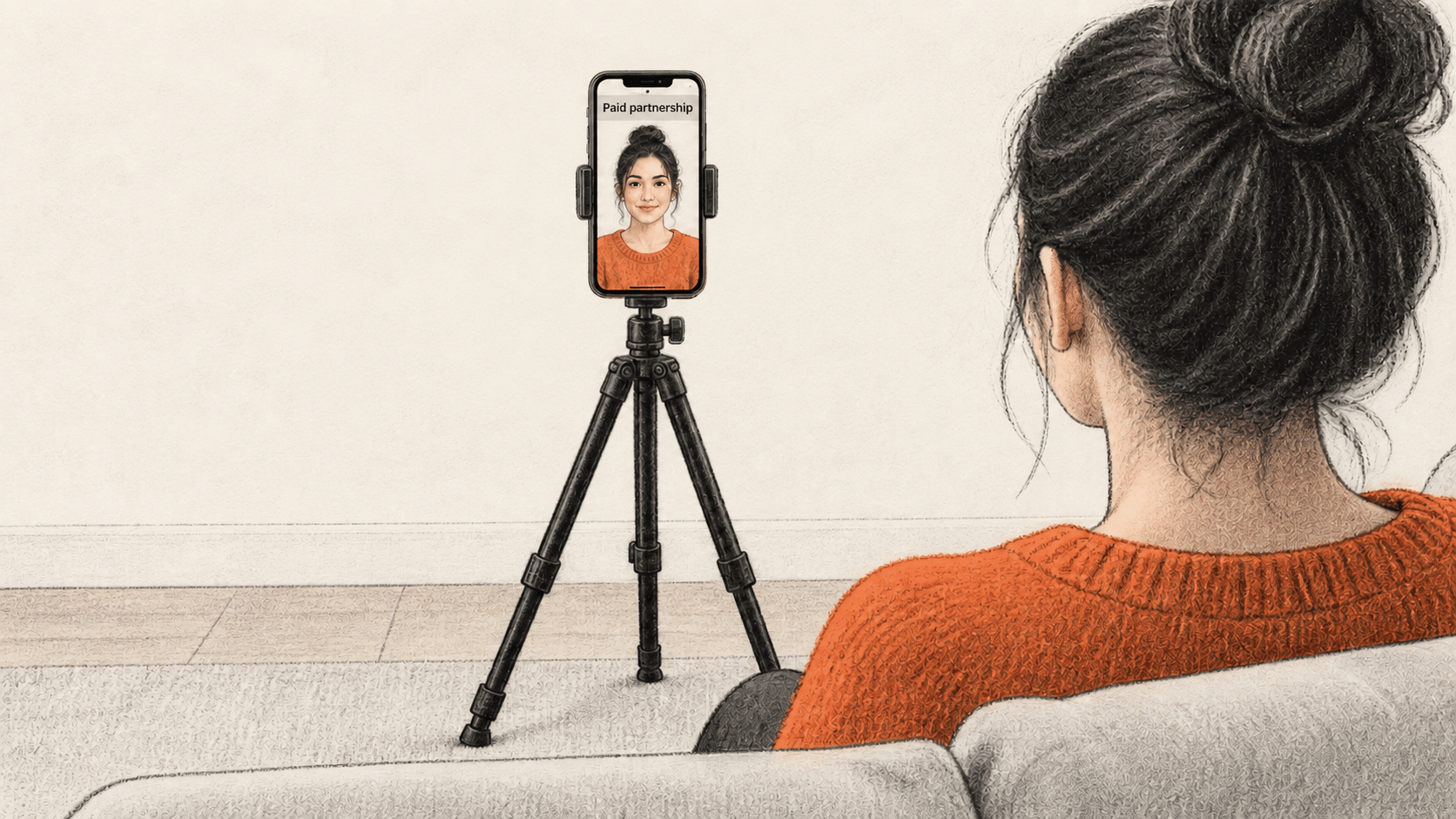
The Stanford Review reported on September 21 that Stanford Residential & Dining Enterprises used an AI-altered student photograph in advertising. Billy Ramirez, a member of the class of 2027, told the publication that he had been removed from the image. The paper described his replacement as an AI-generated Black woman and reported changes to other students' faces and body shapes.
Ramirez told the Review he felt "silenced and erased" by the change. The publication displayed images labeled before and after. These are its reporting and image comparison; BIG CHANGE has not independently verified the source files, editing tool, permissions or approval history. The Stanford Review's report
The complaint concerns who controls a person's portrayal after a photograph has been taken.
The big change
- What changed: Generative editing extends a publisher's control from the presentation of a photograph to the people it appears to show. The person photographed can lose control of their portrayal even though the result still looks photographic.
- Why it matters: Agreeing to appear in a photograph and approving an altered likeness are different decisions. Ramirez's objection concerns that loss of control over his portrayal.
- What to watch: Approval of the final portrayal is the pressure point for university marketing. An AI credit alone cannot resolve a participant's objection to how they were represented.
Stanford's rules distinguish retouching from false representation
Stanford's current AI communications guidelines require written permission for likenesses and explicit consent for synthetic portrayals of real individuals. They prohibit false depictions of Stanford and require disclosure where undisclosed generation or manipulation could mislead.
For Stanford Report specifically, they permit image-quality enhancement and minor retouching with disclosure to receiving editors; generated images remain an editorial decision.
Disclosure explains the production method. Permission concerns the person depicted. Accuracy concerns what the institution is telling its audience. A credit naming an AI tool cannot answer all three questions.
The page does not display a publication date. Its current wording therefore cannot establish which rules applied when the reported banner was made, or prove a violation in this case.
The university already addresses misleading photo edits
Stanford's visual and creative recommendations ask communicators to represent subjects accurately. They warn against composites that make separately photographed people appear to have stood together, and against changing skin tones to create an artificial impression of diversity. The guide's own examples make clear that representation is part of editing responsibility, including when conventional photo manipulation is involved.
Its photography guide recommends releases, instructs staff to keep them indefinitely, and calls for authentic portraiture without heavy editing. It also identifies SALLIE, Stanford's existing database for communications photographs, videos and other assets.
These documents put the reported complaint in a concrete context. The institution already publishes standards for permission, authenticity and image handling. The unresolved question is how the reported banner was produced and approved.
The participant's objection deserves an answer about the actual image
The public material reviewed for this article does not establish who requested the changes, what instructions an editor or tool received, or what permission was obtained. We found no public Stanford or R&DE response to the complaint in searches completed on September 22. We have not contacted the university; absence from those searches is not evidence that it refused to comment.
Our conclusion is that institutional use of AI should be judged against the portrayal it publishes and the permission it has for that portrayal. That follows from the student's reported objection and Stanford's own distinctions. The available evidence does not establish an institutional motive.
Correction, September 22: An earlier version included invented illustrative scenes and unsupported claims about costs and future industry behavior. Those passages have been removed. This version uses attributed reporting, Stanford's published guidance and analysis tied to those sources.