# AI memory demand is squeezing budget smartphone access
> Retail price rises and falling shipments in cheap phone bands show how memory pressure affects handset affordability, with unequal consequences across regions.
By BIG CHANGE Editorial
Published: 2026-10-05T13:20:25.741Z
Updated: 2026-10-05T13:20:25.741Z
Canonical: https://bigchange.ai/blog/ai-memory-budget-smartphone-access
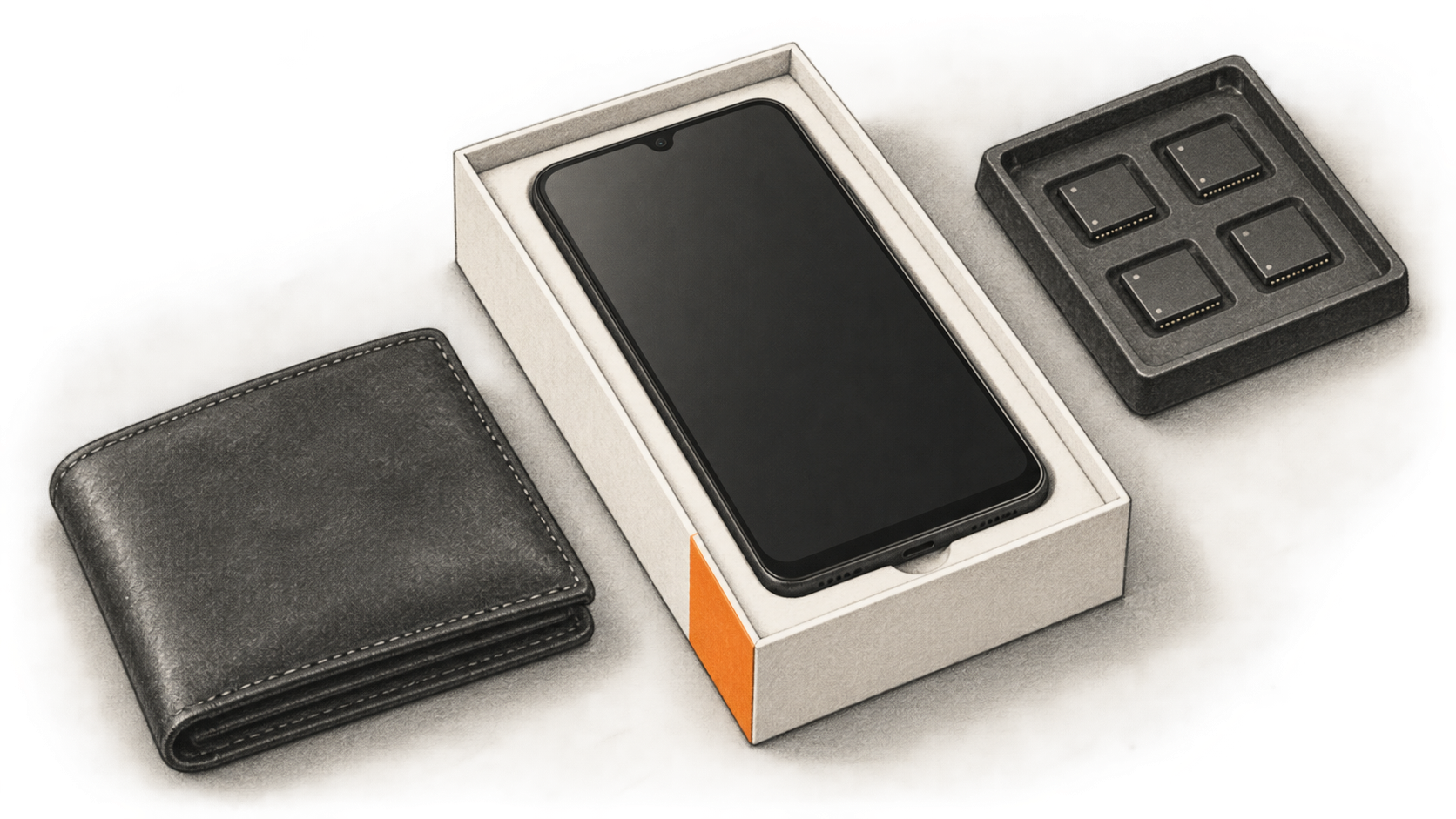
AI-generated conceptual editorial illustration by BIG CHANGE.
Affordable smartphones are getting more expensive while fewer devices ship in the lowest price bands. Counterpoint Research's September study reports a 15% global increase in existing smartphone retail prices during 2026. It reports larger retail-price increases in India than in the United States, although the US increases were concentrated mainly in new launches. [Counterpoint's price tracker](https://counterpointresearch.com/en/insights/global-existing-smartphone-prices-climb-about-15-percent-in-2026)
[Rest of World's October 5 reporting](https://restofworld.org/2026/ai-data-center-memory-chip-shortage-cheap-smartphones-digital-divide/) examines what this means for lower-income consumers trying to get online. The original market releases show manufacturers raising prices and reducing shipments in the cheapest bands as memory costs rise. They leave local retail availability unresolved: neither a shipment decline nor a higher average selling price establishes which phones remain on a particular shop's shelves.
## The big change
- **What changed:** AI infrastructure demand is adding pressure to the memory supply used by consumer devices, according to Omdia. Phone makers face higher input costs and are adjusting the prices and specifications of affordable models.
- **Why it matters:** The cheapest handset can determine whether someone can use mobile internet at all. GSMA identifies handset affordability as the largest adoption barrier across the low- and middle-income countries it surveyed. Losing low-price options makes that barrier harder to address.
- **What to watch:** Financing is becoming part of vendors' response. For affordability programmes, the relevant comparison is the full device cost and repayment terms alongside the upfront payment. A smaller initial payment does not itself reduce the purchase cost.
## Two different ways phones become more expensive
Counterpoint's September 3 release draws on a repository of more than 4,000 active handset models. For the following markets, it reports these average increases in existing smartphone retail prices during 2026:
| Market | Reported increase in existing-model retail prices |
| --- | --- |
| India | 21% |
| Asia-Pacific | 19% |
| Middle East and Africa | 18% |
Counterpoint reports more moderate retail-price increases in China (10%), Europe (7%) and the United States (5%). It says those increases were concentrated largely in new launches rather than existing smartphones, so they do not provide a clean comparison with the existing-model increases above.
The release separately says new launches were 25% more expensive than year-earlier variants. It attributes the pressure to memory and other component costs, and describes reduced storage capacities and more 4G models among manufacturers' responses. The public release does not provide the model records or a complete weighting method for independently reproducing its regional averages. [Counterpoint methodology and findings](https://counterpointresearch.com/en/insights/global-existing-smartphone-prices-climb-about-15-percent-in-2026)
A market's average selling price measures something different. It can rise because prices increase within a segment, because more expensive devices make up a larger share of shipments, or both. In Africa, Omdia reports that the average reached $202 in the second quarter, $41 above a year earlier, with both effects contributing. Sub-$100 shipments fell 34%, against a 7% decline for the whole regional market. [Omdia's Africa release](https://omdia.tech.informa.com/pr/2026/aug/africa-smartphone-market-expected-to-decline-26percent-in-2026-following-first-contraction-in-three-years)
In Southeast Asia, Omdia reports that OPPO's sub-$100 shipments fell 96% in the quarter, while vivo moved its entry model above $100 in most markets. It also identifies reduced discounting as a reason fewer phones qualified for the cheapest band. Those figures describe shipments and positioning, rather than a census of models available to buy. [Omdia's Southeast Asia release](https://omdia.tech.informa.com/pr/2026/aug/southeast-asia-smartphone-shipments-fall-23percent-in-2q26-to-lowest-level-since-2014)
## Memory pressure meets an existing access barrier
Omdia explicitly connects AI data centre demand for DRAM and NAND memory to higher component costs in its [budget phone analysis](https://omdia.tech.informa.com/blogs/2026/aug/beyond-the-100-dollars-smartphone-how-rising-costs-are-reshaping-africas-budget-smartphone-market). These analyst assessments establish a reported supply-chain mechanism; they do not isolate the share of each regional price rise caused by AI.
IDC dates the memory shortage to late 2025. Its final second-quarter data records 276.3 million smartphone shipments globally, down 7.4% from a year earlier. Its public page also reports an almost 60% decline in sub-$100 shipments. The tracker excludes refurbished devices, leaving an alternative purchase route outside those figures. [IDC's shipment results and notes](https://www.idc.com/promo/smartphone-market-share/)
The access problem predates this year's memory pressure. In its September 15 release, GSMA says that at the end of 2025 an entry-level internet-enabled handset cost the poorest fifth of people in low- and middle-income countries 44% of their average monthly income, rising to 76% in sub-Saharan Africa. These are income-relative affordability estimates, rather than 2026 price increases. GSMA also identifies digital skills and other barriers to adoption. [GSMA's digital inclusion findings](https://www.gsma.com/newsroom/press-release/gsma-warns-of-emerging-global-ai-divide-as-three-billion-people-remain-offline-and-smartphone-component-costs-soar/)
Omdia describes financing partnerships as one response to the pressure on Africa's cheapest devices. For organisations supporting access, this changes the buying decision: compare what a device costs over the whole agreement with what the buyer must pay today. The growing importance of repayments follows from the industry's response; these releases do not measure whether financing has restored access for people priced out of phone ownership.
## Sources & further reading
- **Counterpoint Research, September 3:** Public model-based retail price findings. The regional comparison distinguishes existing-model increases from increases concentrated in new launches. Detailed model records and full weighting are unavailable here.
- **Omdia, August 20 and 27:** Regional shipment and price-band findings. Shipments measure market flows, not local shop inventory.
- **IDC, August 28 release on a page updated September 17:** Final global Q2 shipment results, tracker exclusions and a separate forecast section. This article uses historical figures.
- **GSMA, September 15:** Industry-association evidence on affordability and internet adoption. The income comparison describes the end of 2025.
- **Rest of World, October 5:** The reporting that prompted this analysis, including interviews. BIG CHANGE has not surveyed buyers or tested handset prices.
## Sources
- [Counterpoint: Global Existing Smartphone Prices Climb About 15% in 2026](https://counterpointresearch.com/en/insights/global-existing-smartphone-prices-climb-about-15-percent-in-2026) — September 3 public price study based on 4,000+ active models. India/APAC/MEA existing-model increases are separated from China/Europe/US retail increases concentrated mainly in new launches. Full model rows and weighting unavailable.
- [Omdia: Africa smartphone market, Q2 2026](https://omdia.tech.informa.com/pr/2026/aug/africa-smartphone-market-expected-to-decline-26percent-in-2026-following-first-contraction-in-three-years) — August 20 regional shipment findings and average selling price. Shipments are not local retail stock; average price incorporates mix changes. Full-year forecast is not used.
- [Omdia: Southeast Asia smartphone shipments, Q2 2026](https://omdia.tech.informa.com/pr/2026/aug/southeast-asia-smartphone-shipments-fall-23percent-in-2q26-to-lowest-level-since-2014) — August 27 public release traces OPPO and vivo low-band changes and reduced discounting. Detailed research records not inspected.
- [Omdia: Beyond the $100 Smartphone](https://omdia.tech.informa.com/blogs/2026/aug/beyond-the-100-dollars-smartphone-how-rising-costs-are-reshaping-africas-budget-smartphone-market) — August analyst explanation of AI demand for DRAM/NAND and handset financing. Does not quantify AI's causal share of regional price changes.
- [IDC: Smartphone Market Share and Q2 2026 final results](https://www.idc.com/promo/smartphone-market-share/) — August 28 historical release on page updated September 17; refurbished units excluded. Separate outlook includes historical cheap-band data and shortage start in late 2025. Forecasts omitted.
- [GSMA: Digital inclusion and smartphone component costs](https://www.gsma.com/newsroom/press-release/gsma-warns-of-emerging-global-ai-divide-as-three-billion-people-remain-offline-and-smartphone-component-costs-soar/) — September 15 release; affordability comparisons describe end-2025 income. Full indexed text read after direct-fetch 403. GSMA represents the mobile industry; report microdata not inspected.
- [Rest of World: The AI boom is making the world's cheapest smartphones disappear](https://restofworld.org/2026/ai-data-center-memory-chip-shortage-cheap-smartphones-digital-divide/) — Kinling Lo's October 5 reporting prompted this analysis. Interview reporting is credited; BIG CHANGE has not repeated the interviews or independently tested handset prices.
The BIG CHANGE newsletter
The big picture. At your pace.
Recent stories on AI and robotics, the shifts worth watching and practical ideas to use. Choose a daily briefing, weekly digest or monthly perspective.
Sent at 09:00 Belgrade time: daily, Mondays or the first of the month. Your first edition arrives at the next scheduled send after you confirm.
Your privacy, your choice.
Necessary storage supports site security and remembers your choices. Optional Google Analytics stays off until you allow it. You can read every story with necessary storage only. Privacy details
Markdown edition: AI memory demand is squeezing budget smartphone access — BIG CHANGE