# AlloyDB Omni connects SQL queries to local language models
> Google's example makes model routing explicit, while operators retain responsibility for the environment.
By BIGCHANGE.AI Editorial
Published: 2026-11-24T11:56:38.356Z
Updated: 2026-11-24T11:56:38.356Z
Canonical: https://bigchange.ai/blog/alloydb-omni-sql-local-language-models
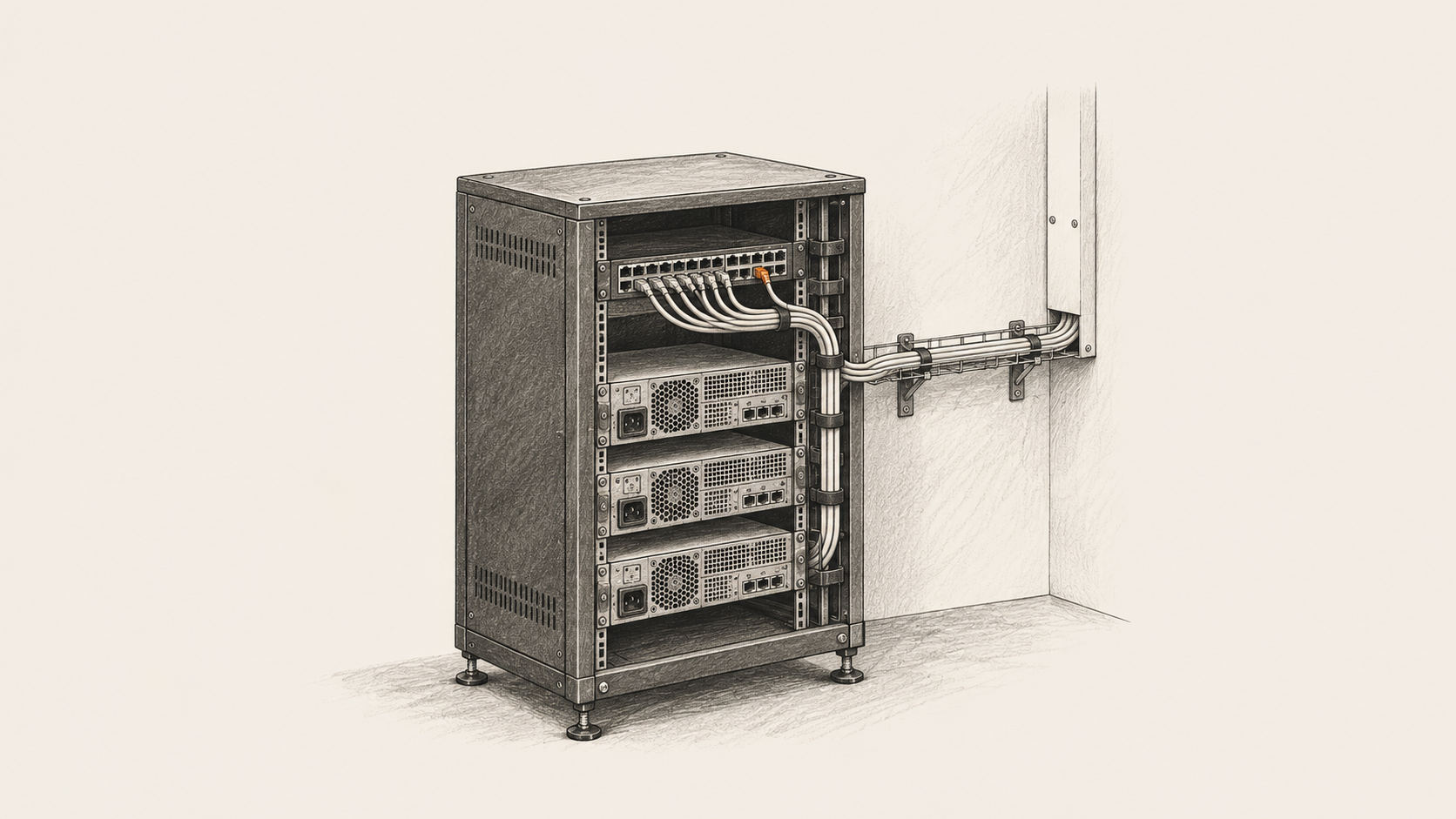
AI-generated conceptual illustration for BIG CHANGE; not Google equipment, a customer deployment or evidence of isolated or compliant operation.
Google Cloud described connecting AlloyDB Omni, its downloadable PostgreSQL-compatible database, to locally hosted language models such as Gemma 4 and Qwen 3.8.
## The big change
- SQL can send database text to a registered model server and return generated text; Google's example uses Ollama inside a Kubernetes cluster.
- Ollama supports local and cloud models, so a server running nearby does not by itself establish where the selected model processes a request.
- Operators still manage infrastructure, access and maintenance. Google's responsibility matrix assigns those jobs explicitly, rather than making them disappear when the database is downloadable.
## Where the model runs
Google's demonstration uses database version 18.4.0 and Kubernetes operator 1.9.0, both already generally available. These example versions do not establish a minimum requirement for every deployment. The endpoint identifies the model server, while input and output transformations adapt the request format and extract the answer. The database calls an existing model; it does not train one.
It illustrates summarizing customer feedback through ai.generate, with each comment supplied for a generated summary returned alongside the customer name. This is a worked example, not a measured production result. The setup runs on Google Kubernetes Engine, so “local” here does not necessarily mean on-premises or offline.
## A local server can reach a cloud model
Ollama's own documentation distinguishes running a downloaded model from using its cloud-hosted models. Its local FAQ says the company does not see prompts or data when models run locally. Its cloud FAQ also explains that a local Ollama installation can run models hosted in Ollama's cloud. The location of the program accepting a request and the location of the model doing the computation can therefore differ.
That distinction matters when evaluating a data-handling promise. A locally addressed service is one part of the route, rather than evidence that every subsequent step stays on the same machine. The relevant question is which model and backend handle the request. Ollama documents a local-only mode that disables its cloud features, including cloud models and web search. That is a separate configuration decision; BIG CHANGE has not inspected any reader's installation.
## Placement is different from network isolation
Kubernetes' networking documentation provides another boundary. By default, a pod—a unit in which application containers run—is not isolated for inbound or outbound traffic. Network policies can restrict those directions independently, but the cluster needs a network plugin that actually enforces them. Merely creating a policy object without supporting enforcement has no effect.
Putting two services in one cluster therefore does not, by itself, describe all the connections either service can make. An organization intending to keep a workload within a defined network needs an enforced traffic policy, not only a diagram showing neighboring services.
The policies also have limits: they operate at network address and port level, and do not establish application-layer protections such as encrypted transport. Network placement and the protection of the connection answer different questions. A cluster boundary alone cannot substantiate a broader claim that data handling is compliant with a particular rule.
## Control includes the work of operating it
Google's separate responsibility matrix assigns the work. Customers manage host operating-system patches, day-to-day Kubernetes upgrades, storage and networking. Google releases database patches and upgrade guidance; the customer schedules the upgrades.
The matrix similarly separates providing a backup mechanism from choosing backup schedules, retention and storage. Google supplies failover logic, while customers provision enough nodes and zones for a standby. The existence of those software features does not establish that a particular installation can recover its data or maintain service.
For a team assessing operational readiness, the useful questions follow that division: who maintains the hosts, who monitors health, where backups are kept, and whether standby capacity exists. Google's matrix assigns monitoring and alerting to customers too. The deployment decision consequently includes a continuing operating commitment, alongside the software itself.
BIG CHANGE reviewed the announcement and documentation; it did not deploy the database, run a model or measure output quality, latency or cost.
## Sources
- [Google's local-model announcement](https://cloud.google.com/blog/products/databases/alloydb-omni-integration-with-local-models) — Example and routing.
- [AlloyDB Omni release notes](https://docs.cloud.google.com/alloydb/omni/docs/release-notes) — Example versions.
- [Ollama local and cloud FAQ](https://docs.ollama.com/faq) — Local versus cloud processing.
- [Kubernetes network policies](https://kubernetes.io/docs/concepts/services-networking/network-policies/) — Default behavior and enforcement limits.
- [AlloyDB Omni responsibility matrix](https://docs.cloud.google.com/alloydb/omni/kubernetes/current/docs/shared-responsibility) — Infrastructure and operating duties.
The BIG CHANGE newsletter
The big picture. At your pace.
Recent stories on AI and robotics, the shifts worth watching and practical ideas to use. Choose a daily briefing, weekly digest or monthly perspective.
Next scheduled send (UTC): . Your first edition arrives at the next scheduled send after you confirm.
Your privacy, your choice.
Necessary storage supports site security and remembers your choices. Optional Google Analytics stays off until you allow it. You can read every story with necessary storage only. Privacy details