# Google Cloud revenue doubles in third quarter
> Cloud growth and company cash flow.
By BIGCHANGE.AI Editorial
Published: 2026-10-29T01:43:38.515Z
Updated: 2026-10-29T01:43:38.515Z
Canonical: https://bigchange.ai/blog/alphabet-cloud-growth
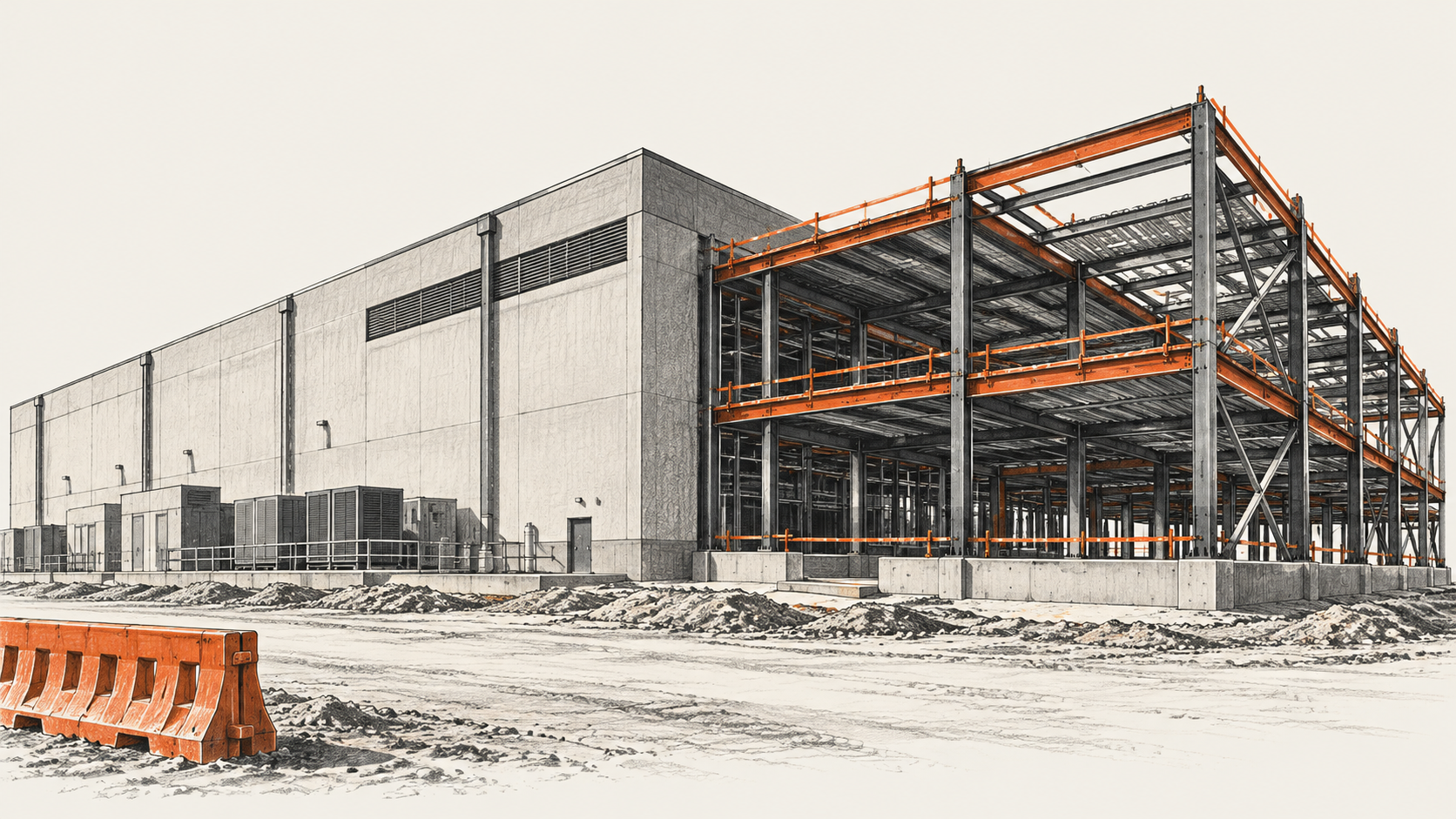
AI-generated conceptual illustration by BIG CHANGE.
Alphabet reported Cloud growth on October 28.
## The big change
- Cloud revenue does not isolate any one AI product’s contribution. Investors therefore cannot infer the return on a specific model from the segment total.
- Segment operating income and company-wide free cash flow answer different questions. A profitable segment can coexist with negative company-wide free cash flow. Asset purchases use cash when paid for, while depreciation generally spreads their cost over time.
- The timing and funding of investment matter to shareholders as well as the growth rate. Borrowing and share issuance provide financing, while additional shares can dilute existing holdings; the eventual return depends on cash generated over the assets’ useful lives.
## What grew inside Google Cloud
[Cloud revenue](https://www.sec.gov/Archives/edgar/data/1652044/000165204426000080/googexhibit991q32026.htm) rose 103% year over year to $30.7 billion from $15.2 billion in the quarter ended September 30, 2026. Alphabet attributed growth to enterprise AI infrastructure and solutions, core cloud services and sales of TPU systems.
Alphabet’s [June filing](https://www.sec.gov/Archives/edgar/data/1652044/000165204426000071/goog-20260630.htm) describes Cloud as including Google Cloud Platform, Workspace, other enterprise services and TPU system sales. Platform fees can be consumption-based or subscriptions; Workspace is sold by subscription. The combined segment total therefore cannot identify AI-only demand.
Cloud operating income reached $11.1 billion. In its June filing, Alphabet placed shared AI research and development expenses in Alphabet-level activities. Cloud profit is therefore not a complete account of company-wide AI costs.
The [second-quarter results](https://www.sec.gov/Archives/edgar/data/1652044/000165204426000066/googexhibit991q22026.htm) put Cloud revenue at $24.8 billion, up 82% from the comparable quarter of 2025.
## Why profit and cash can move differently
Operating income reflects revenue and expenses recognized for a period. Cash flow tracks when cash moves. As the [SEC's guide to financial statements](https://www.sec.gov/reportspubs/investor-publications/investorpubsbegfinstmtguidehtm.html) explains, buying long-lived equipment is an investing cash outflow; its cost is generally allocated over its useful life through depreciation rather than charged entirely against profit at purchase. Alphabet's [June quarterly filing](https://www.sec.gov/Archives/edgar/data/1652044/000165204426000071/goog-20260630.htm) says depreciation starts when its property and equipment are ready for intended use.
Alphabet's June filing also described a $49.6 billion stock and preferred-stock raise for general corporate purposes, including AI infrastructure and computing. Issuing shares provides financing but can dilute existing shareholders; the filing separately identifies dilution as a risk.
That timing helps explain why a business can report operating profit while investment consumes cash. It does not mean an individual purchase has already earned its cost back. Assets can support activity over multiple periods, so a single quarter's cash movement is not their lifetime return.
Alphabet reports $42.3 billion in operating cash flow less $51.4 billion in property purchases: negative $9.1 billion of non-GAAP free cash flow.
In the preceding quarter, purchases were $44.9 billion and free cash flow was negative $5.9 billion. Together, they show why growth and cash require separate scrutiny. Neither quarter establishes the long-term return on those assets.
BIG CHANGE reviewed Alphabet's filings and the SEC guide; it did not independently measure customer demand or the performance of Alphabet's infrastructure.
## Sources
- [Alphabet third-quarter 2026 results](https://www.sec.gov/Archives/edgar/data/1652044/000165204426000080/googexhibit991q32026.htm) — Segment results and the free cash flow reconciliation.
- [Alphabet second-quarter 2026 results](https://www.sec.gov/Archives/edgar/data/1652044/000165204426000066/googexhibit991q22026.htm) — The preceding quarter provides Cloud growth and cash-flow comparisons.
- [SEC guide to financial statements](https://www.sec.gov/reportspubs/investor-publications/investorpubsbegfinstmtguidehtm.html) — The SEC explains cash flows and depreciation of long-lived assets.
- [Alphabet June 2026 quarterly filing](https://www.sec.gov/Archives/edgar/data/1652044/000165204426000071/goog-20260630.htm) — Alphabet describes Cloud’s scope, depreciation, its June capital raise and dilution risks.
The BIG CHANGE newsletter
The big picture. At your pace.
Recent stories on AI and robotics, the shifts worth watching and practical ideas to use. Choose a daily briefing, weekly digest or monthly perspective.
Next scheduled send (UTC): . Your first edition arrives at the next scheduled send after you confirm.
Your privacy, your choice.
Necessary storage supports site security and remembers your choices. Optional Google Analytics stays off until you allow it. You can read every story with necessary storage only. Privacy details