Canva introduced Craft on October 22, its first image generation model built by Canva Research. It is available through Dream Lab and as a selectable model in Canva's image generation API. For design teams, the useful question is what comes back from a prompt and how much of that result can be changed afterward.
The big change
- What changed: Canva now offers its own image model inside Dream Lab and through an API. Craft is designed to plan a composition, including text and object placement, before rendering an image.
- Why it matters: A team making posters or social graphics can generate an image within Canva's design environment, then use a separate Magic Layers operation when it needs movable elements. The generated image itself is not a layered Canva design.
- What to watch: Canva has announced faster Craft variants, but neither is listed as available in the current API model table. The present decision for developers is whether the preview image endpoint, its user credit allowance and its output controls fit their application.
A plan before the image
Canva's launch account describes two stages. An image planning model interprets the prompt into a composition plan covering the elements, their positions and relative sizes, visual hierarchy and text. A rendering model then makes the image. Canva says the result can reach 2K resolution and that Craft supports more than 30 aspect ratios. This is the company's description of its model; Canva has not published the internal plan format or a reproducible comparison of editing results in the cited launch account.
Canva says it trained Craft with millions of human-made templates from its library, including posters, presentations, menus and other layouts with typography. It also says its designers assessed more than 25,000 image pairs during internal evaluation. Those details explain the emphasis on layout, but the reported image quality and text accuracy remain Canva's claims. Canva says Craft debuted fourth overall on DesignArena and first in two named categories, People & Portraits and Landscapes & Nature; those are reported rankings, not results from a BIG CHANGE test.
The editable layer step is separate
The distinction matters for anyone expecting an editable poster from one generation request. Canva's generation API documentation says a successful image job returns a download URL for a generated image. It can also save that image as an asset in the user's Canva account. The documented result is an image, with its width and height reported by the API, rather than a Canva document whose text and objects are already independent elements.
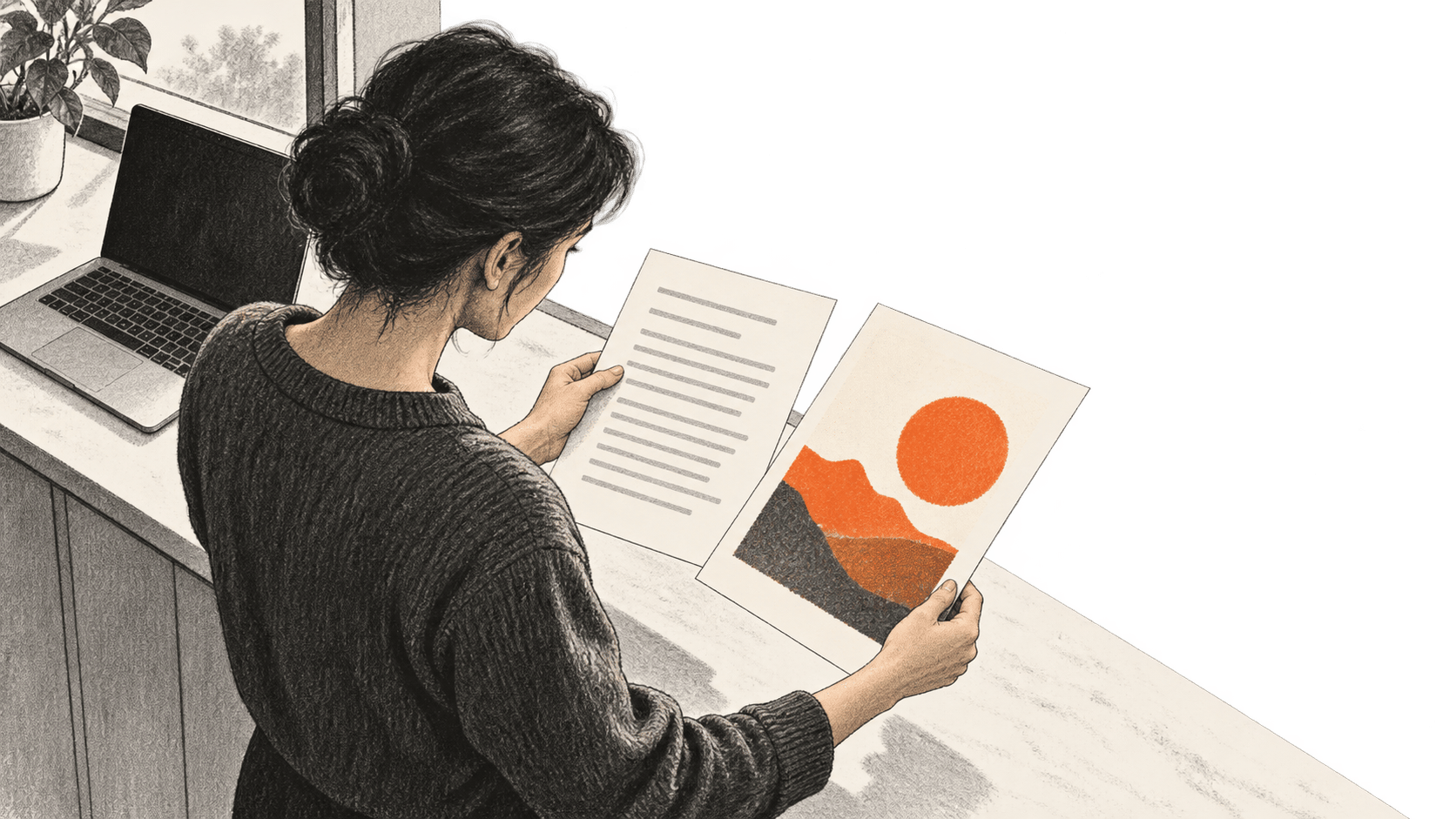
Magic Layers can take a flat image and separate it into elements that a user can move, delete, resize or replace. Canva says Craft's composition structure makes its outputs well suited to this conversion. The help page describes Magic Layers as its own processing step, accepts single-page PNG or JPG files, and says graphic designs and illustrations work best. Photorealistic images may separate less cleanly; the longest edge cannot exceed 5,000 pixels. Canva's general download guide lists JPG and PNG among design export choices, but the image generation API does not promise an editable file or specify an image MIME type in its response schema.
Where Craft is available and what usage costs
Canva says people can open Dream Lab from Canva's bottom-left panel to use Craft. Its API reference lists the current model as craft_v1_2k. An app can request it explicitly; if it leaves out the model parameter, Canva chooses an available model and may use another one. The API offers six named aspect-ratio settings, from square to portrait 4:5. That list is narrower than the more than 30 aspect ratios Canva describes for Craft as a product. The job response gives the actual pixel dimensions.
The image generation API is in preview, with possible unannounced breaking changes. Canva says public apps using preview APIs will not pass its review process and cannot be made available to all Canva users. The endpoint requires a user access token with asset:write scope and the image_generation capability, and is limited to 20 requests per minute per app user. A successful job's download URL lasts 24 hours; the app can instead save the image to the user's Canva uploads. Canva says starting a job consumes the user's AI allowance, and an exhausted allowance returns a quota error. Its AI usage guidance says plan, tool and task complexity affect that allowance; it does not provide a fixed Craft price per image. Magic Layers also draws from the shared AI allowance. Canva's announcement describes Dream Lab access as global, while the help page makes clear that usable AI allowances differ by plan.
Canva has announced Craft-fast and Craft-ultrafast as upcoming, lower-cost variants and says a custom inference engine made the current model's planning stage an order of magnitude faster than its first internal version. Neither variant appears in the current API model table, and the speed comparison is Canva's internal claim.
Sources & further reading
- Canva, “Introducing Canva Craft” (October 22, 2026). Canva's account of the launch, two-stage planning and rendering, training, internal comparisons, Dream Lab access and proposed faster variants. Rankings, speed and quality claims are attributed to the company.
- Canva Developers, “Generations” and “Create image generation job”. The current API model list, preview status and public-app review restriction, user authorization, image output, selectable ratios, job limits and allowance behavior. The request and response details specify the current interface.
- Canva Help Center, “Turn images into editable layers with Magic Layers”. Establishes that layer separation is a separate operation and documents input types, editing actions and image limits. It does not establish that every Craft image separates cleanly.
- Canva Help Center, “Understanding your AI usage”. Explains shared monthly allowances and plan variation. It does not state a fixed cost for an individual Craft image.
- Canva Newsroom listing. Dates the Craft launch announcement October 22, 2026.