# ChatGPT Wallet begins US rollout
> Each initial purchase requires user approval.
By BIGCHANGE.AI Editorial
Published: 2026-11-13T18:46:38.106Z
Updated: 2026-11-13T18:46:38.106Z
Canonical: https://bigchange.ai/blog/chatgpt-wallet-us-agent-checkout
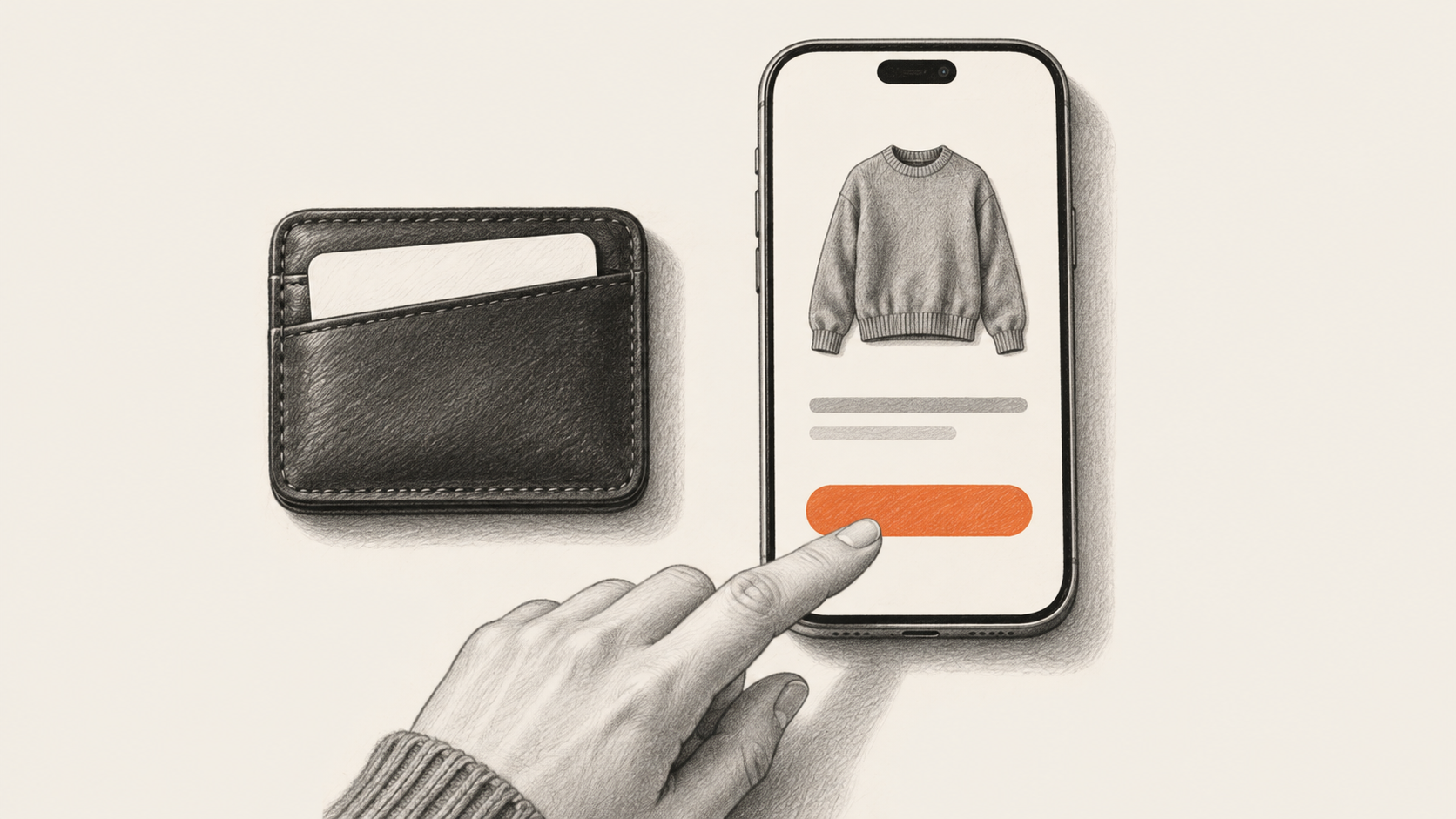
AI-generated illustration for BIG CHANGE.
OpenAI began rolling out [ChatGPT Wallet](https://openai.com/index/introducing-chatgpt-wallet/) on November 13 for US Pro subscribers. It lets a dot—the ChatGPT assistant a user sets up—submit purchases after approval.
## The big change
- Users approve each initial purchase with a biometric check on a supported device. Merchant acceptance remains a separate decision.
- The merchant handles delivery and returns. An assistant’s involvement does not make OpenAI responsible for those obligations.
- Tokenization limits exposure of the underlying card number, but checkout still involves personal information. The privacy notice describes purchase records and information shared with payment participants.
## From approval to an order
Initial access requires US residence, age 18 or older, eligible US-issued cards and US billing addresses. Wallet works in dot conversations, not ordinary Chat, Work or standalone Codex.
After users review the item, total and card, approval releases a network payment token for checkout instead of their underlying card details. Some merchant sites or risk checks can block the transaction.
[Mastercard's general explanation](https://www.mastercard.com/global/en/personal/get-support/frequently-asked-questions.html) defines tokenization as replacing a card account number with an alternate number. This lets a checkout use a credential without receiving the number printed on the card. It explains the substitution, rather than establishing that any particular order will succeed.
OpenAI's [operational guide](https://help.openai.com/en/articles/20001654-making-purchases-with-chatgpt-wallet) distinguishes approval from order completion. A ready-to-check-out message means approval is complete; if the outcome is unclear, check for merchant confirmation before retrying. Otherwise, a person could mistake an unfinished conversation for a failed order and submit it again.
The guide also says merchants may retain a credential for recurring charges under agreed terms. Chase cards must be added by their primary cardholder, and virtual cards cannot be added at launch. Wallet's saved cards are separate from the card paying for a ChatGPT subscription.
## Who handles a problem
The [Wallet terms](https://openai.com/policies/chatgpt-wallet-terms/) assign card authorization to the issuer and order acceptance to the merchant. Cancellation and refund requests go to the merchant; card-charge disputes go to the issuer. OpenAI disclaims responsibility for merchant products and fulfillment, subject to nonwaivable rights and any separate promise it makes.
Removing a saved card does not cancel an existing order or merchant obligation. For an agreed subscription, removing the payment credential and cancelling the merchant agreement are different actions.
OpenAI describes budget-based advance approval as a future capability, not part of this initial purchase-by-purchase rollout.
## What the payment record contains
The [privacy notice](https://openai.com/policies/chatgpt-wallet-privacy-notice/) says a provider collects full card information through a secure form. OpenAI receives tokenized credentials and limited card details, not the full card number or security code. It also collects purchase details, approval records and security information.
Merchants and payment participants receive information needed for checkout and may apply their own privacy notices. Removing a card does not erase every record: information may remain for pending transactions, fraud prevention and legal obligations. A concealed card number therefore should not be confused with an anonymous purchase.
## Sources
- [OpenAI Wallet launch](https://openai.com/index/introducing-chatgpt-wallet/) — Rollout and purchase flow.
- [Wallet purchase guide](https://help.openai.com/en/articles/20001654-making-purchases-with-chatgpt-wallet) — Eligibility and practical use.
- [Wallet terms](https://openai.com/policies/chatgpt-wallet-terms/) — Merchant and cardholder terms.
- [Wallet privacy notice](https://openai.com/policies/chatgpt-wallet-privacy-notice/) — Data collection and sharing.
- [Mastercard tokenization](https://www.mastercard.com/global/en/personal/get-support/frequently-asked-questions.html) — Payment-token background.
The BIG CHANGE newsletter
The big picture. At your pace.
Recent stories on AI and robotics, the shifts worth watching and practical ideas to use. Choose a daily briefing, weekly digest or monthly perspective.
Next scheduled send (UTC): . Your first edition arrives at the next scheduled send after you confirm.
Your privacy, your choice.
Necessary storage supports site security and remembers your choices. Optional Google Analytics stays off until you allow it. You can read every story with necessary storage only. Privacy details