# Claris previews Harbor local AI server for Macs
> The private preview describes local model serving and connected Macs.
By BIGCHANGE.AI Editorial
Published: 2026-11-12T21:47:38.314Z
Updated: 2026-11-12T21:47:38.314Z
Canonical: https://bigchange.ai/blog/claris-harbor-local-ai-mac-preview
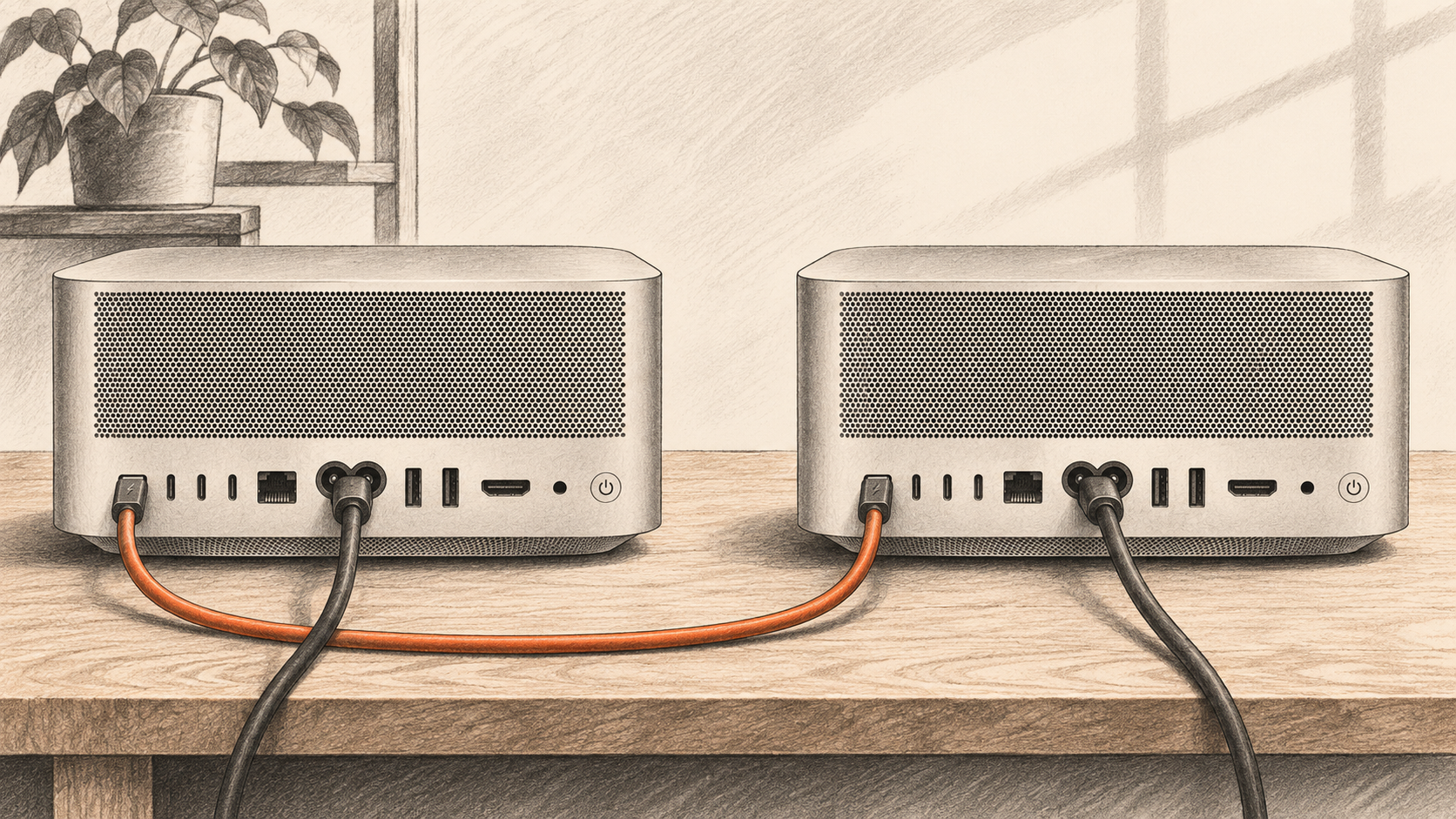
AI-generated illustration for BIG CHANGE.
Claris is describing an early-access product called Harbor that would turn Apple silicon Macs into a local AI server. The Apple subsidiary says one Mac can provide an endpoint for open-weight models, while compatible machines can be connected over Thunderbolt 5 for larger workloads.
## The big change
- Harbor is presented as a private preview, and its page asks people to sign up for updates. That does not establish a general release date or guarantee immediate access to the software.
- Running a model locally changes where inference takes place: a computer on the user’s premises generates responses rather than sending every request to a cloud model. Claris promises that prompts and data stay on the user’s hardware, a claim BIG CHANGE has not tested.
- Clustering can let multiple computers share work, but hardware, setup and model choices still matter. A larger combined memory capacity is not itself a measured speed or a guarantee that every model will run well.
## A server on hardware the user controls
An AI server receives requests from an application and runs a model to produce answers. An endpoint is the address an application uses to reach that service. Inference is the process of using a trained model to produce an output; open weights are model parameters made available for users to obtain, though their licences can impose different conditions.
[Claris](https://content.claris.com/local-ai-server-get-started) promises no cloud or per-token fees; final software pricing, APIs, model compatibility and system requirements are unspecified.
[MacRumors reported on November 10](https://www.macrumors.com/2026/11/10/apple-claris-harbor-app/) that Harbor was in early access and an App Store listing had been removed. Claris’s page is undated. BIG CHANGE did not install or test Harbor.
## What multiple Macs can add
Memory constrains the size of a model that can be held for inference. Distributing work across machines can make more combined capacity available, but the computers must also exchange information. Communication and how the model is divided can affect the result, so adding a second Mac does not automatically double throughput.
An earlier, separate [Apple research article](https://machinelearning.apple.com/research/mlx-distributed-inference) describes distributed inference with its MLX software and Mac Studio computers. In one example, Apple connects two machines with two Thunderbolt cables and uses pipeline parallelism, in which different parts of a model are assigned to different machines.
Apple’s [developer documentation](https://developer.apple.com/documentation/technotes/tn3205-low-latency-communication-with-rdma-over-thunderbolt?changes=_1) says its low-latency RDMA networking over Thunderbolt is available from macOS 26.2 on Apple silicon Macs with Thunderbolt 5.
## A separate Claris product
Claris already documents an [AI Model Server](https://help.claris.com/en/server-help/content/about-server.html) for locally installed models used by FileMaker custom apps. Its documentation describes administration and API keys and recommends a separate machine for production. The existing server’s administration tools illustrate that hosting a model involves managing access as well as loading its files.
These separate Apple and FileMaker documents do not establish Harbor’s performance, compatibility or deployment requirements.
For a team considering local AI, the practical choice includes model quality and licence, the cost and capacity of computers, security administration and access terms.
## Sources
- [Claris Harbor](https://content.claris.com/local-ai-server-get-started) — Private preview description and update form.
- [MacRumors](https://www.macrumors.com/2026/11/10/apple-claris-harbor-app/) — November 10 reporting on preview availability.
- [Apple MLX research](https://machinelearning.apple.com/research/mlx-distributed-inference) — Separate distributed inference example.
- [Apple developer documentation](https://developer.apple.com/documentation/technotes/tn3205-low-latency-communication-with-rdma-over-thunderbolt?changes=_1) — Thunderbolt networking prerequisites.
- [Claris AI Model Server](https://help.claris.com/en/server-help/content/about-server.html) — Existing FileMaker product context.
The BIG CHANGE newsletter
The big picture. At your pace.
Recent stories on AI and robotics, the shifts worth watching and practical ideas to use. Choose a daily briefing, weekly digest or monthly perspective.
Next scheduled send (UTC): . Your first edition arrives at the next scheduled send after you confirm.
Your privacy, your choice.
Necessary storage supports site security and remembers your choices. Optional Google Analytics stays off until you allow it. You can read every story with necessary storage only. Privacy details