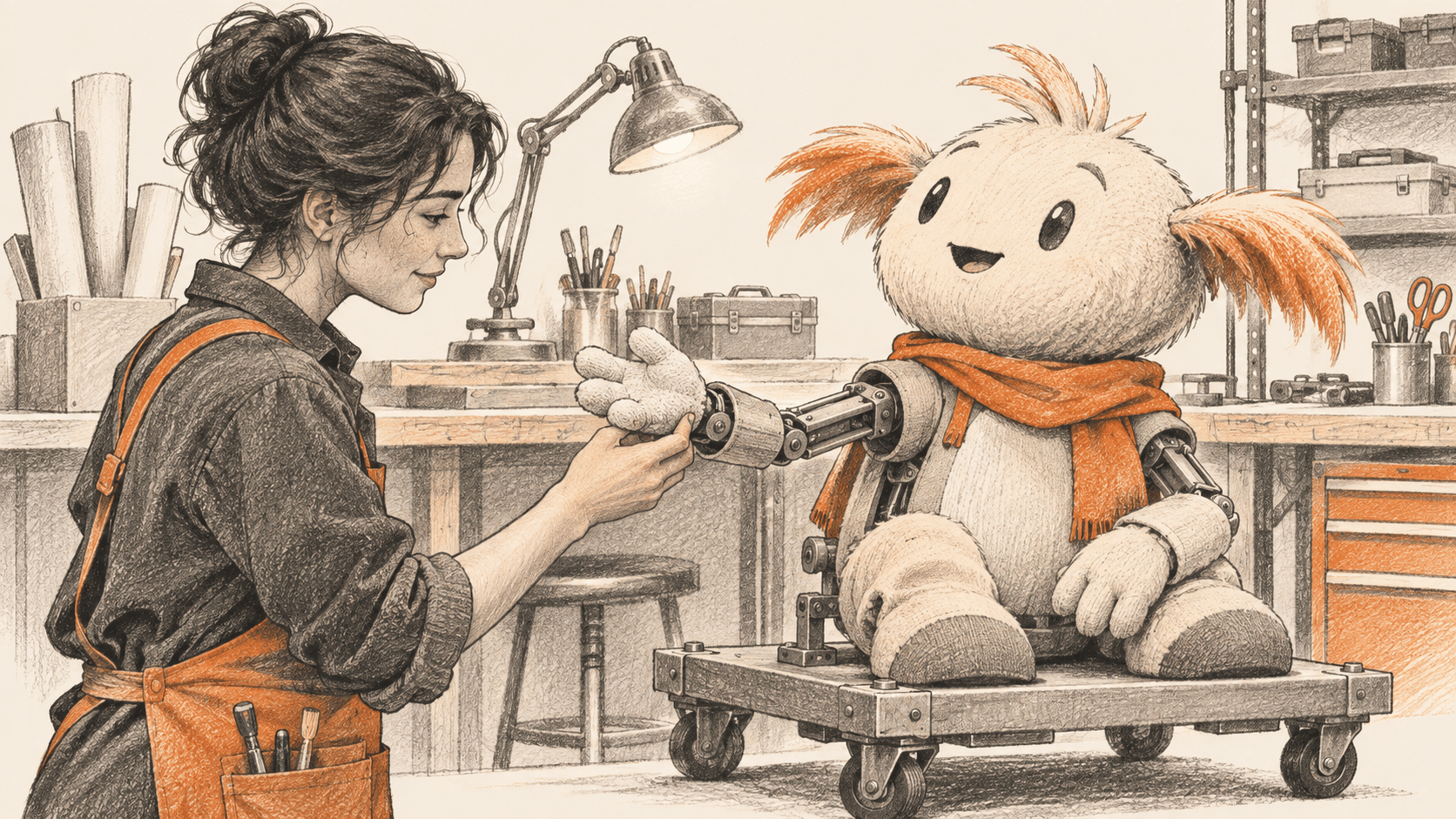
Hasbro’s Sixth Wall Studio and Dynamic Creatures announced a November 10 partnership to develop interactive character robots for entertainment and hospitality venues.
The big change
- Sixth Wall would supply character behavior; Dynamic Creatures would provide mobile, expressive robots. The aim is to connect a character’s conversation with its movements, gaze and gestures.
- The partners imagine a resort character welcoming a guest, setting a quest and asking about it later. That continuing encounter is a proposed experience, not a demonstrated attraction.
- Memory would depend on guest choice and permissions defined by venue and use case. The announcement leaves recognition, retained information and deletion unspecified.
From a voice to a moving character
In its June launch, Hasbro described CharacterOS as a system for preserving a character’s personality, story, voice and behavioral guardrails. Its term “behavioral licensing” refers to how a character speaks and interacts, extending beyond permission to reproduce its appearance.
The June release said characters use authorized source material and human voice performances, with compensation for performers and only authorized recordings. It also announced an ElevenLabs voice partnership. These details explain the creative framework: a recognizable voice is one ingredient, while rules about personality and story govern how that voice responds. The earlier voice announcement is not evidence of a finished robot.
Dynamic Creatures’ September launch described two approaches: custom robots built for a brand or setting, and character experiences built on existing robotics platforms. The company called SnowJay its system for coordinating perception, movement and behavior.
In that account, perception provides information about people and surroundings, while movement and behavior determine the physical response. The company’s stated goal is an encounter that adapts to a guest, rather than a fixed performance for a crowd. It said it was working with an unnamed theme park and retailer. Those are company descriptions of development, not independently verified operating results.
What visitors need to know
A later encounter would need a way to link the guest with the earlier interaction; the release does not describe that mechanism.
The Federal Trade Commission’s general business guidance recommends mapping what personal information a business receives, where it is stored and who can access it. It advises keeping only information needed for a legitimate business purpose, limiting employee access and setting a retention and secure-disposal policy.
These recommendations distinguish several questions that a promise of personalization cannot answer on its own: what is collected, why it is needed, who may use it and when it is removed. A visitor considering an information-sharing choice can ask the operator to explain those points. This is general information-security guidance, not evidence of any specific operator’s practices.
Initial Sixth Wall applications would focus on audiences aged 13 and older. No particular character, venue or opening date is announced.