LangChain says it has raised $300 million at a $3 billion valuation to expand its AI-agent platform. The November 13 announcement says existing investor CapitalG led the round, bringing the company's total funding to $460 million.
The big change
- LangChain’s framework helps developers assemble applications around language models. Its current product family also addresses what happens when those applications need to run, be observed and be assessed over time.
- LangGraph helps developers coordinate multi-step work with state and control over the next step. LangSmith provides tools to inspect and evaluate agent runs, including applications built with other frameworks.
- The investment and valuation indicate what backers agreed to finance, not a measured improvement in any customer's AI system. LangChain has announced a November 20 event for additional capabilities; those future announcements should not be treated as features already released.
From a model to an agent
An agent application needs more than a model's answer. It may have to choose a tool, use a result in the next step and preserve enough context to continue a longer task. Each step can fail for a different reason, so a final answer alone may not show where a problem began.
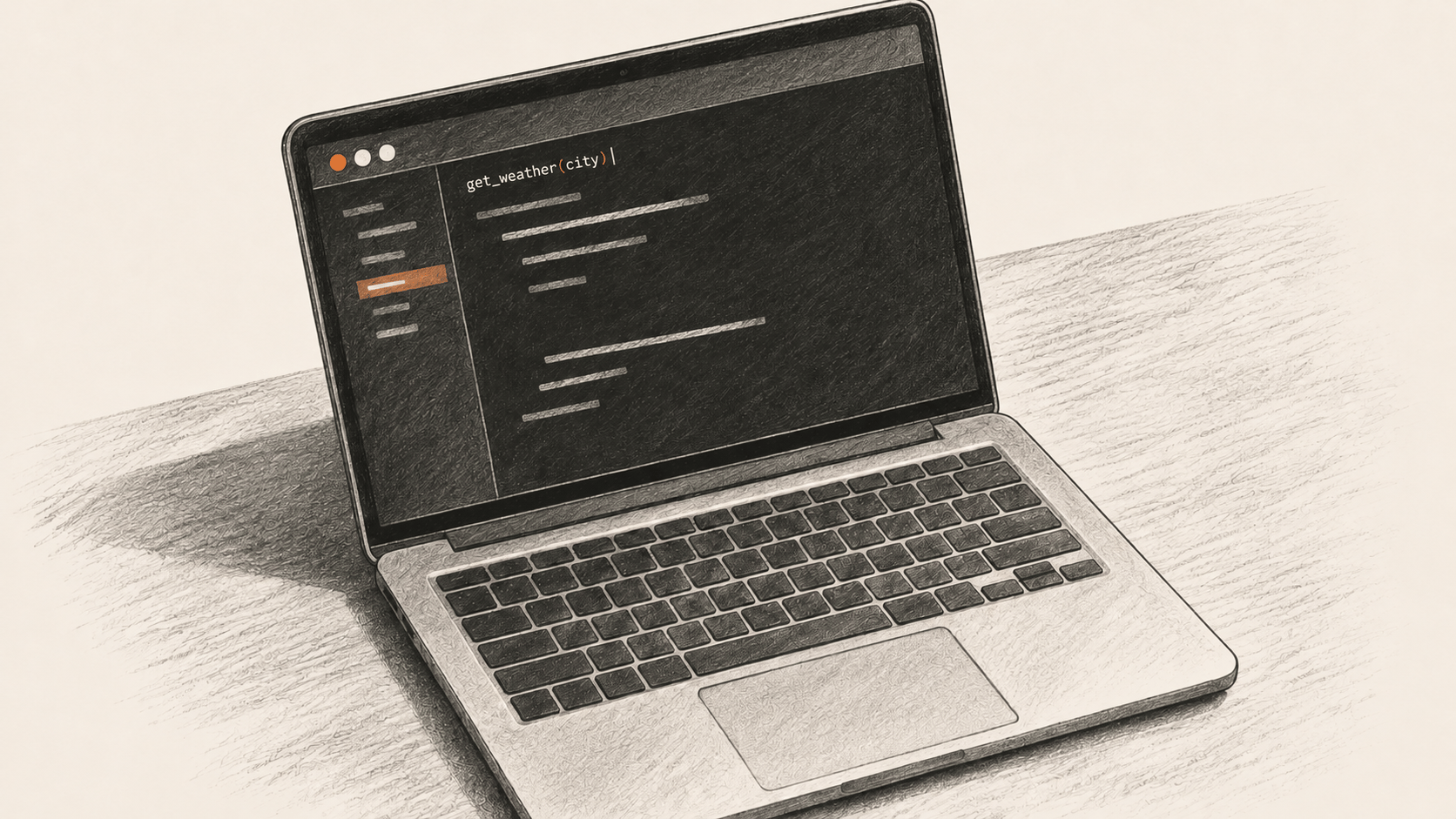
LangChain's documentation describes its framework as a way to combine a model with tools, instructions and additional code that controls behavior around an agent loop. Its example supplies a weather tool to an agent that receives a question about a city. The example's function returns a fixed response; it is a programming demonstration, not a live weather service or proof of agent accuracy.
LangGraph is a lower-level orchestration framework for longer-running work that retains information between steps, known as state. Developers define steps and connections, and can combine fixed rules with model-driven decisions. Its documentation describes persistence, resuming execution and human review as capabilities. That can help a team design where a workflow pauses for a person, but the team still has to decide what requires approval and verify the resulting behavior.
Watching what happened
LangSmith's observability documentation describes traces as records of an agent's actions. A developer can inspect a run to investigate a failure, then use examples and evaluators to test changes. For instance, if an agent gives the wrong answer after calling a tool, a trace can help distinguish a bad tool result from a later interpretation. A trace is evidence to investigate, not a guarantee that a diagnosis or fix is correct.
LangSmith offers cloud, hybrid and self-hosted setup options, according to its documentation. The choice matters when a trace may contain prompts, tool outputs or other sensitive information: teams still need to decide what to record, who may see it and how to manage access.
Financing and claims
LangChain says the round included new investors GIC and DFJ Growth and existing investors IVP and Sapphire Ventures. It claims more than 7,000 organizations use LangSmith and gives customer examples, including a deployment-time improvement at Workday. These are company-reported figures and examples, not independently audited results or evidence that other customers will see the same outcome.
For developers evaluating the platform, the practical question remains whether its tools work with their models, data and review process. This article did not test the software or independently verify the financing or customer claims.