# NHTSA proposes optional cyan lights for automated vehicles
> NHTSA proposes optional cyan marker lamps for automated vehicles and revised lighting controls for vehicles without manual driving controls. It is not yet a final rule.
By BIGCHANGE.AI Editorial
Published: 2026-10-24T11:39:01.488Z
Updated: 2026-10-24T11:39:01.488Z
Canonical: https://bigchange.ai/blog/nhtsa-cyan-ads-marker-lamps-lighting-proposal
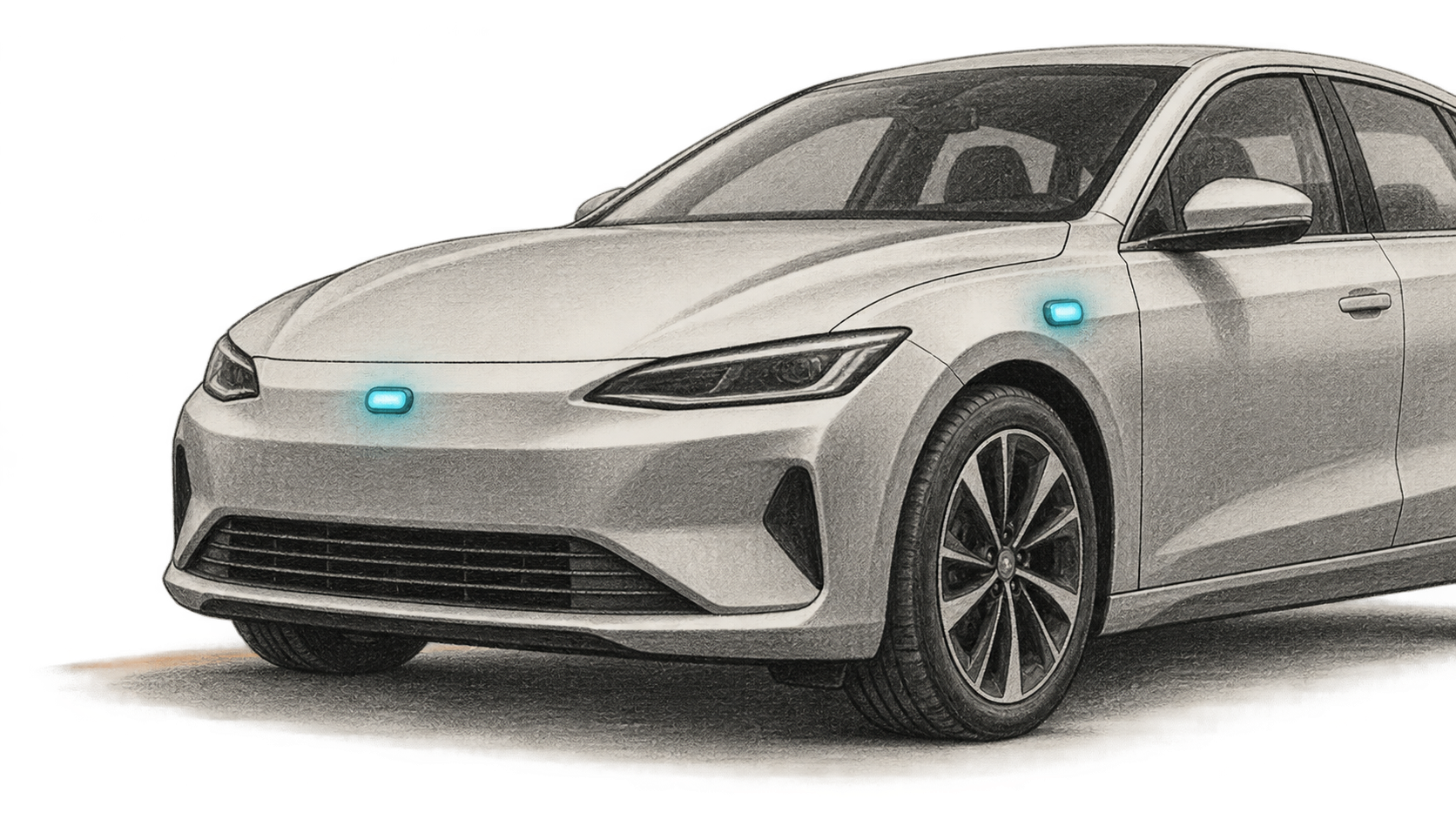
AI-generated conceptual illustration by BIG CHANGE; an unbranded vehicle shows one possible optional lamp arrangement, not an actual manufacturer design, deployment or safety approval.
The US National Highway Traffic Safety Administration proposed a federal lighting standard on October 23 that would let manufacturers fit cyan marker lamps to vehicles operated by automated driving systems. The lamps would be optional. If fitted, they would signal that the vehicle is operating without the expectation that an occupant is watching the road.
That distinction matters on a vehicle that can switch between automated and human driving. Under the proposed text, the lamps may turn on automatically during operation without an occupant expected to monitor the road. They must turn off automatically when an occupant is expected to monitor it. All of a vehicle's ADS marker lamps would switch together. An unlit lamp, or a vehicle without one, would therefore tell a road user little on its own about the vehicle's equipment or driving mode.
## The big change
- **What changed:** NHTSA proposes a defined, optional cyan signal for a vehicle operating without an occupant expected to monitor the road. Vehicles lacking manual driving controls would also gain relief from some driver-operated lighting-control specifications.
- **Why it matters:** A common signal would give road users a consistent meaning to look for when manufacturers choose to fit the lamps. Required lighting functions would remain, and the marker would not certify automated-driving safety.
- **What to watch:** Federal Register publication is scheduled for October 26, followed by a 30-day comment period. The final requirements and any effective date depend on rulemaking; no final rule has been adopted.
## A signal visible around the vehicle
NHTSA proposes one or two steady cyan lamps at each of the front, rear and two sides. A vehicle using them would have at least four and at most eight. A single front or rear lamp would sit on the centerline; a pair would be mounted symmetrically at the same height. Each would be at least 15 inches above the ground. The proposal sets visibility angles and brightness requirements, with different intensity levels depending on whether the headlamps are on.
The agency chose cyan to give the signal a color distinct from the amber, red and white lamps already used for other purposes. It is also proposing limits meant to keep the marker lamps from obscuring required signals. NHTSA does not propose allowing an ADS lamp to be optically combined with another lamp. Its notice asks for comment on some details, including whether flashing should be allowed; the proposed default is steady light.
The lamps would identify a particular operating condition, not certify that an automated vehicle is safe or that it can drive itself everywhere. NHTSA says the marker could help road users and law enforcement recognize a vehicle operating without an occupant expected to monitor the road, but the agency has not quantified a safety benefit. Manufacturers could also choose not to install the lamps if the rule is adopted.
## Controls for vehicles without a steering wheel
The same proposal would revise requirements written for a human driver. For vehicles without manually operated driving controls, a turn signal operating unit would no longer have to cancel through steering wheel rotation or have a manual cancellation control. A headlamp beam switch would no longer have to be positioned for operation by a driver's hand or foot. Both functions would still have to be present. NHTSA also proposes to remove driver-specific language from the hazard warning control and to limit its multiple-switch ease-of-use rule to vehicles with manual driving controls.
The change would leave the current control requirements in place for vehicles with manually operated driving controls, even when they also have an automated driving system. Proposed relief for turn signal and upper-beam telltales is similarly limited to vehicles without those manual controls. If such a vehicle lacks turn signal telltales, the proposal calls for a lamp failure telltale visible from all designated seating positions. The hazard warning telltale requirement would remain in this proposal.
NHTSA also proposes two broader headlamp changes: manufacturers could specify the test voltage for integral-beam headlamps, and a lower beam would no longer have to sit above an upper beam when the lamps are vertically arranged. Other types of headlamp would keep the 12.8-volt test specification.
This is a notice of proposed rulemaking, not a final standard. Its public-inspection copy is scheduled for Federal Register publication on October 26, after which NHTSA says it will accept comments for 30 days under docket NHTSA-2026-1519. The copy still has a placeholder for the exact comment deadline. NHTSA proposes immediate effect if it adopts a final rule, but no final rule or effective date has been set.
## Sources & further reading
- [NHTSA's October 23 announcement](https://www.nhtsa.gov/press-releases/vehicle-lighting-updates-automated-vehicles) summarizes the proposed changes and the planned comment period.
- [The full 59-page proposed rule](https://public-inspection.federalregister.gov/2026-21794.pdf) sets out the proposed lamp configuration, control exceptions, agency reasoning and draft regulatory text. It is scheduled for publication on October 26 and remains subject to revision through rulemaking.
## Sources
- [NHTSA Updates Vehicle Lighting Standards for AVs](https://www.nhtsa.gov/press-releases/vehicle-lighting-updates-automated-vehicles) — October 23, 2026 agency announcement; summarizes proposed changes and says the 30-day comment period follows Federal Register publication.
- [Federal Motor Vehicle Safety Standards; Modernization of FMVSS No. 108 to Accommodate ADS-Equipped Vehicles](https://public-inspection.federalregister.gov/2026-21794.pdf) — 59-page public-inspection proposed rule, docket NHTSA-2026-1519, scheduled for October 26 publication; provides regulatory text and limitations.
The BIG CHANGE newsletter
The big picture. At your pace.
Recent stories on AI and robotics, the shifts worth watching and practical ideas to use. Choose a daily briefing, weekly digest or monthly perspective.
Next scheduled send (UTC): . Your first edition arrives at the next scheduled send after you confirm.
Your privacy, your choice.
Necessary storage supports site security and remembers your choices. Optional Google Analytics stays off until you allow it. You can read every story with necessary storage only. Privacy details