# NVIDIA describes AI agents for cluster investigations
> NVIDIA describes agents investigating GPU cluster issues.
By BIGCHANGE.AI Editorial
Published: 2026-11-05T12:09:38.791Z
Updated: 2026-11-05T12:09:38.791Z
Canonical: https://bigchange.ai/blog/nvidia-ai-factory-operations-agent
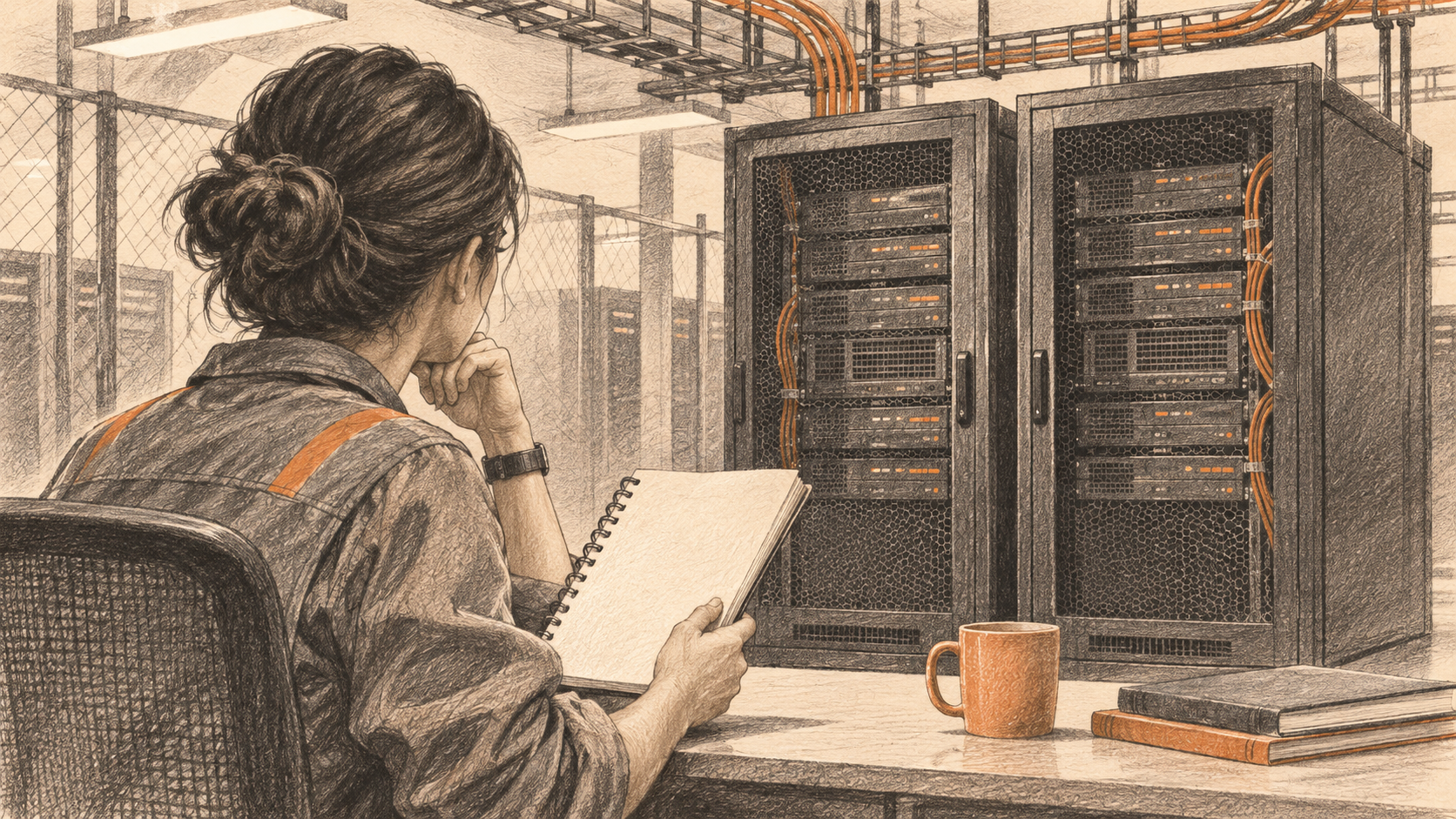
AI-generated conceptual illustration by BIG CHANGE.
[NVIDIA said November 4](https://developer.nvidia.com/blog/how-nvidia-uses-ai-agents-to-streamline-ai-factory-operations) that it uses an AI Factory Operations Agent to help engineers investigate failures in its GPU clusters.
## The big change
- A runtime routes chat requests to specialists.
- Engineers review evidence before acting.
- NVIDIA reports internal use but no measured accuracy or time savings.
## From a failed job to evidence
The user-facing runtime routes requests to agents. NVIDIA says job recovery examines scheduler and log evidence; hardware and observability specialists investigate device faults and telemetry. Together, their findings can help an engineer decide which issue to check first.
Its [repository use cases](https://github.com/NVIDIA/AI-Factory-Operations-Agent/blob/main/docs/use_cases.md) describe an illustrative failed Slurm job: a recovery agent reads scheduler records and job logs, then may suggest correcting a missing dataset path before rerunning. This is a documented workflow example, not evidence that the system solved a customer incident.
NVIDIA says it is measuring diagnostic accuracy and engineer agreement, but provides no results.
## Access is part of the design
The [repository](https://github.com/NVIDIA/AI-Factory-Operations-Agent) describes session sandboxes for general commands and separate service tools with configured credentials. NVIDIA says Kubernetes inspection uses read-only credentials and scoped permissions. Engineers should review evidence; these controls do not guarantee accuracy.
The experimental orchestration code is open source. The repository says its deployment images and chart require an early-access invitation; NVIDIA customers can request operations agents through their account manager.
## Sources
- [NVIDIA technical blog](https://developer.nvidia.com/blog/how-nvidia-uses-ai-agents-to-streamline-ai-factory-operations) — Internal use; access.
- [NVIDIA framework repository](https://github.com/NVIDIA/AI-Factory-Operations-Agent) — Experimental code, deployment and tool boundaries.
- [NVIDIA repository use cases](https://github.com/NVIDIA/AI-Factory-Operations-Agent/blob/main/docs/use_cases.md) — Illustrative Slurm investigation workflow.
The BIG CHANGE newsletter
The big picture. At your pace.
Recent stories on AI and robotics, the shifts worth watching and practical ideas to use. Choose a daily briefing, weekly digest or monthly perspective.
Next scheduled send (UTC): . Your first edition arrives at the next scheduled send after you confirm.
Your privacy, your choice.
Necessary storage supports site security and remembers your choices. Optional Google Analytics stays off until you allow it. You can read every story with necessary storage only. Privacy details