# NVIDIA updates DAQIRI’s path from scientific detectors to GPU memory
> Moving measurements into memory is one stage of a scientific feedback cycle.
By BIGCHANGE.AI Editorial
Published: 2026-11-22T02:43:38.402Z
Updated: 2026-11-22T02:43:38.402Z
Canonical: https://bigchange.ai/blog/nvidia-daqiri-scientific-instruments
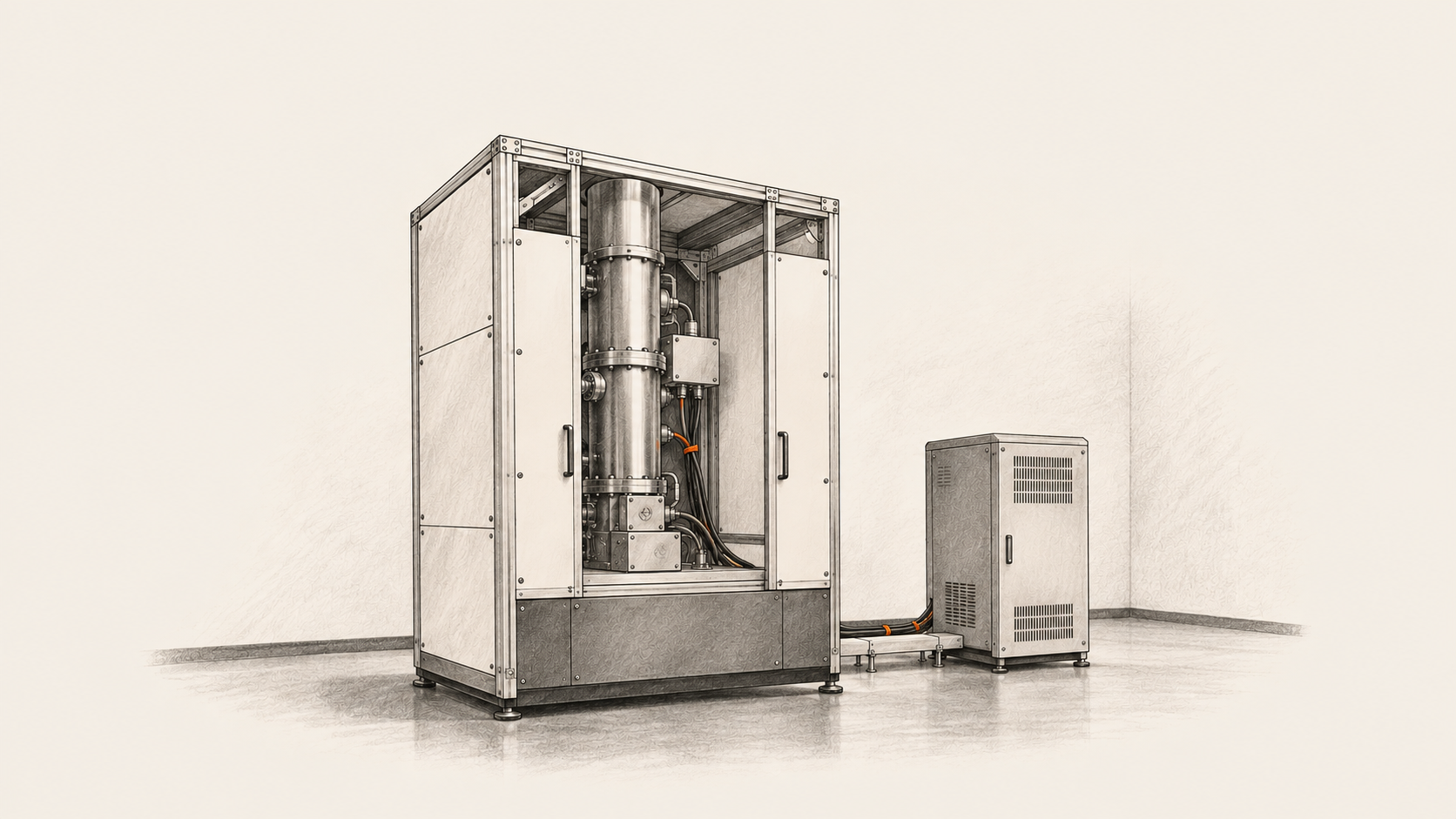
AI-generated conceptual illustration for BIG CHANGE; fictional equipment and setting, with no actual camera model, laboratory deployment or measured result shown.
On November 19, NVIDIA detailed DAQIRI v2026.11.00, its scientific data acquisition library released on GitHub on November 10.
## The big change
- DAQIRI changes packet handling before analysis. Optional hardware reordering arranges compatible payloads in memory, while direct polling removes a software handoff; neither measures the time to interpret a sample.
- Direct access to GPU memory can avoid an intermediate copy through host memory. The application still needs to coordinate data arrival with computation, so bytes reaching the device and a calculation finishing are different milestones.
- A scientific feedback loop needs a measurement to affect the next acquisition. Logging or displaying results can help a researcher, but those observation tasks alone do not demonstrate that an instrument executed a new decision.
## Changes in acquisition
Hardware reordering needs compatible repeating sequences and ConnectX-7 or newer adapters. Direct polling removes an I/O-worker handoff. Both are optional; indirect polling remains the default.
NVIDIA reports a Berkeley Lab electron camera producing over 500 gigabits per second. Its readout electronics send Ethernet packets into GPU memory for frame assembly, correction and energy-loss spectra—measurements of how electrons lose energy in a sample.
IGX Thor’s 64-byte GPU-memory test with direct polling averaged 2.70 microseconds for its per-run medians and 3.12 for the 99th percentiles. It used a 200 GbE cable linking ConnectX-7 ports on the same host. This times application send-to-receive, excluding camera exposure, inference and instrument response.
## What a direct memory path changes
NVIDIA’s separate GPUDirect RDMA guide describes data exchange between a GPU and peer devices, including network and video-acquisition hardware, over PCI Express. That avoids requiring the payload to pass through host memory before the GPU can use it. Hardware topology and platform support still matter; a direct path is not a promise that every adapter and GPU combination works.
The guide also explains why communication completion is not automatically computation readiness. Data written by another device needs the appropriate synchronization before dependent GPU work uses it. Otherwise, a running calculation can observe old or incomplete values.
For an instrument builder, the distinction is practical. A transport measurement answers how data travels to its destination; the processing pipeline must additionally establish that the right, complete measurements were available when the analysis consumed them.
## Earlier microscopy at the Foundry
A September 2024 Molecular Foundry report describes a 4D Camera connected to processing at the NERSC supercomputing facility. The lab used fast networking and high-performance computing to handle large microscopy datasets, with demonstrations involving light atoms and a battery stack.
That report shows why processing during an experiment matters: faster turnaround can let researchers assess results while they can still change the measurement. This does not independently verify NVIDIA’s new camera claim.
The useful consequence is earlier access to evidence, rather than automatically making the experiment autonomous. A researcher may still decide what to inspect next, and the recorded result still needs to support the scientific conclusion.
## What would demonstrate a feedback loop
The original Bluesky Adaptive documentation makes an explicit distinction between observation and control. Its logging callback reports optimization progress but does not choose measurement points, move hardware or calculate objectives. Choosing a point belongs to the optimizer; changing what happens at the instrument belongs to the acquisition plan.
Its event records can link selected parameters and outcomes to the acquisition run that evaluated a suggestion. That connection lets a team distinguish a proposed experiment from an executed measurement and examine whether the intended action produced a usable result.
For an illustrative materials scan, analysis might recommend inspecting another position more closely. Validation would need to connect the measurement, recommendation, executed move and subsequent observation, with timing that covers the complete cycle. An observation log alone would not show that sequence being executed.
## Sources
- [NVIDIA’s author report](https://developer.nvidia.com/blog/enabling-real-time-ai-for-scientific-instruments-with-gpu-native-data-acquisition/) — Case and changes.
- [DAQIRI v2026.11.00 release](https://github.com/NVIDIA/daqiri/releases/tag/v2026.11.00) — Publication and defaults.
- [DAQIRI’s IGX Thor benchmark](https://nvidia.github.io/daqiri/benchmarks/performance-igx-thor/) — Bounded same-host transport measurements.
- [Original GPUDirect RDMA guide](https://docs.nvidia.com/cuda/gpudirect-rdma/index.html) — Peer memory paths, support and synchronization.
- [Molecular Foundry’s distinct 2024 report](https://foundry.lbl.gov/2024/09/21/very-fast-electron-detector-connected-to-high-performance-computing/) — Earlier 4D Camera/NERSC workflow.
- [Bluesky Adaptive’s original workflow documentation](https://blueskyproject.io/bluesky-adaptive/main/explanations/callbacks.html) — Observation, optimization and acquisition records.
The BIG CHANGE newsletter
The big picture. At your pace.
Recent stories on AI and robotics, the shifts worth watching and practical ideas to use. Choose a daily briefing, weekly digest or monthly perspective.
Next scheduled send (UTC): . Your first edition arrives at the next scheduled send after you confirm.
Your privacy, your choice.
Necessary storage supports site security and remembers your choices. Optional Google Analytics stays off until you allow it. You can read every story with necessary storage only. Privacy details