# Pennsylvania targets misleading AI ads with disclosure law
> Signed October 22 and effective December 21, the law ties disclosure to false impressions about goods or services and expressly excludes content limited to text.
By BIGCHANGE.AI Editorial
Published: 2026-10-24T20:48:38.746Z
Updated: 2026-10-24T20:48:38.746Z
Canonical: https://bigchange.ai/blog/pennsylvania-ai-advertising-disclosure-law
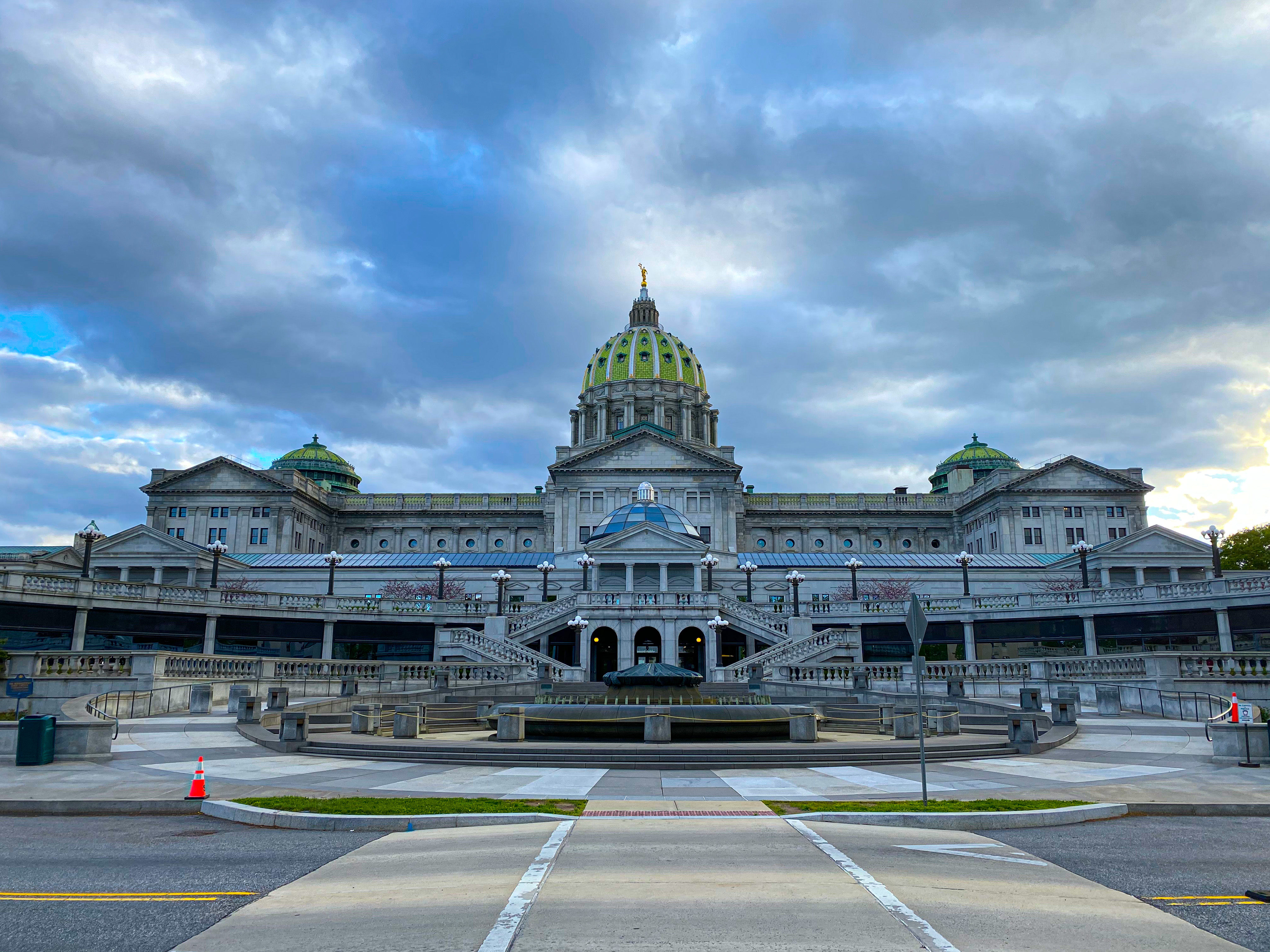
Cicku / Wikimedia Commons, CC BY 4.0 (https://creativecommons.org/licenses/by/4.0/). Original 2020 photograph, unchanged.
Pennsylvania has enacted a disclosure law for advertising that uses AI-generated or significantly AI-modified content to create a false impression about the goods or services being sold. Governor Josh Shapiro signed Senate Bill 806 on October 22. The Artificial Intelligence Deceptive Advertising Act takes effect on December 21, 2026, after a 60-day delay. [Governor's announcement](https://www.pa.gov/governor/newsroom/2026-press-releases/governor-shapiro-signs-58-bills-into-law), [legislative record](https://www.palegis.us/legislation/bills/2025/sb806).
The disclosure requirement turns on what the synthetic content communicates about a product or service. The final text includes exceptions for evidently fictional content, parody, satire, commentary, criticism and content limited to text. Those limits matter for both advertisers deciding how to present synthetic material and consumers trying to understand what an AI label tells them. [Final bill text](https://www.palegis.us/legislation/bills/text/PDF/2025/0/SB0806/PN1808).
## The big change
- **What changed:** Pennsylvania has added a specific disclosure requirement to its treatment of deceptive advertising. It covers synthetic representations of goods and services, with the duty tied to a false consumer impression.
- **Why it matters:** The disclosure must reach consumers when they first encounter the covered content, in the same medium. That makes its placement, readability and audibility part of the rule. Disclosing AI use also leaves other legal remedies intact.
- **What to watch:** The meaning of a false consumer impression will determine the rule's reach. Legal analysis has already identified competing readings of that threshold; its application matters as the December 21 effective date approaches.
## What the disclosure rule covers
Section 4 addresses an advertiser creating and distributing an ad, or causing that to happen, when synthetic content creates a false consumer perception about the nature, origin or authenticity of the advertised goods or services. Section 3 defines synthetic content to include information generated or significantly modified by AI, including images, video, audio and text. The separate exception in section 4 removes content limited to text from the disclosure requirement.
The final version also deletes the words “knowingly, recklessly or willfully” from the disclosure provision. They remain visible as crossed-out text in the legislature's PDF and can reappear in automated text extraction. The legislature's [guide to reading bills](https://www.palegis.us/legislation/bills/how-to-read-a-bill) says struck-out language does not become part of the enacted law.
There is still uncertainty about the trigger itself. In an [October 23 analysis](https://www.loeb.com/en/insights/passle/2026/10/a-new-ai-disclosure-law-from-pennsylvania-but-what-does-it-actually-cover), Libby O'Neill, deputy chair of advertising, marketing and promotions at Loeb & Loeb, identifies two possible readings: that an AI depiction of a product can itself require disclosure, or that the depiction must additionally misrepresent the product.
## Disclosure at the first encounter
For covered content, the notice must say the ad contains material modified or generated using AI. It must appear when the consumer first encounters the synthetic content and use the same medium. Where technically feasible, it must be permanent or extraordinarily difficult to remove. The [final text's sections 3 and 4](https://www.palegis.us/legislation/bills/text/PDF/2025/0/SB0806/PN1808) also specify how noticeable and understandable a disclosure must be.
Audio disclosures must be delivered at a volume and pace people can hear and comprehend. Visual disclosures must be large enough, visible enough and on screen long enough to read. Print disclosures must be noticeable and contrast with their background. A notice cannot contradict the other information presented with it.
The law expressly preserves other legal recourse when an advertiser discloses AI use. For readers, that means an AI label identifies the use of the technology; it does not establish that the product claim is accurate.
## Enforcement through state and local prosecutors
The attorney general or the appropriate district attorney can seek an injunction against prohibited conduct, subject to the conditions in section 5, and bring a civil action for violations. A court may award a civil fine of up to $3,000, plus actual attorney fees and court costs. The [House Appropriations Committee's October 7 fiscal note](https://www.palegis.us/WU01/LI/BI/FN/2025/0/SB0806P1808.pdf) describes the same enforcement structure.
## Sources
- [Governor Shapiro's October 22 signing announcement](https://www.pa.gov/governor/newsroom/2026-press-releases/governor-shapiro-signs-58-bills-into-law) — Lists SB 806 among the bills signed that day. It establishes the signing date, without explaining the advertising law's scope.
- [Pennsylvania General Assembly: SB 806 history](https://www.palegis.us/legislation/bills/2025/sb806) — Records governor approval and Act 99 of 2026 on October 22, and identifies printer's number 1808 as the final bill text. The separate Act 99 text page returned a document error when checked on October 24; the bill history and governor's announcement independently establish enactment.
- [SB 806, final printer's number 1808](https://www.palegis.us/legislation/bills/text/PDF/2025/0/SB0806/PN1808) — The five-page legislative text supplies the definitions, disclosure requirements, exceptions, enforcement provisions and 60-day commencement clause. Its amendment marks matter: the crossed-out mental-state wording on page 3 is deleted. The legislature's reading guide explains those marks.
- [Pennsylvania General Assembly: how to read a bill](https://www.palegis.us/legislation/bills/how-to-read-a-bill) — Explains that strike-out type marks wording removed from a bill. That convention is necessary to read the disclosure provision in the final SB 806 PDF accurately.
- [Loeb & Loeb: analysis by Libby O'Neill, October 23](https://www.loeb.com/en/insights/passle/2026/10/a-new-ai-disclosure-law-from-pennsylvania-but-what-does-it-actually-cover) — Explains the uncertainty in the false-perception threshold and identifies December 21 as the effective date. This is a law firm's interpretation, not an enforcement decision or court ruling.
- [House Appropriations Committee fiscal note, October 7](https://www.palegis.us/WU01/LI/BI/FN/2025/0/SB0806P1808.pdf) — Summarizes the enforcement powers, civil fine and commencement provision. Its staffing and cost projections are estimates, not evidence of actual hiring or spending.
The BIG CHANGE newsletter
The big picture. At your pace.
Recent stories on AI and robotics, the shifts worth watching and practical ideas to use. Choose a daily briefing, weekly digest or monthly perspective.
Next scheduled send (UTC): . Your first edition arrives at the next scheduled send after you confirm.
Your privacy, your choice.
Necessary storage supports site security and remembers your choices. Optional Google Analytics stays off until you allow it. You can read every story with necessary storage only. Privacy details