# Pony AI’s quarter separates fare growth from vehicle deliveries
> Robotaxi revenue combines passenger trips with vehicle deliveries.
By BIGCHANGE.AI Editorial
Published: 2026-11-22T05:32:37.945Z
Updated: 2026-11-22T05:32:37.945Z
Canonical: https://bigchange.ai/blog/pony-ai-robotaxi-quarter
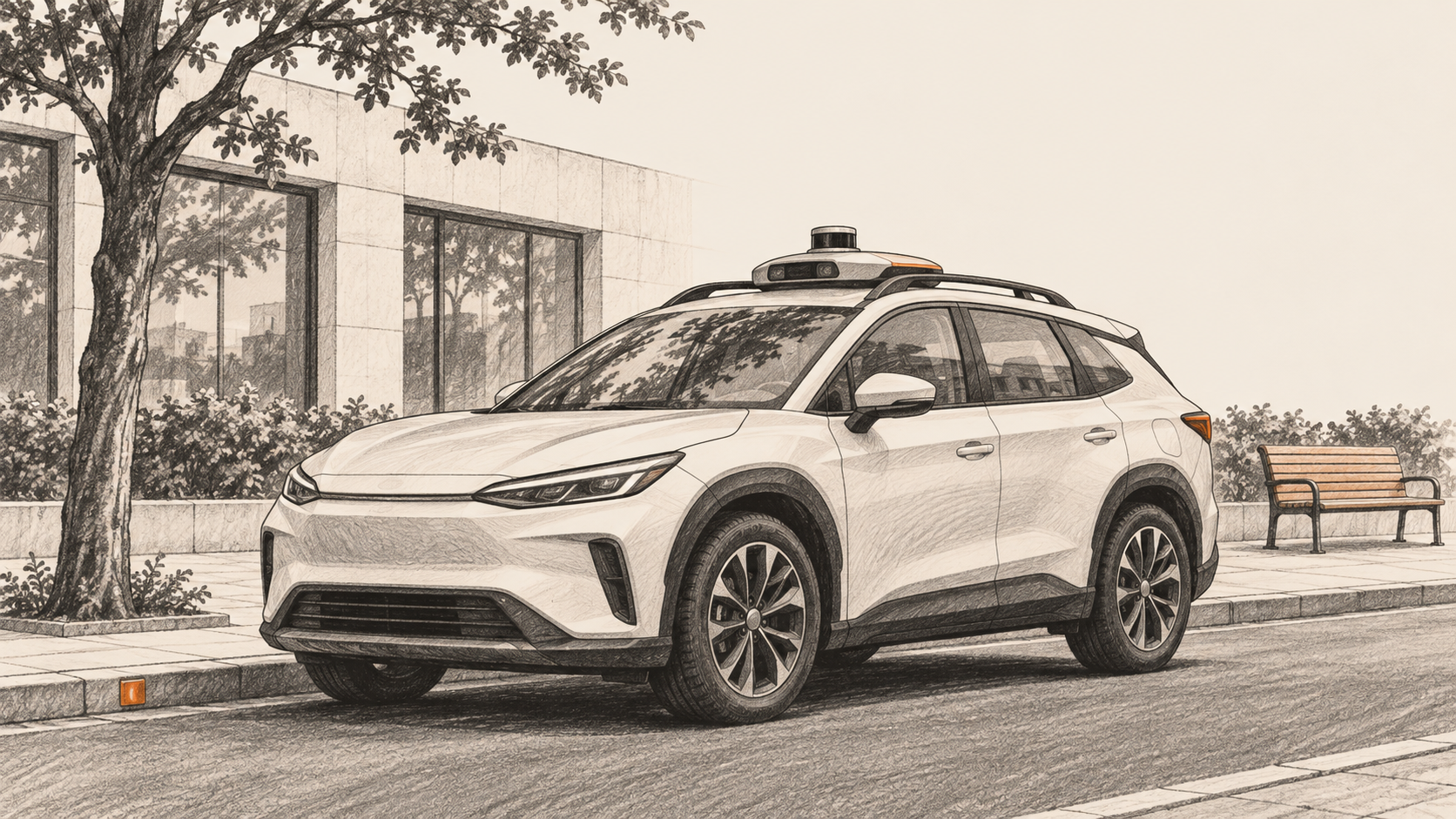
AI-generated conceptual illustration for BIG CHANGE; fictional vehicle and setting, not an actual Pony or Toyota deployment, test or financial result.
On November 18, 2026, Pony AI reported unaudited revenue of $44.6 million for the quarter ended September 30, up 75.2% from a year earlier.
## The big change
- Robotaxi revenue includes fares and vehicle deliveries, so the $17.8 million category does not measure passenger spending alone. The release gives no fare dollar total.
- Under joint deployment, partners can fund vehicles or handle local operations while Pony supplies technology and support. Shared responsibilities make a fleet’s ownership and revenue arrangements matter alongside its size.
- Gross profit is what remains after direct costs, while the operating result also includes research and administration. Interest and tax enter later, so each measure answers a different question about the business.
## What the quarter records
Fare-charging revenue grew nearly 400% year over year. Robotruck contributed $18.0 million; intelligent solutions, $8.9 million. Across all businesses, service revenue was $25.2 million and product revenue $19.4 million. That accounting split differs from the Robotaxi, Robotruck and intelligent-solutions business categories.
Gross profit was $7.9 million, but research and development cost $60.1 million. Operating loss narrowed to $68.7 million from $69.7 million. Consolidated net loss widened to $136.3 million, primarily because of trading-securities fair-value losses. The loss attributable to Pony AI’s owners was $105.6 million, excluding losses assigned to other owners in consolidated subsidiaries.
## What a deployment partner contributes
Pony’s earlier interim report explains the joint-deployment model. Partners may bring vehicle funding, local fleet operations, maintenance, market access or users; Pony provides autonomous-driving technology, system capabilities and operating support. The parties share economic benefits under their particular arrangements.
That division matters because operating a passenger service requires more than supplying a driving system. A partner bringing customers plays a different role from one financing cars, even when both contribute to the same deployment.
The report also separates revenue recognition by activity. Passenger-trip revenue is recognized as the taxi service is provided, with promotional discounts deducted. Product revenue is generally recognized when goods are delivered and accepted. In plain terms, transporting a rider and delivering equipment complete different obligations; neither transaction should be used as a substitute measure for the other.
## A service example has a place and a date
A separate November 16 announcement from Pony and Toyota supplies a concrete operating example: their seventh-generation bZ4X Robotaxi had joined fully driverless commercial service in Guangzhou. The company said passengers could book through PonyPilot, WeChat or Alipay, with round-the-clock booking available.
The same announcement described preparations in other cities and a plan for around 1,000 bZ4X vehicles across major Chinese cities. Preparations and a fleet plan are different from completed commercial deployment. The statement also assigns ordinary operational work—maintenance, charging and routine servicing—to the collaboration. Those tasks remain part of running a passenger fleet even when nobody drives the car.
This November service announcement falls after the September 30 quarter-end; it does not identify the source of the quarter’s fares. BIG CHANGE has not tested the booking service or independently measured its driving performance.
## Following the money through the statement
The SEC’s financial-statements guide explains why the profit measures differ. Subtracting the direct cost of goods or services from sales gives gross profit. Operating expenses then include costs such as developing products and administering the company, which can outweigh that gross profit.
Interest income and interest expense are accounted for after operating profit and before tax and net income. A change at that level need not mean the underlying transport operation changed by the same amount. A cash-flow statement answers another question: where cash actually came from and went. Accounting earnings and cash movement are related, but they are not interchangeable.
Read the revenue note to see what was sold and when it was earned. Then check which costs the profit measure includes and whether cash actually moved.
## Sources
- [Pony’s November 18 results](https://www.sec.gov/Archives/edgar/data/1969302/000110465926129308/tm2629888d1_ex99-1.htm) — Unaudited quarter; category and statement splits.
- [Pony’s 2026 interim report](https://www.sec.gov/Archives/edgar/data/1969302/000110465926109772/tm2625374d1_ex99-1.pdf) — Earlier business model and recognition policies.
- [Pony and Toyota’s service announcement](https://blog.pony.ai/pony-ai-and-toyota-launch-fully-driverless-commercial-services-with-gen-7-bz4x-robotaxi/) — Guangzhou service; later plans distinguished.
- [SEC’s financial-statements guide](https://www.sec.gov/about/reports-publications/beginners-guide-financial-statements) — Profit stages and cash-flow distinctions.
The BIG CHANGE newsletter
The big picture. At your pace.
Recent stories on AI and robotics, the shifts worth watching and practical ideas to use. Choose a daily briefing, weekly digest or monthly perspective.
Next scheduled send (UTC): . Your first edition arrives at the next scheduled send after you confirm.
Your privacy, your choice.
Necessary storage supports site security and remembers your choices. Optional Google Analytics stays off until you allow it. You can read every story with necessary storage only. Privacy details