An ITESO university team in Guadalajara has built two RoboMeshA robots for hands-on STEM teaching. Students can control the wheeled platform through a browser and observe its movement and obstacle response. The team reports a workshop at CETI Colomos and a partnership with Prepa ITESO. The reported workshop does not establish routine use across schools or measured learning gains. IEEE's July 2026 project account describes the workshop; IEEE Spectrum reported on the project on September 24.
The big change
- What changed: A university-built robot now bundles motion, sensors and browser controls into a portable teaching platform. Its builders say a class can connect without installing specialist software or relying on a school network.
- Why it matters: Students at the reported CETI Colomos workshop could work with one physical system that joins programming to visible movement and obstacle response. That gives teachers a concrete way to demonstrate robot control where a dedicated lab is unavailable, though no learning improvement has been measured publicly.
- What to watch: The team plans two more units and a system that couples four robots. The next useful evidence is how those units perform in repeated classes, including teacher setup, maintenance and whether students can work with the computer vision and AI functions the team describes.
What students can operate
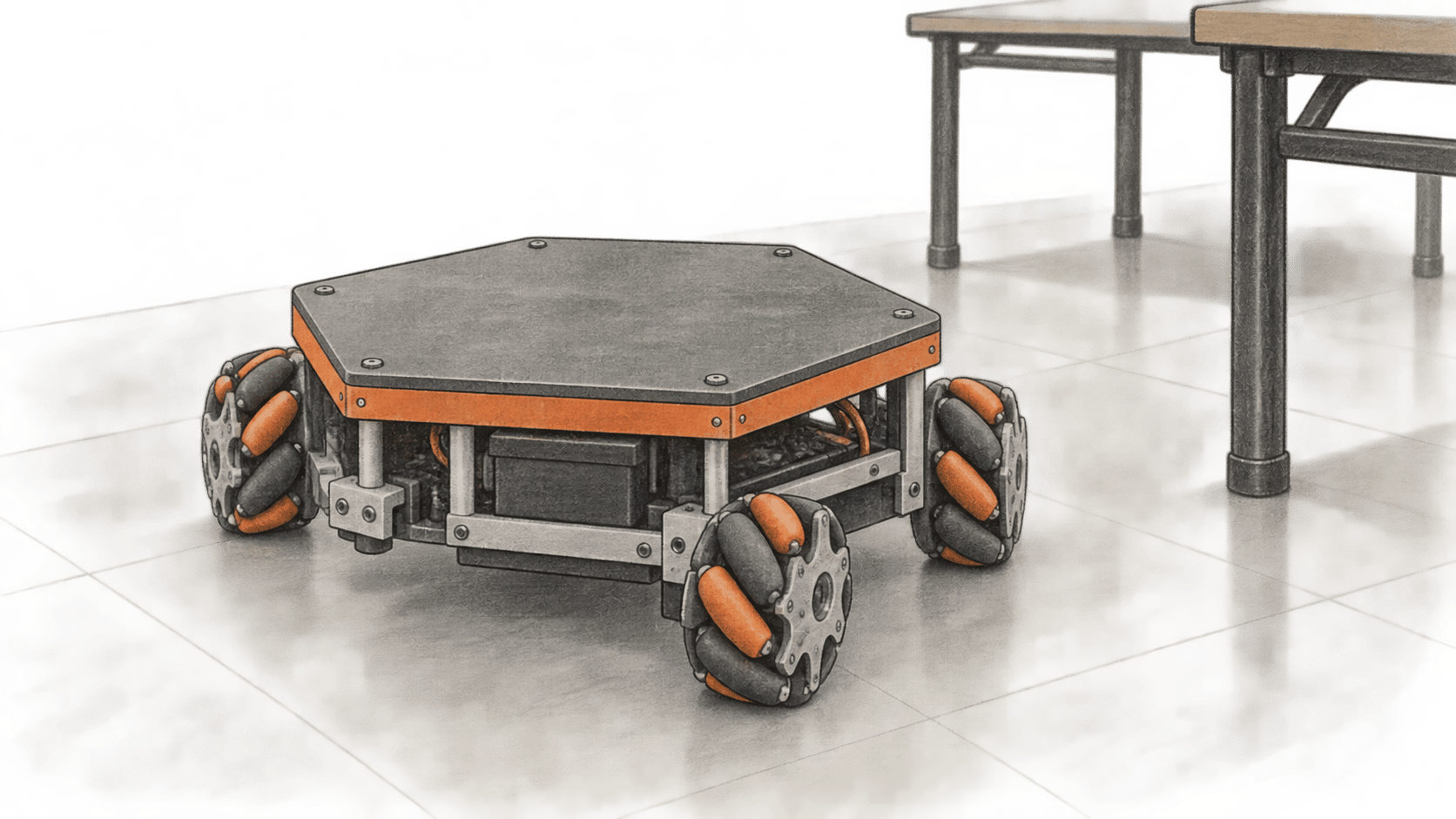
RoboMeshA is a hexagonal, omnidirectional mobile platform with a top work surface. Fernando Vidal Luna, an ITESO mechatronics student on the team, told IEEE's EPICS program that students connect directly through a browser. The account describes manual and sequential control modes, along with obstacle detection and avoidance using ultrasonic sensors. Faculty adviser Luis Fernando Luque-Vega said the two built units include a Raspberry Pi, mecanum-wheel drive, LiDAR, computer vision and AI-powered autonomous navigation. The roughly 15-person group includes engineering students, advisers and IEEE Guadalajara Section collaborators. IEEE's Robotics and Automation Society funded the project through EPICS in IEEE.
The older ITESO spring 2025 electronics report shows how this work grew. It documents a drive subsystem, motor feedback and remote commands through a React interface connected to Firebase. A separate 2025 interface report describes joystick and map-based route controls. Those reports establish an earlier prototype, rather than a new invention in September 2026. The EPICS account in July 2026 and Spectrum article in September describe a later, more complete classroom platform. Public material does not date the precise move from the 2025 Firebase arrangement to the later direct browser connection.
The AI label needs the same care. Moving on command, following a route and avoiding an obstacle with an ultrasonic distance sensor can be done through conventional control software. Luque-Vega's statement identifies computer vision and AI navigation as components of the later units, but the available accounts do not specify the vision model, training data, navigation algorithm or a classroom evaluation of those functions. ITESO's 2025 electronics report treated AI navigation and advanced sensing as future additions. Its limits should not be projected onto the later units, yet the later AI claim remains a team description rather than an independently documented performance result.
One reported workshop, two school partners
The EPICS account says the team held a hands-on STEM workshop at CETI Colomos. It names CETI Colomos and Prepa ITESO as school partners for classroom validation, without describing a completed workshop at both. The project team also presented a paper and poster at a May 2026 engineering congress; the congress program lists its RoboMeshA presentation. None of these records gives workshop participant counts, a comparison group, measured learning results, a purchase price or a count of schools using the robots routinely.
For a teacher considering this kind of equipment, the trial establishes that a working robot reached at least one school workshop. It leaves practical questions about repeated classroom use: how reliably the connection works, what a teacher must prepare, how often the hardware needs repair and whether pupils can meaningfully inspect or program the AI functions. The team's stated plan to build two more platforms and test at other institutions would create opportunities to answer those questions. It remains a plan.
Sources & further reading
- EPICS in IEEE, July 1, 2026: interviews student team members and advisers about the two units, controls, sensors, funding, CETI Colomos workshop and school partnerships. EPICS funds the project, so its account is a participant source.
- IEEE Spectrum, September 24, 2026: later report by Ashley Moran on the same project and participants. Moran is the EPICS in IEEE program manager, so this is participant reporting. Its date is the report date, not the project's start or the workshop date.
- ITESO, spring 2025 electronics project record: institutional student report on the earlier drive, motor feedback and remote control implementation. Its full report lists AI navigation among future additions at that stage.
- ITESO, spring 2025 interface project record: describes the earlier joystick and map-based controls; it does not evaluate later classroom learning.
- Third SUJ Engineering Congress program, May 2026: lists the RoboMeshA presentation and its named presenters. A program listing does not independently validate the robot's performance.