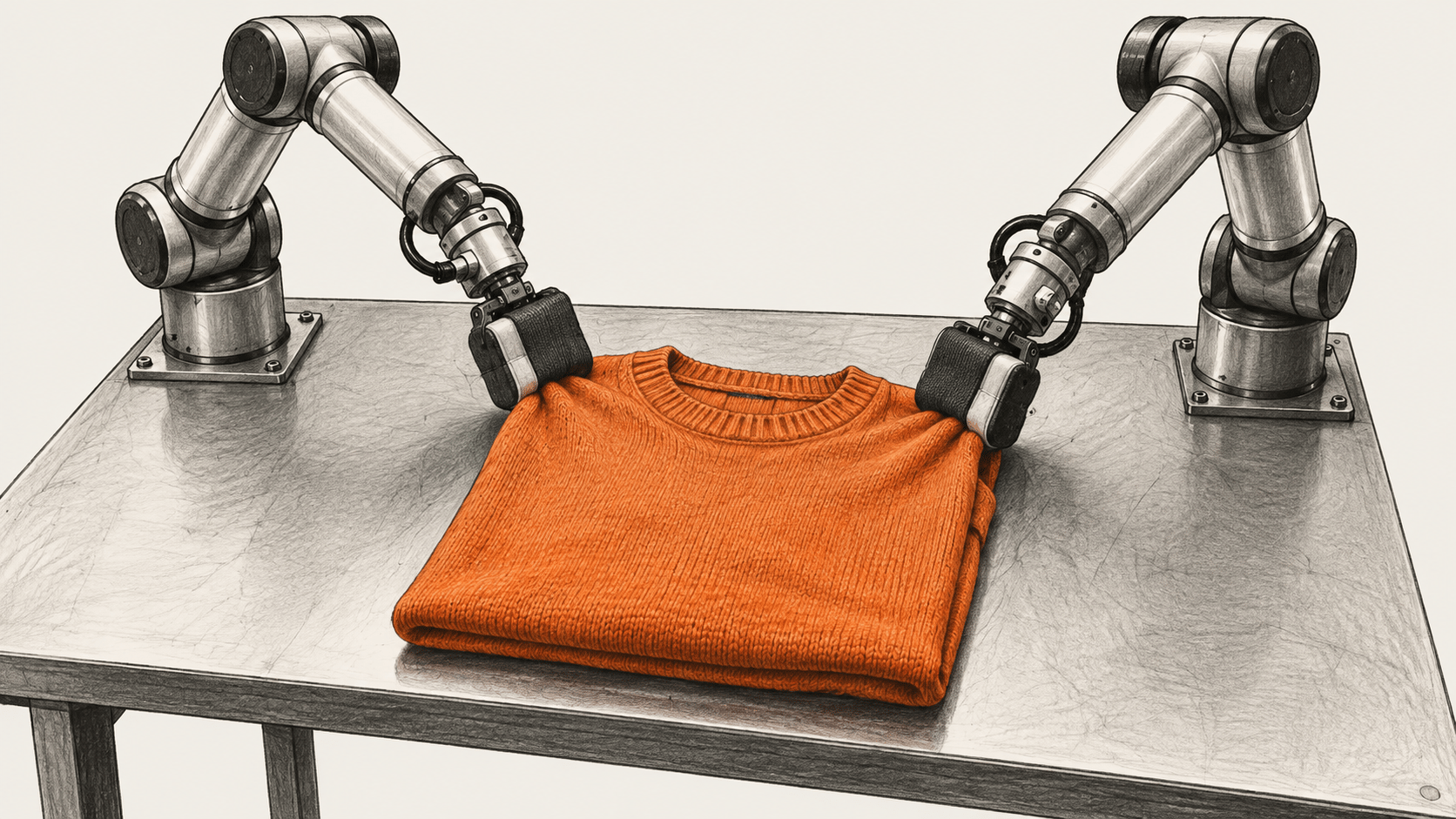
CEVA Logistics said on October 7 that Sereact's robots had entered live fashion-returns operations for Zalando in Greven, Germany, and Świebodzin, Poland. Sereact and Teradyne Robotics announced a formal partnership on October 21 and showed a separate returns demo at NVIDIA GTC Berlin.
The big change
- What changed: CEVA reports dual-arm returns robots working at two facilities.
- Why it matters: Buyers need accepted-sort and human-intervention figures across varied goods.
- What to watch: The proposed European expansion makes output, error and uptime figures important.
What the robots reportedly do
CEVA says the robots grasp, identify and sort varied fashion returns without per-item training. That broader ability lacks independent verification here.
Under a Robotics-as-a-Service arrangement, people supervise stations, handle exceptions and check quality, CEVA says. It gives no staffing count or intervention rate.
The October 21 announcement says hundreds of Universal Robots arms have shipped in dual-arm systems to European customer sites. That is an arm count, not a site count. The GTC demo used two UR12e-1300 arms; the announcement does not establish that model as the hardware at either Zalando site or measure a warehouse shift.
The measure a buyer still needs
CEVA's release gives no site figures for throughput, errors or uptime.
Buyers need accepted-sort counts, intervention rates and quality across the item mix.