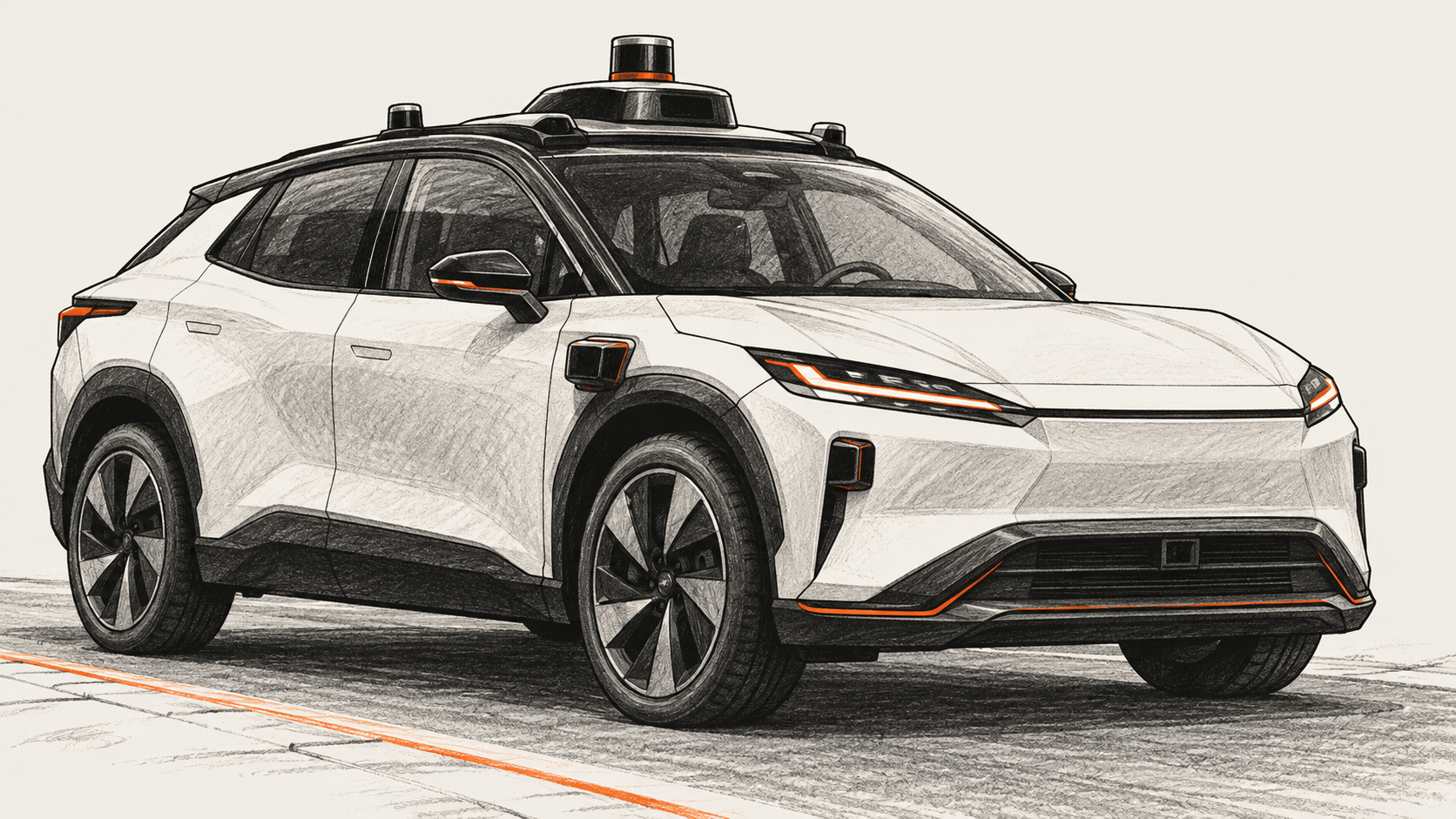
On October 30, Toyota and Waymo announced a 2027 Japanese test of autonomous bZ4X vehicles, with later UK deployment planned.
The big change
- An autonomous ride service needs vehicles that can be produced and maintained as well as software that can navigate. Manufacturing and road validation solve different problems.
- Tokyo riders cannot yet book the planned service. The launch depends on approvals and validation, not simply a fleet announcement.
- Britain’s rules distinguish driverless pilots from supervised trials. Passenger service has its own permit requirements, adding a further step beyond vehicle development.
A vehicle platform for a driving system
Toyota plans to build the vehicles and integrate Waymo hardware at its Takaoka plant.
The division of work matters because adding an automated driver to a car is more than installing an app. A fleet operator needs vehicles with the hardware, power and physical access arrangements appropriate for the service, and needs to support them after they enter operation. The announcement gives no fleet cost, volume or operating performance.
Tokyo has its own launch conditions
A separate Tokyo initiative involves local partners. In September, Waymo said it, Nihon Kotsu and GO were preparing an unmanned Tokyo ride-hailing service for 2027. Waymo said vehicles had been driving autonomously under trained crew supervision and that its planned public service depended on national and local regulatory approval and completion of validation. It proposed eventually expanding to around 100 vehicles; the announcement does not identify them as the bZ4X fleet.
For prospective riders, the distinction is practical. A supervised vehicle gathering experience and an available commercial ride are different stages: the first can help evaluate local operation, while the second requires a permitted service that people can actually book. The bZ4X announcement gives no passenger-service date. BIG CHANGE has not independently tested the vehicles or verified their performance on Japanese roads.
What a UK expansion would require
The UK plan has no launch date. British government pilot guidance distinguishes operations without a safety driver from trials with one. It describes vehicle approval and registration requirements, and a separate permit route when a pilot carries passengers. This guidance does not establish approval for the Toyota–Waymo fleet.
For cities and passengers, the useful questions now are where validation happens, what operating boundaries are approved, and when a ride can actually be booked.