# Britain's information defence centre needs a clear chain of command
> Britain proposes a centre for hostile-state information attacks, though NSOIT already covers similar risks and Parliament has questioned ownership and scrutiny.
By BIGCHANGE.AI Editorial
Published: 2026-09-23T06:54:33.153Z
Updated: 2026-09-23T09:26:46.296Z
Canonical: https://bigchange.ai/blog/uk-information-defence-centre-accountability
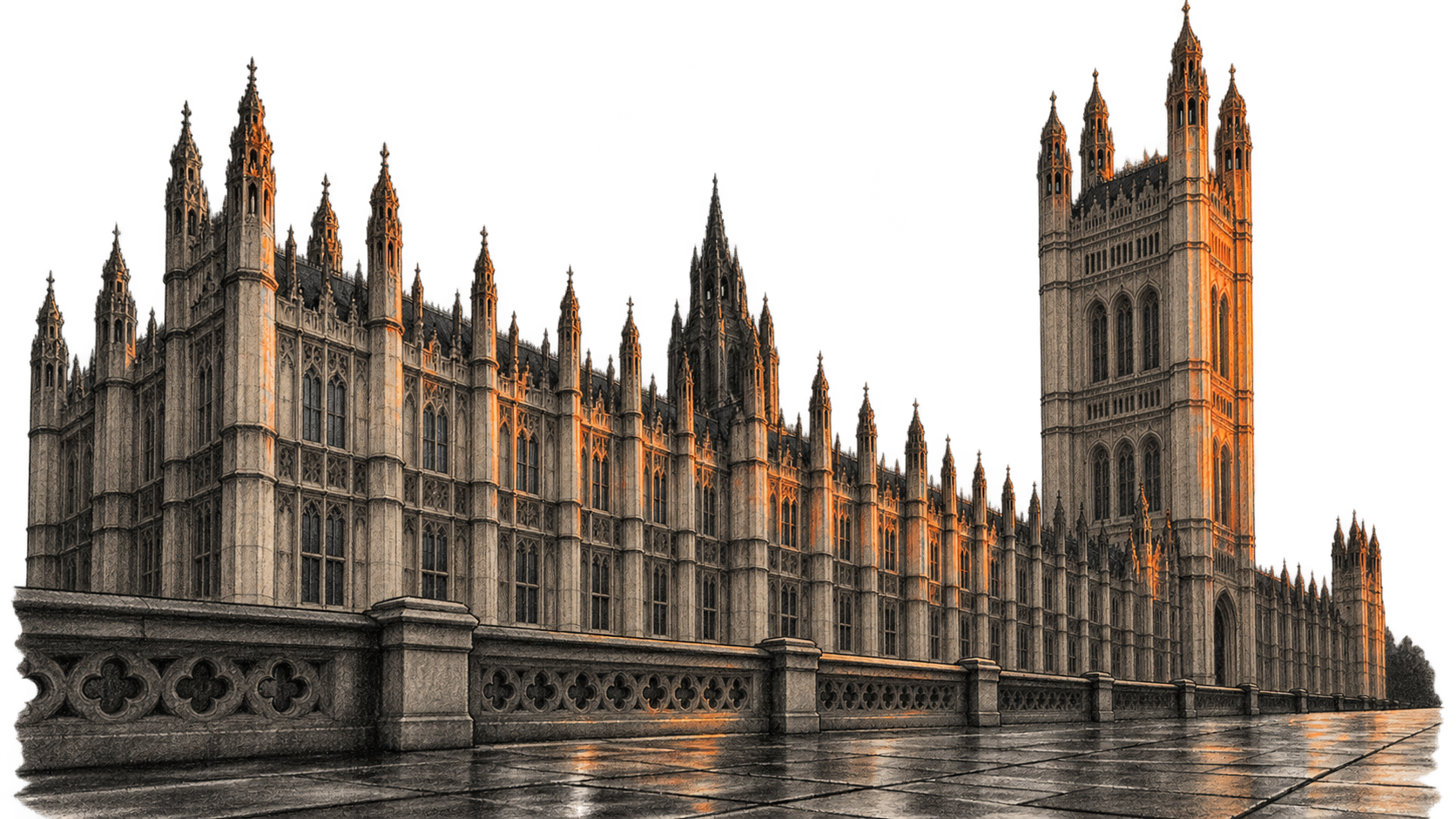
AI-generated conceptual illustration by BIG CHANGE. Conceptual parliamentary setting for the unresolved accountability questions around Britain's proposed information-defence centre.
Britain will begin designing a National Centre for Information Defence to detect, attribute and disrupt hostile-state information attacks. Prime Minister Andy Burnham announced the work in a [September 22 UN speech](https://www.gov.uk/government/speeches/pm-speech-at-unga-22-september-2026), published the next morning, and said AI would multiply the threat.
## The big change
- **What changed:** Security chiefs have been instructed to begin work on a centre with detection, attribution and disruption in its remit. The speech does not establish an operating body or new powers.
- **Why it matters:** Identifying synthetic or misleading material does not identify who directed it. A state attribution can shape government and platform responses, making evidence, ownership and scrutiny part of the public-interest question.
- **What to watch:** Parliament questioned divided responsibility. The implementation plan should name a lead, define the centre's relationship with NSOIT and state its oversight.
## Britain already has an information-response team
The proposal sits beside a system that already assigns similar work to government bodies.
In a [June 2025 parliamentary answer](https://questions-statements.parliament.uk/written-questions/detail/2025-05-19/HL7610/), the Department for Science, Innovation and Technology said the National Security Online Information Team, or NSOIT, analyses online narratives and trends when ministers agree misinformation presents a high risk to UK audiences. The answer explicitly includes foreign-state threats, elections, AI and deepfakes within its remit.
NSOIT's [privacy notice](https://www.gov.uk/government/publications/national-security-online-information-team-privacy-notice/national-security-online-information-team-privacy-notice) gives a more concrete picture. The team sits inside the science and technology department, analyses publicly available information and may share aggregated findings across government. It can send platforms links to content of concern or broader trends; the platform decides whether to act under its own policies. The notice also says NSOIT does not review private online information and does not use personal data for automated decisions or profiling.
The speech does not specify whether NSOIT will move into the centre, report to it or remain separate.
## Parliament had already asked who owns the response
The chain-of-command problem predates this announcement. In 2025, the House of Commons Science, Innovation and Technology Committee said responsibility for tracking foreign disinformation appeared divided. It asked the government to identify an owner, consolidate the work in a body such as NSOIT or establish a clear command structure.
The [government's published response](https://publications.parliament.uk/pa/cm5901/cmselect/cmsctech/1397/report.html) defended a cross-government approach, with NSOIT leading the operational response for UK audiences. The committee also proposed statutory status for NSOIT and scrutiny by the Intelligence and Security Committee. The reply cited ministerial oversight and existing parliamentary and information-rights channels, without committing to that arrangement.
## Sources
- [Prime Minister's speech at the UN General Assembly](https://www.gov.uk/government/speeches/pm-speech-at-unga-22-september-2026) — Official September 22 speech, published September 23. It announces work on the centre and its three functions. It does not establish operation, powers or implementation.
- [UK Parliament: NSOIT monitoring remit](https://questions-statements.parliament.uk/written-questions/detail/2025-05-19/HL7610/) — Ministerial answer defining NSOIT's existing analysis remit, including foreign-state threats, elections, AI and deepfakes. It supports the before-state comparison rather than evidence of effectiveness.
- [House of Commons: Social media, misinformation and harmful algorithms, government response](https://publications.parliament.uk/pa/cm5901/cmselect/cmsctech/1397/report.html) — Committee recommendations and government replies documenting the ownership dispute, cross-government structure and competing scrutiny models.
- [National Security Online Information Team privacy notice](https://www.gov.uk/government/publications/national-security-online-information-team-privacy-notice/national-security-online-information-team-privacy-notice) — Current NSOIT notice describing its DSIT location, analysis of public online material, cross-government sharing, limited platform referrals and personal-data boundaries. First published April 16, 2024 and last updated October 31, 2025.
The BIG CHANGE newsletter
The big picture. At your pace.
Recent stories on AI and robotics, the shifts worth watching and practical ideas to use. Choose a daily briefing, weekly digest or monthly perspective.
Next scheduled send (UTC): . Your first edition arrives at the next scheduled send after you confirm.
Your privacy, your choice.
Necessary storage supports site security and remembers your choices. Optional Google Analytics stays off until you allow it. You can read every story with necessary storage only. Privacy details