AI-designed CAR-T binders showed cell activity; four of ten killed targets specifically
A study screened 12,000 designed CD20 binders in CAR-T cells. It found 707 pooled growth hits; four of ten individually tested showed significant specific target-cell killing.
The big change
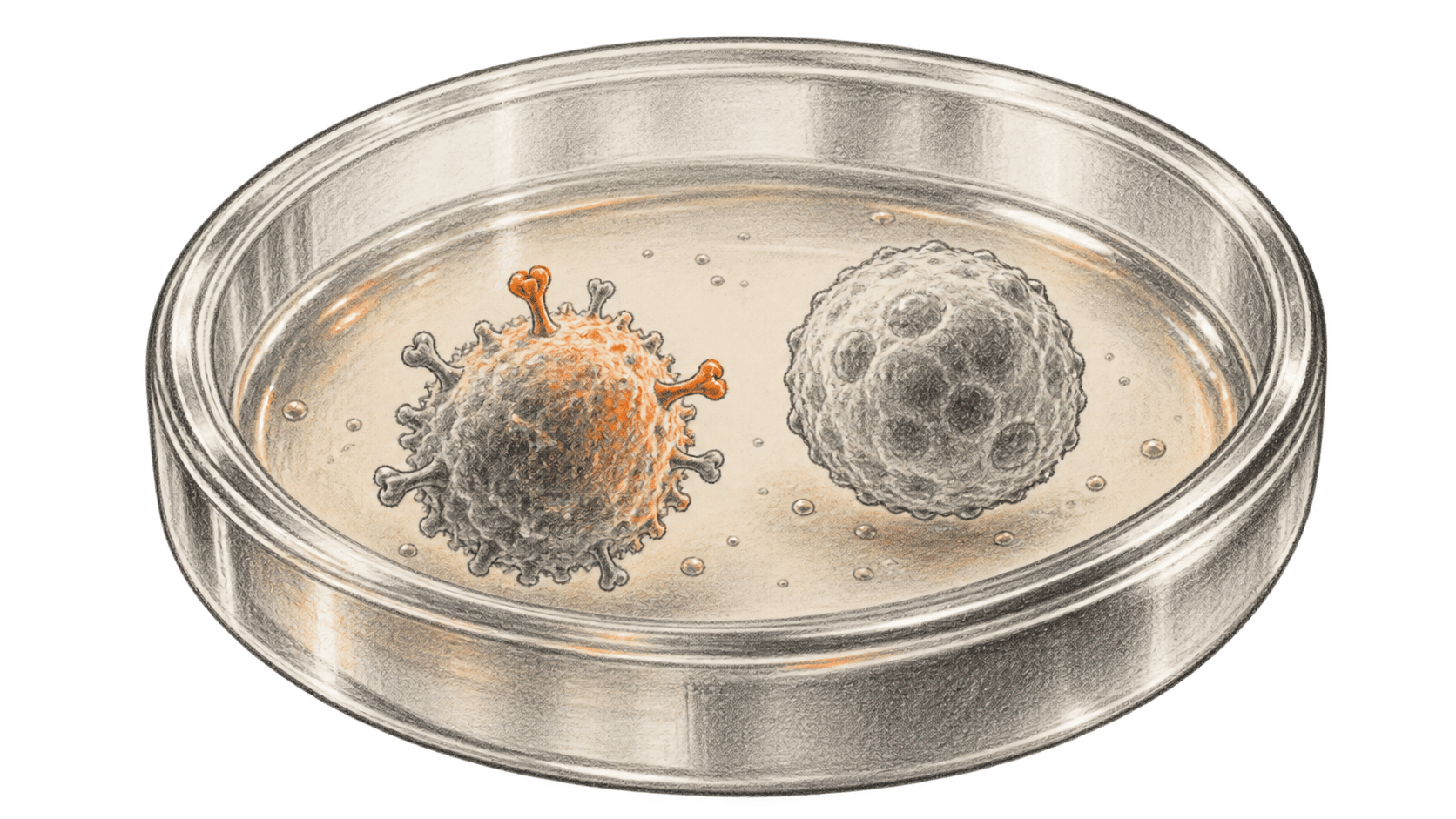
What changed: A competition evaluated thousands of computationally designed CD20 binders as working parts of CARs in primary human T cells, then checked ten leading designs in individual functional assays.
How: Teams combined varied generative, sequence-design, structure-prediction and selection methods. The researchers inserted the submitted sequences into one CAR scaffold, screened T-cell growth in a pool and measured several functions of selected constructs separately.
Why it matters: The experiment tests a harder question than isolated binding: whether a designed recognition domain can be expressed by a T cell and help it respond to a target. The drop from pooled hits to specific killing shows why each assay must be read on its own terms.