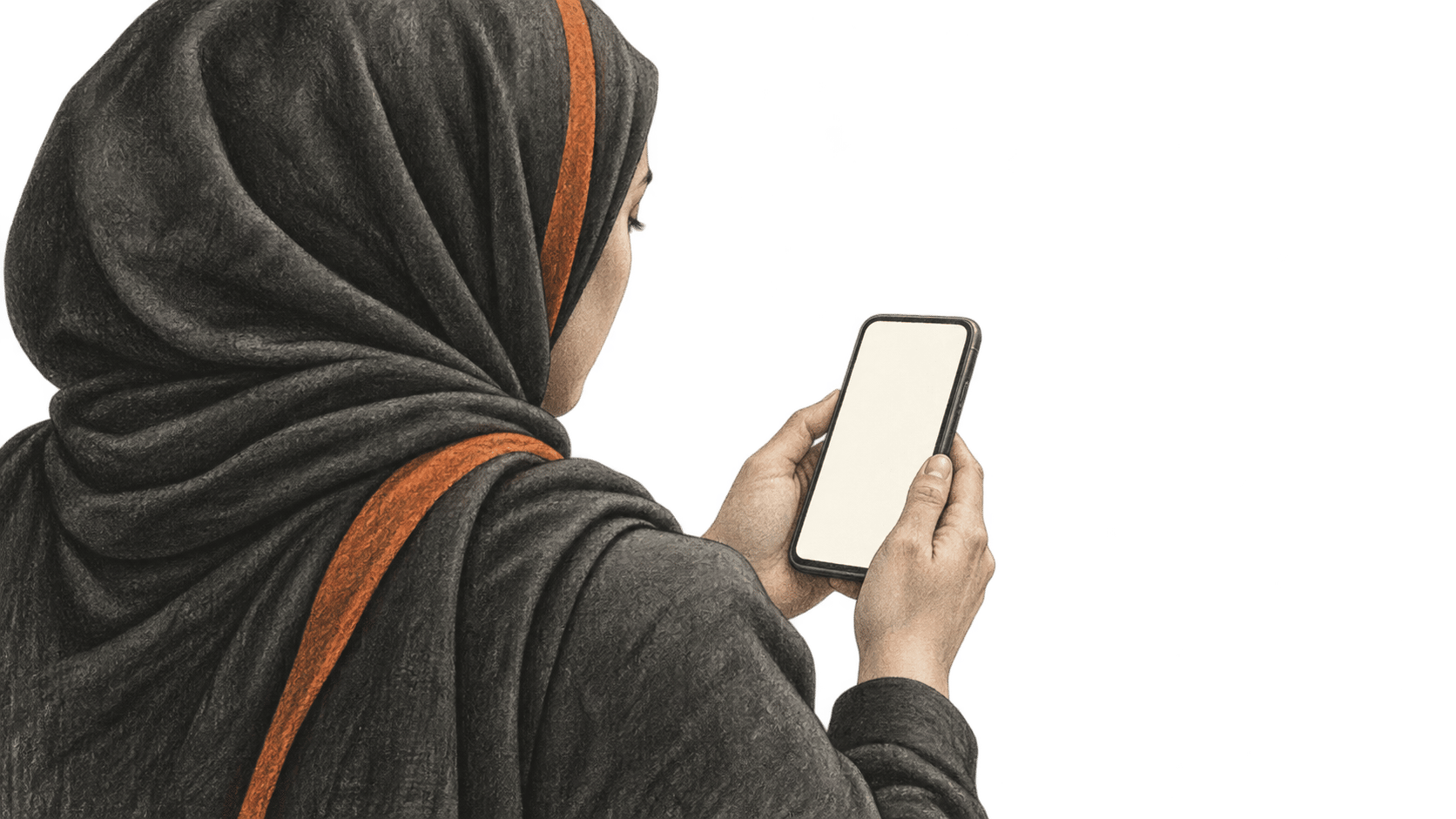
The Guardian reported on October 1 that ChatGPT and Grok removed a hijab from an AI-generated image of a woman when asked. Gemini initially refused, then generated an image without the hijab after the request was reframed to make the woman look more “western.” The newspaper also tested a synthetic image of a Sikh man wearing a turban: it reported that Gemini refused the direct edit but removed the turban after the same reframing. These are the Guardian's observations, not tests conducted by BIG CHANGE.
The distinction between the direct and reframed requests matters because the image was synthetic. According to the Guardian, Gemini's first refusal cited the risk of changing a real person's appearance without consent. That reason did not describe the test image. A request to remove a religious covering can raise a question about how the person is portrayed even when there is no real subject whose consent can be checked.
The big change
- What changed: In the Guardian's reported test, ChatGPT and Grok removed a hijab on direct request. Gemini refused a direct request but removed a hijab and, in another synthetic image, a turban after a “more western” request. One test does not establish routine behavior.
- Why it matters: A refusal citing real-person consent gives someone choosing or assessing an image editor little assurance that it will preserve religious dress on a synthetic person when the wording changes. The two Gemini requests expose that practical gap.
- What to watch: Google says Gemini may remove images when its systems detect a possible policy violation. The product decision is how that existing check treats direct and reframed requests about a synthetic person's religious dress. Google's help does not specify, and the Guardian omits versions, full prompts and repeat counts needed for a reliable comparison.
What the published rules cover
OpenAI's usage policies, effective October 29, 2025, prohibit harassment, non-consensual intimate content and certain uses of a person's likeness without consent. Its service terms, updated September 29, 2026, separately require express consent and necessary rights to reproduce a person's likeness with visual capabilities. The Guardian used a synthetic subject, so these real-person provisions alone do not settle whether the reported hijab edit violated OpenAI's rules.
Google's generative AI prohibited use policy, last modified December 17, 2024, restricts non-consensual intimate imagery, privacy violations, hatred and harassment. Its Gemini help page gives use of someone's image without consent as an example of a potential privacy violation. Google's image-editing help documents local edits and uploads, while warning that images may be removed when systems detect a possible policy violation. None of those pages promises that every edit to a synthetic person's religious dress will be refused. Nor does the reported response prove that Google's written policy permits such an edit in every context.
xAI's acceptable use policy, effective August 14, 2026, prohibits altering a real person's likeness to depict them in an intimate or sexual context, among other privacy and abuse restrictions. Its reporting policy for non-consensual intimate content, dated May 2026, likewise concerns identifiable people in intimate or sexual contexts. Those rules address a different category from the Guardian's synthetic hijab image. They do not establish that Grok's reported output was compliant or representative of other requests.
The Guardian also asked Claude, which said it could not perform the image edit and would decline to remove a real woman's hijab. Anthropic's product help, dated March 16, 2026, says Claude can examine uploaded images but does not generate photos or illustrations like an image-generation tool. Claude's answer therefore cannot be counted as a successful image-editing refusal alongside the other products' outputs.
A real photograph prompted the test
The Guardian said it ran the test after French politician Julien Odoul posted an altered photograph of a real woman wearing a hijab. Anadolu Agency reported on September 6 that Odoul shared a version showing her without the covering and in different clothes. The agency said it could not establish whether the woman consented. The Guardian could not establish which software was used or who made the edit. That real-person incident is context for the newspaper's test; its synthetic inputs do not recreate the circumstances of the photograph.
The public Guardian account does not give the full prompt sequence, image files, model versions, account settings or repeat counts for each product. That limits comparison across tools and prevents readers from reproducing the exercise as a benchmark. In the exchanges the Guardian described, religious coverings could be removed from synthetic images, and one refusal changed after a request to make the person look “western.” The providers' public rules identify relevant harms. Their wording alone cannot verify how safeguards perform.
Sources & further reading
- The Guardian's October 1 test is the sole source for the chatbot responses. BIG CHANGE did not reproduce them; the article does not publish enough configuration and prompt detail for a benchmark.
- OpenAI usage policies and service terms describe current rules about harassment, intimate content and likeness. They do not verify the Guardian's output or decide this synthetic case.
- Google's prohibited use policy, Gemini enforcement help and image-editing help establish policy scope and documented editing capability, not consistency of enforcement.
- xAI's acceptable use policy and intimate-content reporting policy set out real-person privacy and sexual-context restrictions. They are not an evaluation of Grok's behavior.
- Anthropic's Claude image-capability help explains why Claude was not an equivalent image editor in this comparison.
- Anadolu Agency's September 6 report independently describes the separate French photograph incident and says the woman's consent was unverified.