On November 18, 2026, the Global Electronics Association warned of shortages in printed circuit boards (PCBs), linking the problem to AI-server demand and more complex designs. These layered boards support and connect electronic components.
The big change
- The association says demand is shifting toward boards that use more layers and specialist inputs. Expanding a factory does not automatically supply the glass fabric, resin and copper foil required to keep it running.
- The order figures are regional and cumulative: North American bookings rose 56.1% through September 2026, while shipments grew 13.3%. They compare the year so far with the same period of 2025, not September alone.
- A technically capable factory is not necessarily an approved alternative for a particular board. NCAB’s sourcing guide shows how an advanced requirement can leave a buyer with only one qualified factory.
Why the materials matter
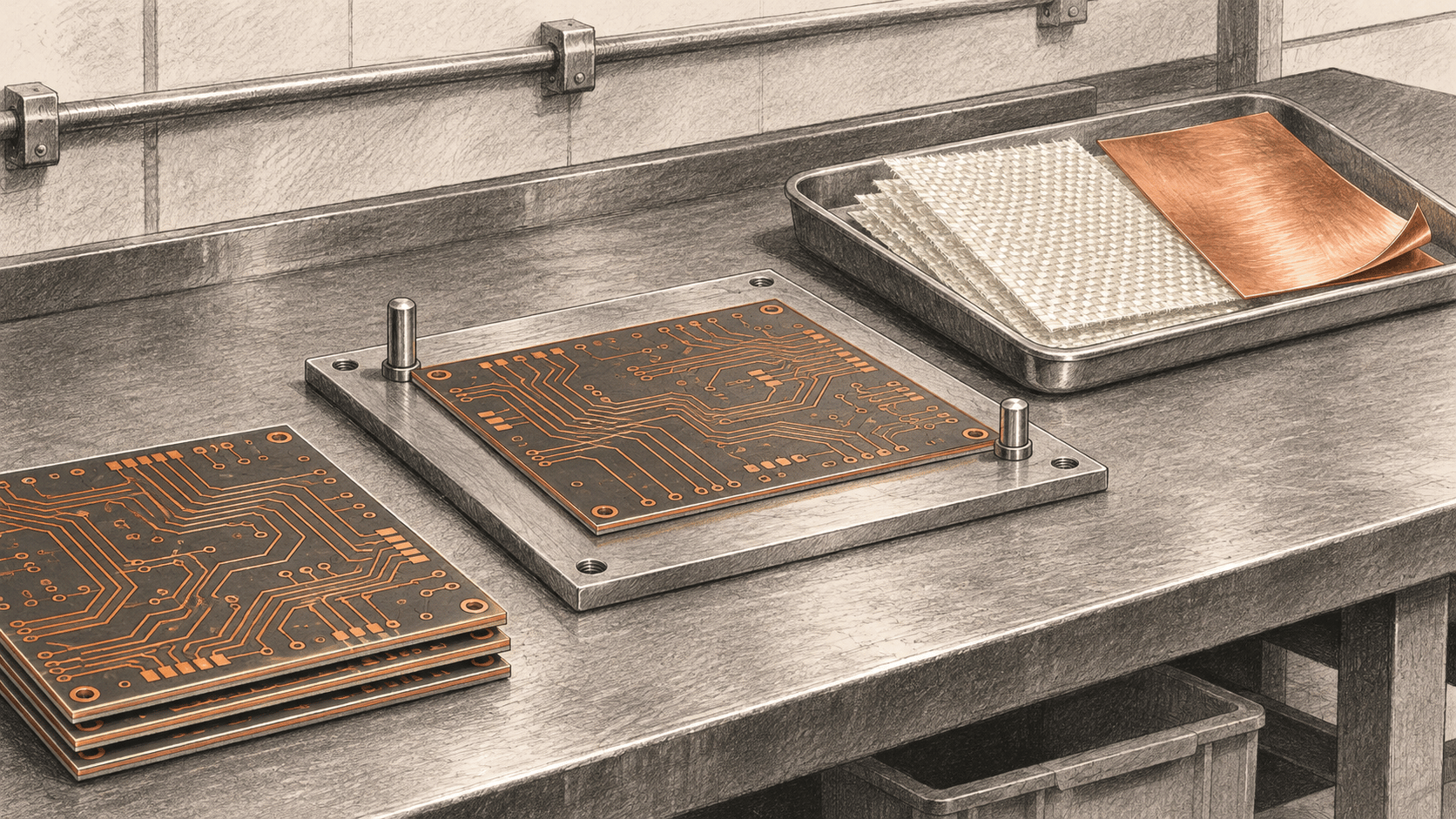
NCAB’s manufacturing guide shows copper circuits being formed on internal layers, which are bonded into a board before holes are drilled and plated to connect the layers. Electrical inspection follows. Those stages create connections across the stack.
In the association’s comparison, a typical PC board has about 12 layers, while AI-server designs are moving toward 40–60 or more. It reports supply difficulties beyond AI, including automotive and industrial production.
The material choice matters electrically. Panasonic’s MEGTRON8 documentation explains transmission loss: the electrical signal weakens as it travels along the board. Trace length, frequency and material properties all affect that loss.
Its material family combines resin, specialized glass cloth and low-profile copper foil for high-speed, high-layer-count boards. Smoother copper can reduce loss, but it also weakens mechanical adhesion to resin; the resin formulation has to address that trade-off. An apparently similar replacement sheet therefore cannot be judged by appearance alone.
What the order figures measure
The September statistical release, published October 26, comes from an association-described representative sample of rigid and flexible circuit manufacturers selling in the United States and Canada. It does not measure worldwide production.
Its 1.77 book-to-bill ratio divides the value of orders booked over three months by the value of sales billed in the same period. That indicates incoming order value above billed sales, not 1.77 physical boards ordered for every board made.
Together, the figures show orders and shipments growing at different rates. They do not identify AI’s share of those orders, explain every supplier’s delay or set a shipment date for an individual customer.
Qualified sources are not interchangeable capacity
NCAB’s capability guide makes the sourcing issue concrete. It calls an individual parameter standard when several approved sources can supply it. An advanced requirement can have fewer options, sometimes a single partner factory. Materials also follow its documented qualification procedure.
Those are individual parameters, not a promise that every combination of layer count, material and features is available at multiple factories.
Expansion is a plan, not a delivery date
TTM offered a named capacity response on October 12: a $400 million plan for expansion at four existing Chinese facilities and its Penang plant in Malaysia. It proposes to fit out and optimize existing space, rather than wait for entirely new plants.
The company says customer discussions indicate expected growth. The announcement does not establish that the investment has already produced finished boards, that upstream materials have been secured or that a purchaser has a confirmed allocation slot.
Reusing an existing factory may shorten construction. A customer still needs qualified boards that can actually be delivered.
The association expects constraints through at least the first half of 2027 and considers meaningful relief unlikely before mid-2028. That is an industry assessment, not a promise that a particular part will arrive in 2028.