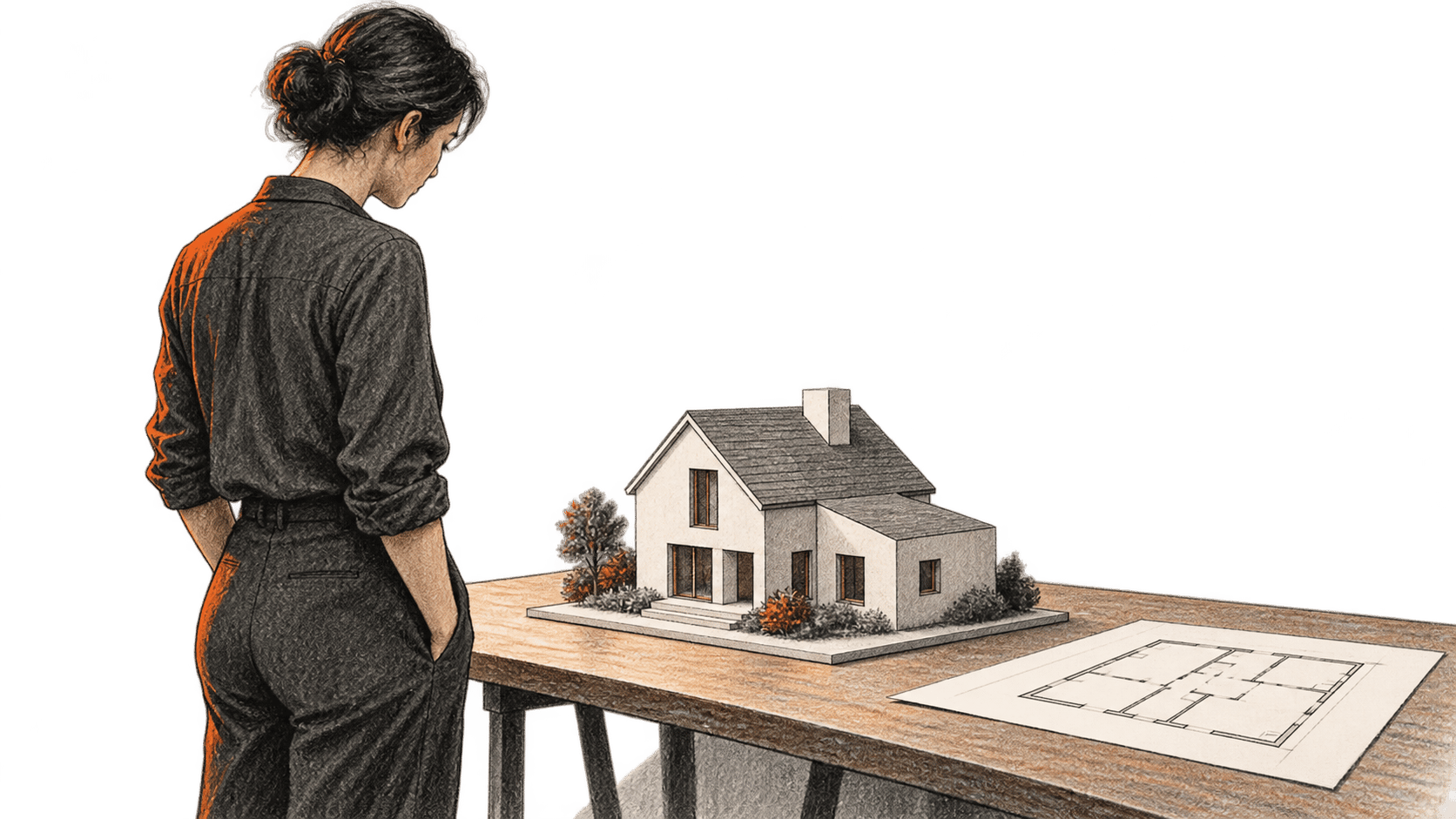
Dream announced $17 million in seed funding on October 29 for its building-design AI. It says licensed architects review and stamp its documents.
The big change
- Dream describes design documents entering professional review.
- NCARB says AI does not replace professional judgment and that licensed practitioners retain responsibility for technical submissions. Its position is guidance, not certification of Dream’s work.
- Company-reported projects do not establish reliability or code compliance. Local requirements remain important for each project.
From a building model to drawings
Dream’s technology description says its models work through layout and spatial constraints, then structural and mechanical systems. It says training data covers more than 100 million square feet of permitted, constructed US buildings.
Dream says its models produce designs and licensed architects review and stamp the documents. It describes the architect-of-record role as taking responsibility for design and construction documents used for permitting and construction.
Dream says the firm served as architect of record on 10 California and Texas projects, including one completed Austin home. BIG CHANGE did not inspect the projects, files or model.
Professional responsibility remains
The National Council of Architectural Registration Boards says AI is a tool rather than a replacement for professional judgment and that the practitioner must remain in responsible control. Its model law describes responsible control as authority and ability to oversee and integrate design decisions.
The model is a resource for jurisdictions to adapt, not a uniform law. Requirements depend on the project and governing jurisdiction. Neither NCARB document evaluates Dream’s system or establishes that its drawings meet code; permitting and engineering review remain project-specific matters.