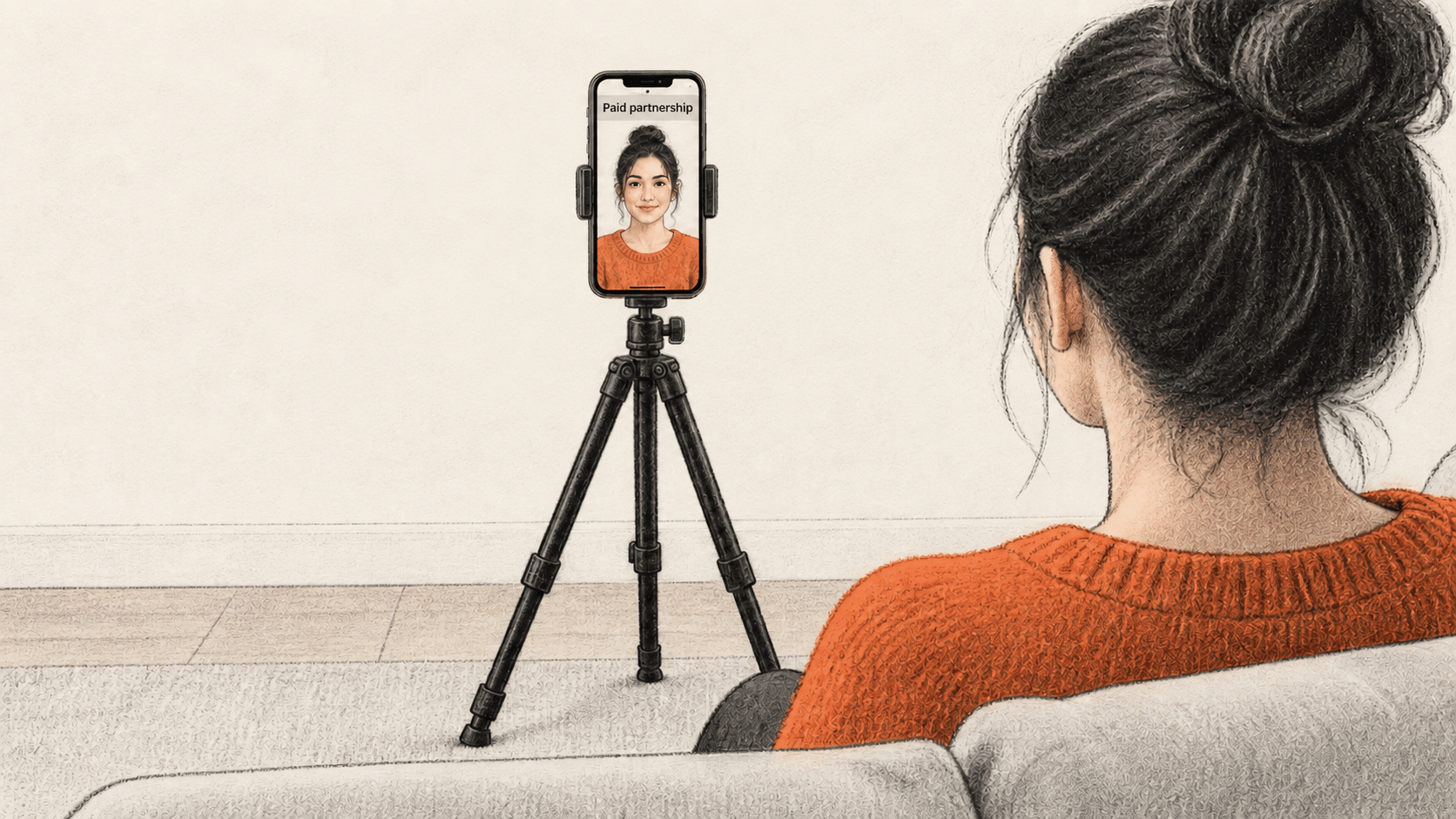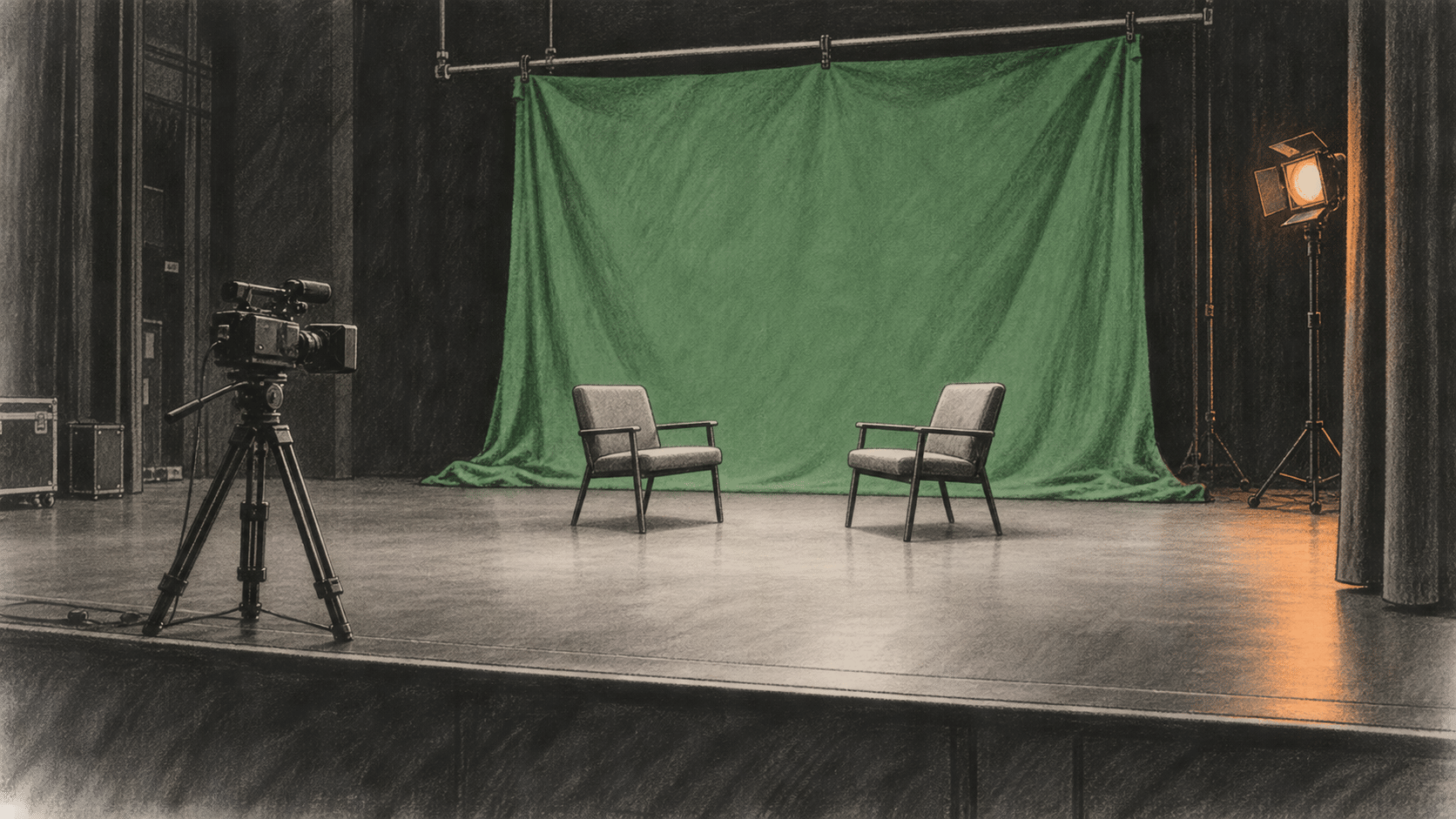
In Deepfake, a politician faces a journalist in a fictional television interview. The audience can see the performers in a green screen studio while a live video image presents another version of the encounter. Jessica Wright and Morgann Runacre-Temple, who work as Jess & Morgs, have built a dance piece around the gap between those views. DanceEast’s production account describes real time green screen effects and performers in chroma key suits; Sadler’s Wells describes the interview as the work’s central situation.
The show is due at DanceEast in Ipswich on September 25 and Sadler’s Wells East in London from October 1 to 3. Its title invokes AI deepfakes, but its documented stage effects use live filming and compositing. That choice lets the audience watch an image being constructed as it watches the finished image.
The big change
- What changed: Jess & Morgs have made the production of a political image part of the performance. DanceEast says the work grew from experiments with its green screen facilities, where the artists found that similar images could tell different stories.
- Why it matters: A viewer of a circulating clip usually receives the frame selected for them. Here, the visible performers and camera work give an audience another view of how that frame is made. The performance gives the artists’ question about political images a physical form.
- False denials in experiments: In five US survey experiments, politicians’ false claims of misinformation raised support more consistently after text reports than after video evidence. The scheduled performances put the artists’ separate concern before audiences; no response to this show has been measured.
The image and its construction share the stage
Wright and Runacre-Temple say the work began when DanceEast invited them to try its green screen facilities. Their account published by DanceEast describes short sequences in which related images suggested different stories. The artists then worked with writer and dramaturg Jeff James on a television interview as the setting. DanceEast credits video designer Dan Light alongside the choreographers and other members of the creative team.
In a September 24 rehearsal interview for the Guardian, the artists described four cameras filming the interview live, with background footage incorporated into the screen image. Dancers dressed for the green screen help manipulate what appears there. Another interview published by Melodrama on September 7 reports Runacre-Temple’s emphasis on letting viewers see both the work of making the image and its result.
A conventional broadcast presents a selected shot; Deepfake places the people making the shot in the same room as its viewers. Choreography gives those people visible work to do. The interview’s political contest can therefore be read through the physical contest over what the camera includes.
The title refers to AI; the stage effects use green screen
DanceEast’s description discusses AI as part of the subject of the piece, then specifies real time green screen effects and live dance as the means used onstage. The Guardian interview likewise calls the green screen technology older and comparatively simple beside contemporary AI deepfakes. The production listings do not document generative AI creating the live screen image.
A green screen openly shows how one image can omit a person or replace a setting. It gives the audience a physical way to examine framing and editing. The artists’ choice also keeps the dancers’ labor central: DanceEast says they developed the effects by working with bodies in space.
The political fear is broader than the evidence
Runacre-Temple told the Guardian that convincing deepfakes could cause people to disbelieve true images as well as believe false ones. The fictional politician in the piece, according to that interview, can exploit a claim that an image is fake. This is the artists’ concern and dramatic premise. The production has not supplied evidence that its audience changes its beliefs, and the premise does not establish a general effect of deepfakes on public trust.
There is relevant, more limited evidence. In five survey experiments with more than 15,000 US adults, Kaylyn Jackson Schiff, Daniel S. Schiff and Natália S. Bueno tested hypothetical politician responses to reports of real scandals. False claims that a story was misinformation increased support for politicians when the scandal was reported in text. The claims were largely ineffective against video evidence, and the researchers did not find a general reduction in trust in media. Their results leave room for particular exceptions and do not test this dance production.
The study brings a limit to the political premise onstage. A politician may try to challenge a recording’s authenticity; the success of that challenge depends on the evidence and the situation. Jess & Morgs make the production of an apparently authoritative image visible. Whether a particular video is genuine still requires evidence about its source and history beyond how convincing it looks.
Performance dates
DanceEast lists one performance for Friday, September 25 at 7:30 p.m. in Ipswich. Sadler’s Wells East lists performances on October 1, 2 and 3 at 7:30 p.m. in London. Both venues describe a work of about one hour. This account is based on production descriptions and pre-opening interviews; it is not a review of a completed performance.