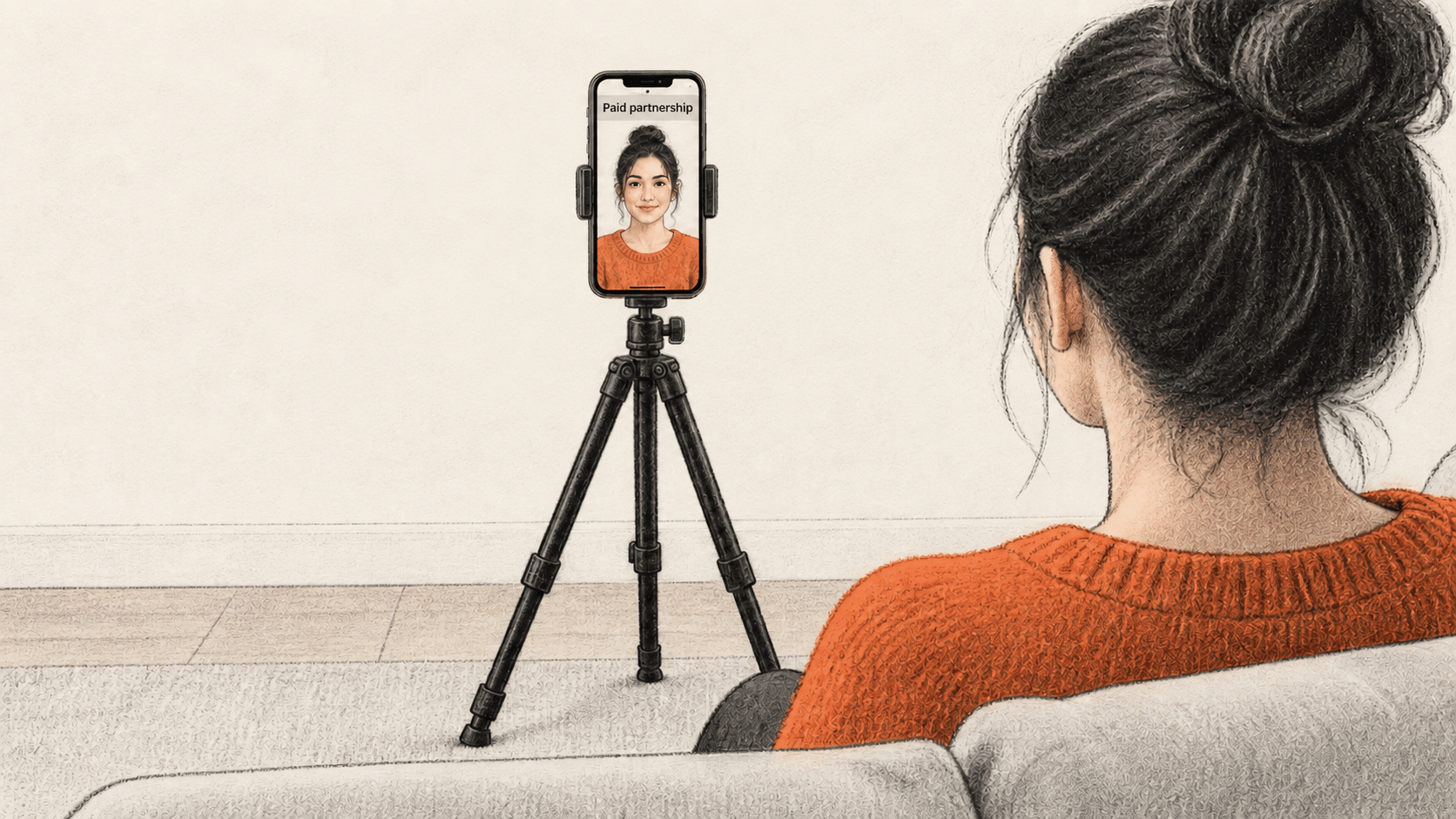
Zelda Williams is again correcting a story someone else has made her father appear to tell. In a September 21 statement on X, she said a supposed private video of Robin Williams discussing conspiracies was AI-generated. She described its voice as unconvincing and objected to using her father to make someone else's claims persuasive. Williams's statement.
The Robin Williams AI videos controversy exposes a problem that extends beyond whether a synthetic face looks convincing. A recognizable person can give an invented statement an apparent history, emotional significance and credibility. The person depicted supplies the reputation; someone else supplies the words.
For families, creators and audiences, the question is who takes responsibility for separating that invention from the record. Our view is that people who publish synthetic portrayals should carry that responsibility before circulation. Relatives should not become the default fact-checking service for a dead person's manufactured statements.
A new statement, and a familiar burden
The current episode should be distinguished from Zelda's October 2025 Instagram appeal asking people to stop sending her AI videos of her father. Variety's September report also notes that she and her brothers revived his Instagram account in August to counter misuse of his voice and likeness. These are separate events, even though all concern control over his public memory. Variety's chronology.
We have read her statement and checked its date. We have not conducted a forensic examination of the disputed video, established its creator or identified the tool used to make it. Zelda's identification of the clip as AI is attributed to her; the surrounding analysis does not depend on guessing a vendor.
Her response makes the immediate burden visible. Someone produces a clip, others bring it to a relative, and the relative feels compelled to correct it. Even an unsuccessful imitation can create that work. Believability and the cost of having to respond are different things.
Calling a clip private adds another complication. It invites viewers to interpret the absence of a public record as evidence of privileged access. A mundane lack of sourcing can acquire the appeal of a revelation. That is our reading of the framing described in the report, rather than evidence that we know how every viewer interpreted this particular video.
The borrowed credibility matters more than perfect realism
A fabricated video can combine an old photograph, a recognizable voice and a claim the depicted person never made. The result invites a jump from recognition to attribution: I know that face, so perhaps those really were his words.
The risk does not require us to claim that deepfakes possess an unprecedented power to manipulate everyone. A 2023 experiment published in PLOS ONE presented 436 participants with fictitious movie remakes, using deepfake clips or written descriptions. Participants reported false memories, but the videos were no more effective than text at producing them. The study concerns movie memories under experimental conditions, not the Williams clip or the entire social-media environment. The original study.
That finding supports a more useful caution. Plausible framing and an audience's expectations deserve attention alongside visual quality. A post can mislead through its caption or claimed source even when its technical execution is poor. Conversely, polished synthetic imagery can be part of clearly disclosed fiction.
For a fan, familiarity should be a reason to look for the original interview or recording. It cannot substitute for one. A new statement attributed to a public figure needs a traceable source, particularly when the account circulating it presents an unexplained private recording as evidence.
Consent includes the person who receives the simulation
The person commissioning a recreation is only one of the people affected by it. Someone may possess recordings without knowing what the subject would have wanted. A relative may welcome an archival photograph while rejecting an animation that makes the person say new things. Those preferences can differ within a family.
Research on posthumous AI offers a helpful distinction. In a 2024 Philosophy & Technology paper, Tomasz Hollanek and Katarzyna Nowaczyk-Basińska distinguish the person whose data supplies a recreation, the person who holds that data, and the person expected to interact with the result. They recommend consent from both the represented person and the intended participant. Their method uses speculative design scenarios to examine ethical problems; it does not measure clinical outcomes or diagnose anyone's grief. The research paper.
Applied to sharing behavior, the principle is straightforward: a sender's affectionate intention does not establish that the recipient wants the experience. Asking before sending a synthetic recreation respects a choice that a surprise message removes.
An AI disclosure cannot settle every objection. A relative may understand perfectly well that a clip is artificial and still object to the portrayal, the words attached to it or being repeatedly asked to watch. Knowing how it was made does not mean wanting to see it.
Authorized creative work is a different proposition
There are constructive uses for synthetic performance when people choose the arrangement and define its limits. A performer might license a voice for narration, or a rights holder might authorize a clearly identified creative production. Audiences can then assess the work as a production with accountable authors, rather than mistake it for an unearthed recording.
ElevenLabs' current Iconic Marketplace describes such a request-and-approval model. Its FAQ says the talent or authorized rights holder evaluates each project; submitting a request does not guarantee approval. The individual agreement defines uses, territories and timeframes. That is the provider's description of its process, not our audit of every transaction. Nothing in this example suggests Robin Williams is available through that service. The marketplace's terms of participation.
Authorization by an estate and consent expressed during someone's lifetime should also be described accurately. They are different grounds for proceeding. Neither establishes that every relative will welcome every use, nor that the resulting words reflect what the deceased person believed.
The optimistic possibility is a creative practice with specific permission, disclosed authorship and understandable limits. It depends on a real ability to refuse. Treating a family's objection as an obstacle to be worked around would undermine that premise.

Labels help, but they do not grant permission
Platform rules already recognize some of these distinctions. YouTube allows people to request removal of realistic synthetic content that uniquely identifies them. Its review considers factors including disclosure, consent, public interest and parody. In cases involving someone who has died, it can consider requests from close family members or legal representatives after verification. A request does not guarantee removal. This is an example of an available process, not a claim that the Williams clip appeared on YouTube. YouTube's identity protections.
YouTube's impersonation policy separately addresses content that falsely implies a person owns or authorizes a channel, or endorses what it says. An AI label does not automatically make impersonation acceptable under that policy. Disclosure explains production; permission answers whether someone authorized the use of their identity. YouTube's impersonation policy.
Technical records can help with a different question. Content Credentials can record information about a file's creation and edits in a form designed to reveal tampering. C2PA's explanation makes clear that provenance alone cannot establish whether the depicted content is true. A record of who created a simulation is useful; it does not turn the simulation into a historical event. C2PA's explanation.
These tools work best when their purpose is visible. A disclosure identifies synthetic production. A permission process establishes an authorized use. An archive connects a recording to its historical source. One should not be presented as a substitute for the others.
Keep the correction attached to the claim
For publishers and platforms, the practical challenge is reducing the work pushed onto the people depicted and their families. A responsible process should make it easy to report a false attribution, preserve the complaint's context and communicate the outcome. Our proposal is to measure the response to a documented impersonation complaint, including repeat uploads, rather than count the existence of an AI label as a complete response.
Audiences have smaller but useful choices. Before sharing an alleged discovery, look for the original source and date. If those cannot be established, do not describe it as authentic footage. Where correction is warranted, share a reliable explanation without needlessly recirculating the misleading clip. Respect a relative's request not to receive synthetic portrayals.
There is room for creative experimentation and for preserving performances people actually gave. Both benefit from knowing who made a work and under what authority. The pessimistic alternative is an expanding supply of invented statements that families must individually disown, long after an upload has gained its audience.
The standard should remain understandable even as the technology improves: a recognizable voice is not evidence that someone spoke, and a recognizable face is not permission to speak for them.