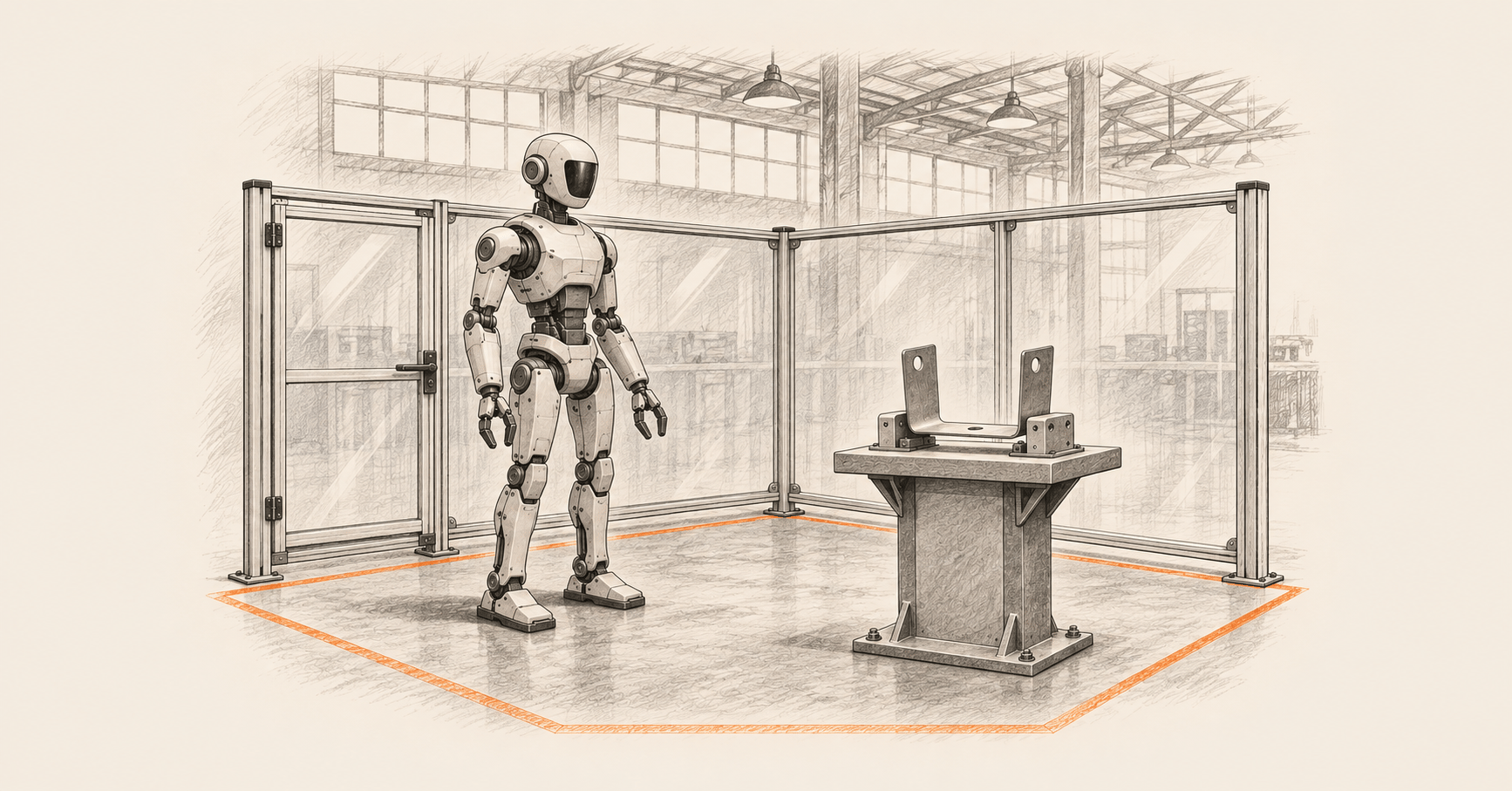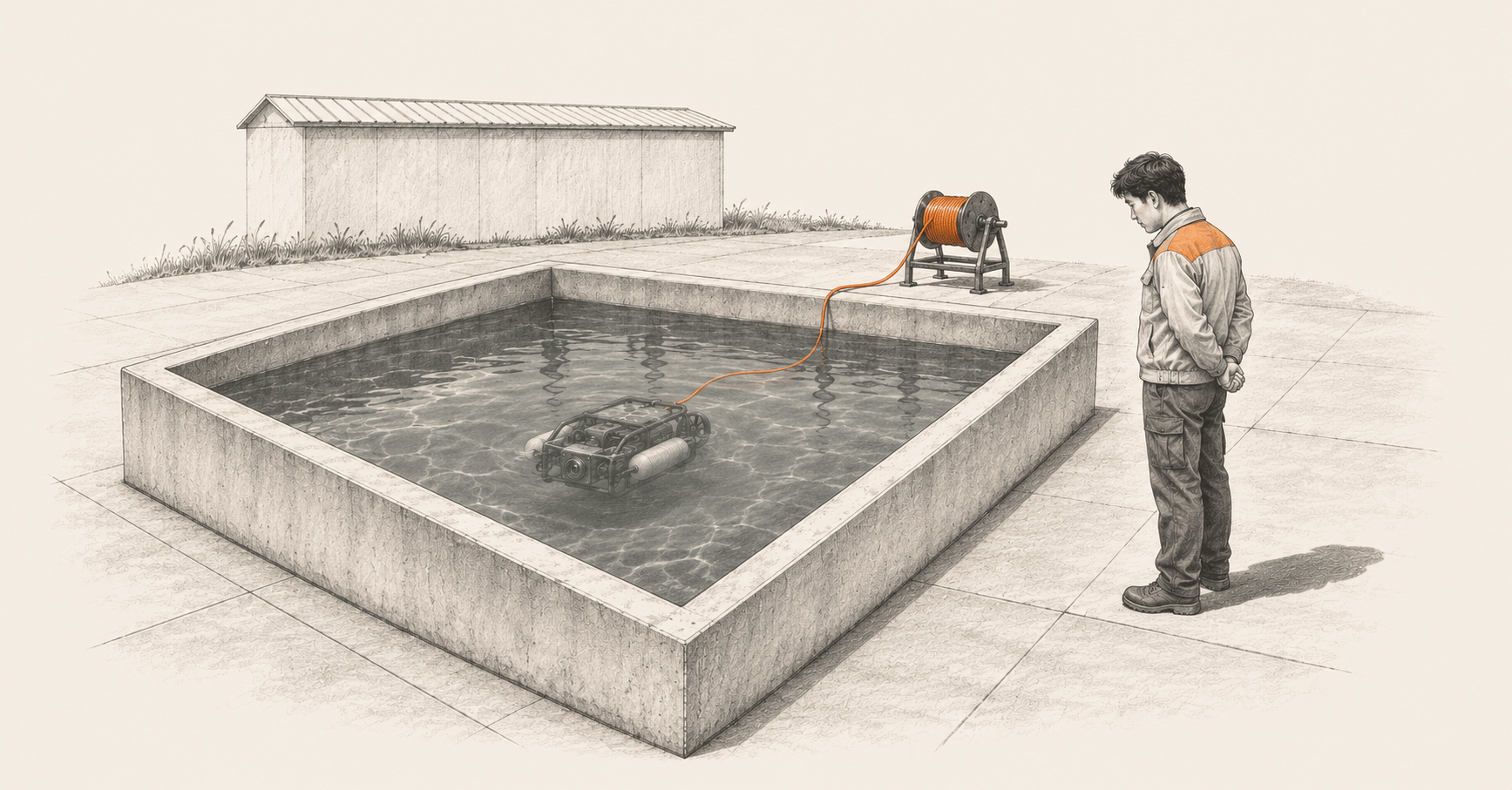
On November 23, Korea Water Resources Corporation (K-water) and KT signed an agreement to develop and test physical AI for water-facility maintenance.
The big change
- The partners intend to link AI to robots and drones for physical tasks, including underwater inspection. Field validation comes next; the agreement does not establish that routine maintenance has been automated.
- English water-regulatory guidance explains why a remotely operated inspection does not automatically replace inspection by people. Useful evidence must let engineers judge condition and decide what work remains.
- NIST’s robot-test framework separates equipment capability from operator proficiency. Repeated tasks, failure records and comparable conditions matter when deciding what can be relied on beyond a successful demonstration.
From operations to maintenance
K-water says the collaboration extends AI from facility operations into inspection, diagnosis and repair. It plans shared test sites, an application roadmap and validation standards, combining its maintenance experience and field data with KT’s AI infrastructure and platforms. Proposed trials include underwater inspection and detecting and collecting floating debris.
The release describes standard packages and overseas expansion after validation. It reports no trial completion rate, inspection-accuracy result or demonstrated safety improvement.
A camera view is part of an inspection
England’s Drinking Water Inspectorate provides a practical caution in its 2024 report. It says remotely operated vehicles, controlled from a distance, can supplement inspections of water-storage assets by people. Those direct examinations remain necessary for clearer views and cleaning. This is English regulatory context, rather than a rule governing Korean trials.
One case in that report describes a remote survey that identified suspected water entering from outside. The response also involved sampling and remedial work, with further inspections arranged. Capturing a possible defect was one part of a maintenance decision, rather than the completed repair.
The distinction matters for an operator evaluating an inspection service: reaching a surface and returning images does not by itself establish whether the asset is sound. Image quality, professional assessment and any necessary follow-up remain consequential. The report’s example supports that distinction; it does not measure an AI system’s detection accuracy.
Test the task and the operator
The US National Institute of Standards and Technology describes repeatable test methods that isolate robot capabilities. They specify a task, a procedure, a measure of success and a fault condition, so results can be compared across trials instead of relying on an impressive video.
Its approach records failures and examines environmental variables separately. Assessments can cover sensing, endurance and response delay as well as movement. Operator training is measured separately, because a machine’s best performance with an expert does not establish another operator’s proficiency.
As an illustrative purchasing question, could the same inspection task be completed repeatedly under the declared conditions, with unsuccessful attempts counted? That follows the framework’s measurement logic; it is not a test result. These methods offer an evaluation approach, not certification of this partnership or a mandatory water-industry test suite.
People still need a defined job
A separate Korean example shows what preparation can involve. In April, the Korea Transportation Safety Authority announced task-specific drone training, beginning with structural inspection. Its description distinguishes theory, practical work and processing the collected material, rather than treating flying alone as the complete job.
The authority said visits to training providers had produced requests for a better balance among those activities and assessment of participants’ existing abilities. That is evidence of an announced training programme and its design inputs, not measured improvement in inspection quality.
For employers, this makes the training question more specific: can staff carry out the assigned inspection and process its output, rather than merely operate the aircraft? It explains why preparation has to cover the work around the flight. An announced course is not evidence that a particular inspection workforce is qualified.