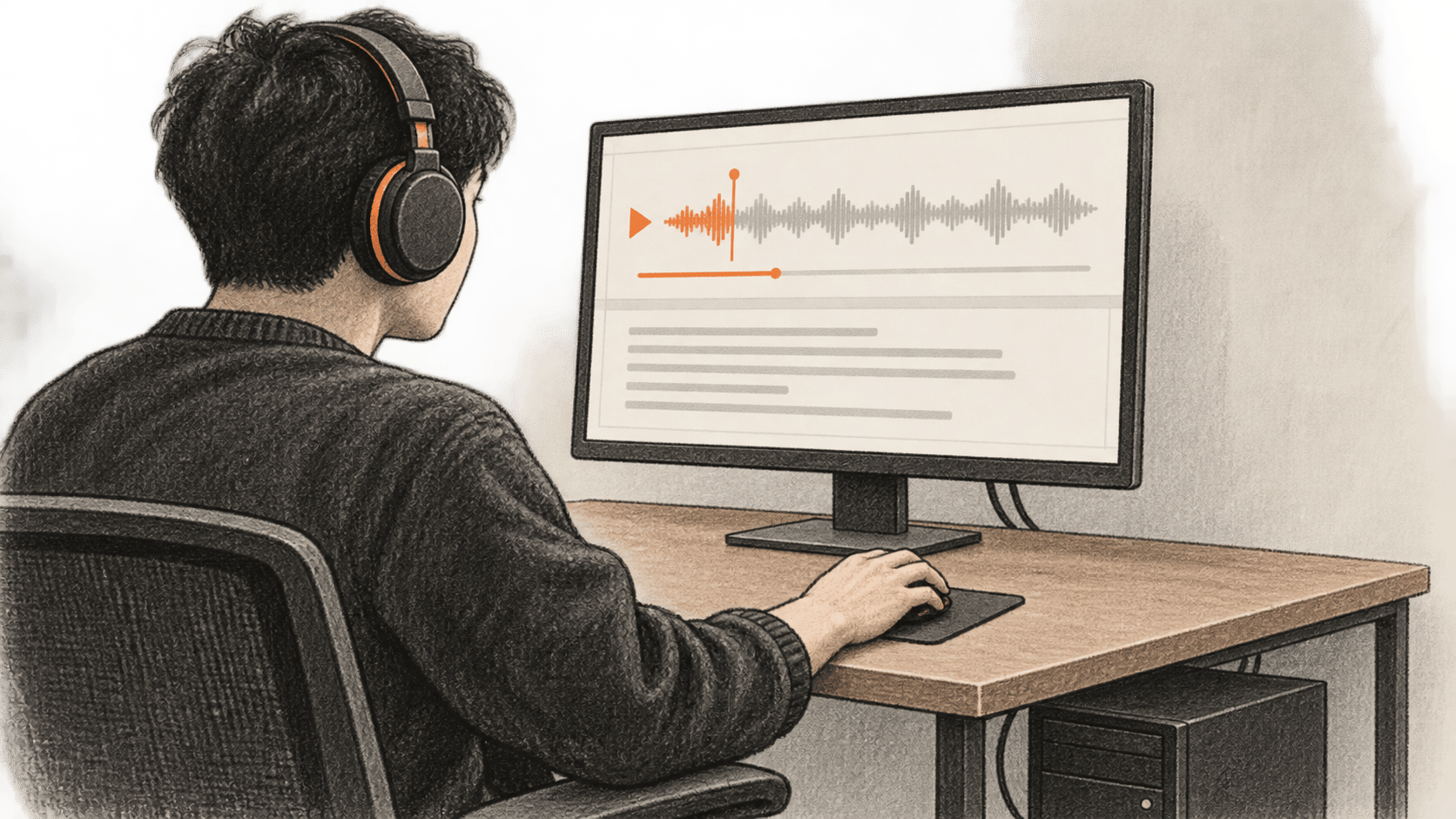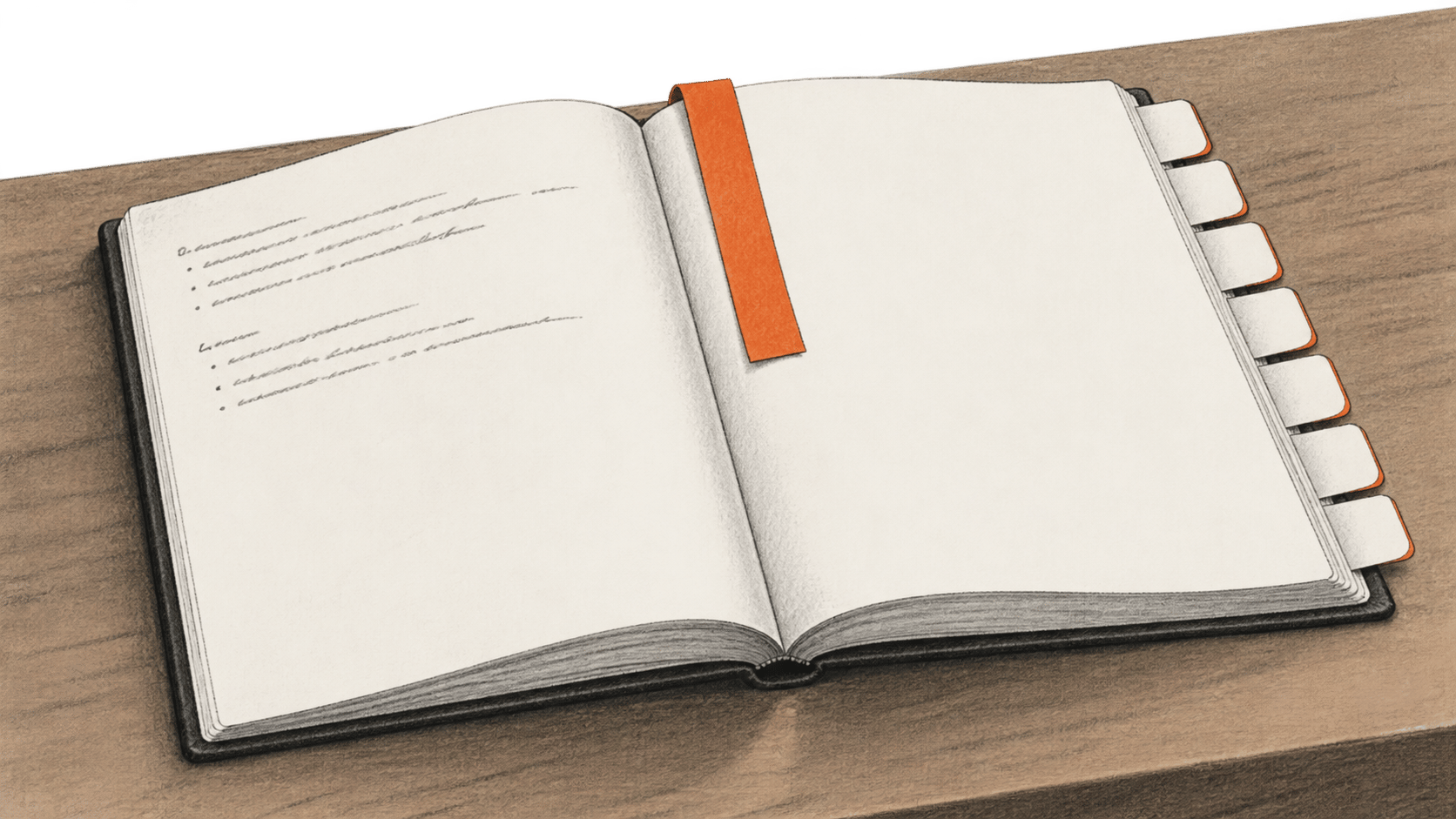
You can learn the basic vocabulary of AI from public lessons, but reading a glossary leaves little evidence of what you understood. This seven-session workbook asks you to explain the ideas, try one permitted task and correct your own mistakes. The sessions are a BIG CHANGE study plan, not a course schedule set by Google or OpenAI. Spread them over more than a week if the material needs it.
The big change
- What changed: BIG CHANGE has joined public lessons on AI history, machine-learning methods, neural networks and language models into a proposed seven-session workbook with written checks.
- Why it matters: A beginner can keep the explanations, quiz feedback and corrected work in one file. That makes a missed concept or an unsupported claim visible before relying on a model's fluent answer.
- What to watch: The actual task artifact, source-checked claim and corrected teach-back show where the reader's explanation holds up. Record unfinished prerequisites and return to them in later sessions.
Set up one workbook
Make a private document with seven dated sections. In each, record the page you actually opened, your explanation in your own words, a question or mistake, the exact page or section that helped you correct it, and a done or not yet mark. Leave spaces for results you have not obtained. A saved link or an AI-written summary does not show what you learned.
The core route uses public Google Cloud and Google for Developers pages and local notes. It requires no coding, API key, paid account or upload. Google's Introduction to Machine Learning estimates 20 minutes for its course; its large language models module estimates 45 minutes. Neither estimate includes this workbook, and the later module assumes several earlier lessons. Treat the selected Crash Course pages as a conceptual preview, not completion of the full course.
Session 1: place generative AI in its history
Read the distinctions between AI, machine learning and deep learning and the history of AI section in Google Cloud's AI overview. Draw a map: AI is the wider field; machine learning uses data to train models; deep learning uses multilayer neural networks; generative AI produces content from learned patterns. Then make a short timeline using milestones on the page, including Turing's work, the 1956 Dartmouth meeting, early systems, AI winters, expert systems, Deep Blue and the modern deep-learning period. Beside each, write what approach or condition changed and cite the relevant paragraph. Do not assign a date or cause that your source does not give.
Check: Explain why today's generative AI has a longer history, and distinguish an AI winter from today's expansion. If your timeline still reads as a list of names, add one sourced change beside each entry.
Session 2: distinguish ways a model learns
Work through Introduction to Machine Learning and its What is Machine Learning? lesson. In your workbook define a model, a training example, a feature, a label and an evaluation check in your own words. Write one sentence each for supervised learning from labeled examples, unsupervised learning that finds patterns without labels, and generative learning that produces new content from learned patterns. Google's lesson also identifies reinforcement learning; add it to your map if you can explain its feedback signal from the page.
Use the current Test Your Understanding questions and write down the feedback you actually receive. If the interaction fails, mark manual check, explain the three distinctions from the lesson and identify what remains uncertain. Correct each missed or unresolved idea in your notes; a guessed correct answer is a reason to revisit the explanation.
Session 3: connect data to a prediction
Open the Machine Learning Crash Course module list and sample the introductions to datasets, generalization and overfitting, neural networks and embeddings. Look for the separation between training examples and evaluation data, why a model that memorizes examples may fail on new ones, how training adjusts a neural network's parameters, and how an embedding represents an item as numbers that can capture relationships.
Draw a simple chain in the workbook: data → training → adjusted parameters → prediction → check on separate data. Under it, state what would count as a poor check. Mark this as your explanation of a process, not a model you trained. These modules assume earlier material, including regression and ways to represent data. List the lessons you have not done. If the vocabulary stops you, return to Session 2 and stretch the schedule.
Session 4: explain tokens, context and attention
Read the opening of Google's Introduction to Large Language Models and its transformer explanation. A token can be a word, part of one or a character. A language model uses the surrounding sequence, its context, to estimate what token comes next. Self-attention is one way a transformer weighs relationships among tokens in that context.
Write those three ideas in your own words, then explain why changing the context can change a prediction. Add one sentence about why a plausible continuation still needs a factual check. Mark any explanation of attention you cannot yet give as not yet and return to the cited section. Google's LLM module explicitly assumes Introduction to ML plus linear regression, categorical data, datasets, neural networks and embeddings; sampling two pages does not clear those prerequisites.
Session 5: try one task you are allowed to use
Choose a small, real task you own or have permission to share, such as revising a draft you wrote. Before working on it, write the goal and a quality criterion you can apply yourself: what should the finished revision preserve, improve or avoid? Remove personal, confidential and third-party information before any optional model use. Check the service's current terms, plan and data controls; Temporary Chat has its own history, personalization and retention behavior, so do not treat it as a promise of perfect privacy.
If you have suitable account access, you may use a model on the sanitized task. Save the actual instructions and response in your private workbook. Compare the response with your original and your quality criterion; mark useful, wrong, missing and unverified parts, then revise it yourself. OpenAI Academy's AI Foundations is an optional structured practice path that requires account access. Its public page led us to a sign-in shell, so check its current availability and account terms yourself. Its separate assessment and badge are not part of this workbook.
If you cannot or choose not to use a model, keep the real task. Write instructions you would give a model, make a human revision locally, and judge that revision against the criterion you set first. Label the artifact as human work. This still gives you an actual piece of work to inspect, without pretending a model ran.
Session 6: check a claim that is really in your work
Read Google's explanation of AI hallucinations: a convincing output can be incorrect or misleading. OpenAI's reasoning-model guidance describes uses for a model family; it does not make any particular answer correct. A paid API or second model is unnecessary for this check.
Find a material factual statement in your actual Session 5 artifact and compare it with a primary source. Keep the exact statement, the source passage and either a correction or an unverified mark. If the task produced no factual statement, choose one you actually wrote in Sessions 1–4 and check it against that session's source. Do not manufacture a model answer just to complete the slot. Explain in one sentence why fluent wording or a model label could not settle the claim.
Session 7: teach it back without notes
Before opening your workbook, write a short explanation for someone new to the subject. Cover the difference between AI, ML, deep learning and generative AI; a few historical steps; how tokens and context affect an LLM; what attention contributes; and when a human should check an output. Compare your explanation with the earlier pages and your notes. Mark every gap you corrected and name one topic you will study next. Recheck your actual Session 5 artifact against its original quality criterion.
You have finished this introductory route when all seven dated sections contain their assigned evidence: a cited timeline and field map, ML distinctions and actual quiz feedback or a labeled manual check, a training diagram with unfinished prerequisites, an LLM explanation, a permitted task artifact and quality review, a check of a real statement, and a corrected teach-back. An unfinished term deserves another session. This record shows what you studied and checked; it does not confer mastery, a credential or a job qualification.
If a lesson or tool gets in the way
If an interactive question will not load, use the public lesson text and mark the check as manual. If a page changes, find its current official module from the course index and note the replacement in your workbook. If the Crash Course prerequisites are too steep, return to the introductory lesson and take more sessions. If Academy or a model is unavailable, use the local human-work path in Session 5. Keep work on your own device when you lack permission to send it to an outside service.
This route was assembled from current provider documentation. BIG CHANGE did not complete the lessons or quiz, sign into Academy, run a model on a learner task, or measure anyone's learning. You will supply the actual workbook results.