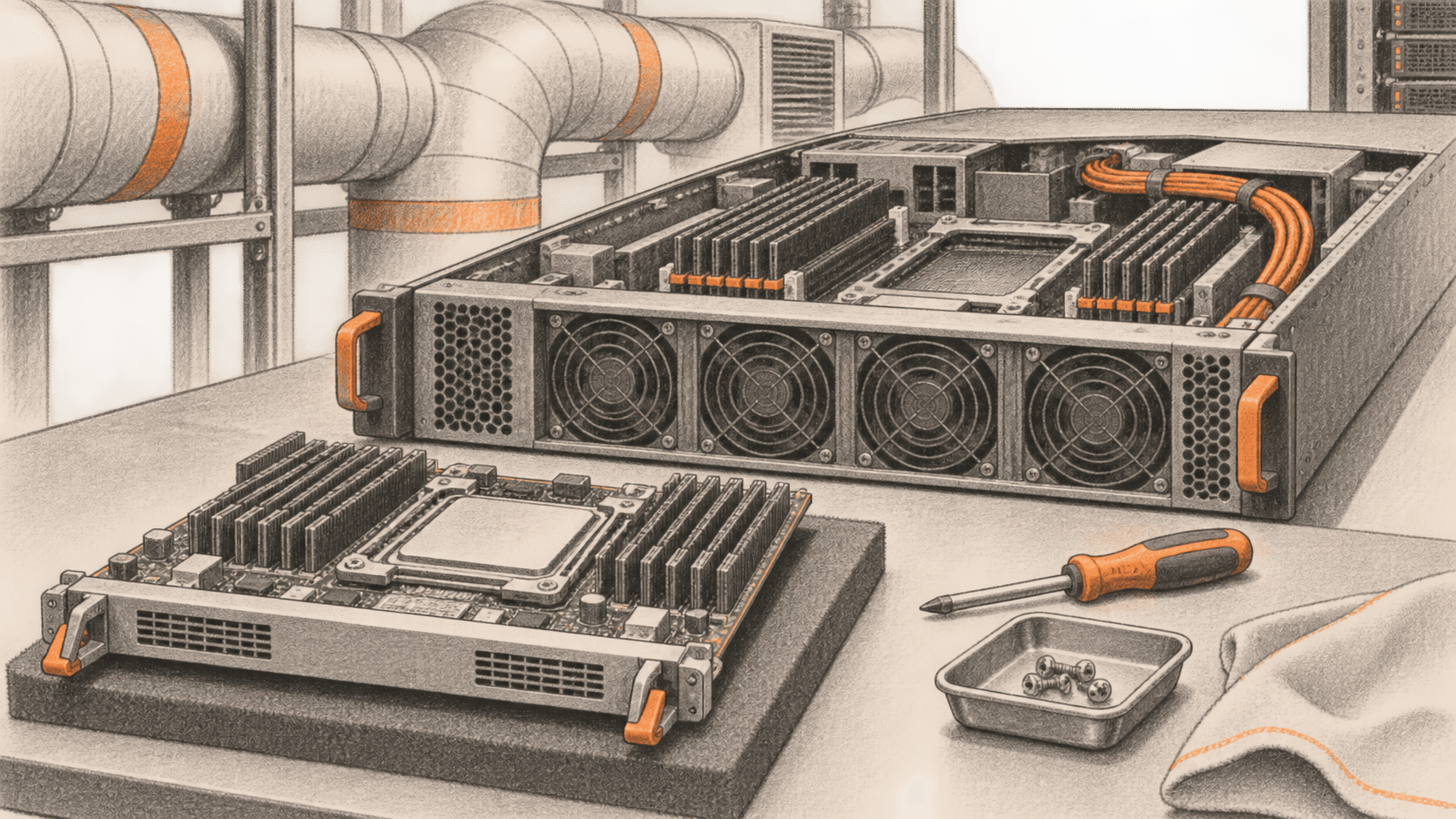
NVIDIA’s November 4 technical post describes a FOX reference workflow for investigating circuit-board defects. Robot transport is simulated.
The big change
- A manager coordinates inspection, transport and investigation.
- Inconclusive findings and recommendations require human review.
- Factory systems need mapped data and permissions.
From inspection to investigation
An inspection alert identifies a board and component. A Cosmos specialist checks the image against reference examples and approved criteria, returning evidence and uncertainty. Inconclusive cases go to a person. For confirmed defects, an agent arranges simulated transport. NVIDIA recommends initial operator approval; physical movement requires equipment integration.
Developers must map identifiers, timestamps, units and permissions across factory systems. The board ID connects inspection, placement and test records; aligned entry and exit times select oven readings for Kumo Anomaly analysis. The root-cause agent compares runs and manuals, assesses whether oven conditions contributed to suspected solder defects, and reports recommendations for review.
NVIDIA offers early access; the workflow is illustrative.
Earlier inspection work
Siemens’ October announcement describes an inspection-preparation effort demonstrated at its Erlangen factory. A digital “golden board” and synthetic images let teams prepare optical inspection before a physical board exists. The design data supplies product and manufacturing context; the synthetic examples include both good boards and possible defects. Siemens describes engineering-effort and quality targets for the project, not independently verified achieved gains.
BIG CHANGE previously reported on the Erlangen planning and inspection work.
Connecting tools
FOX connects systems through APIs and MCP. The Model Context Protocol documentation describes a client-server protocol that lets an AI application discover tools and obtain context from connected servers. The protocol defines that exchange; it does not decide what an application may access or guarantee that its recommendations are correct. Those boundaries depend on the system and permissions configured around it.