Siemens and NVIDIA are testing two industrial AI workflows in live production at Siemens’ electronics factory in Erlangen, Germany. One prepares visual inspection for new circuit boards using images generated from digital twins. The other proposes production schedules that human planners can compare and check in a factory simulation. Siemens presented the work on October 19 as progress toward autonomous manufacturing, while describing Erlangen as a development and test site.
The distinction matters for manufacturers considering similar systems. The reported workflows tackle two specific sources of delay: waiting for a physical board before preparing inspection, and weighing production plans when orders or materials change. Siemens has described the process and its potential gains, but has not published a study that lets outsiders assess the savings or the systems’ performance across other factories.
Inspection can be prepared before the first board
The Erlangen plant makes industrial drives and frequency converters that contain printed circuit board assemblies. According to Siemens’ October 19 announcement, preparing inspection for a new assembly previously meant waiting for a physical prototype, then training vision systems and configuring inspection equipment. That could take several weeks.
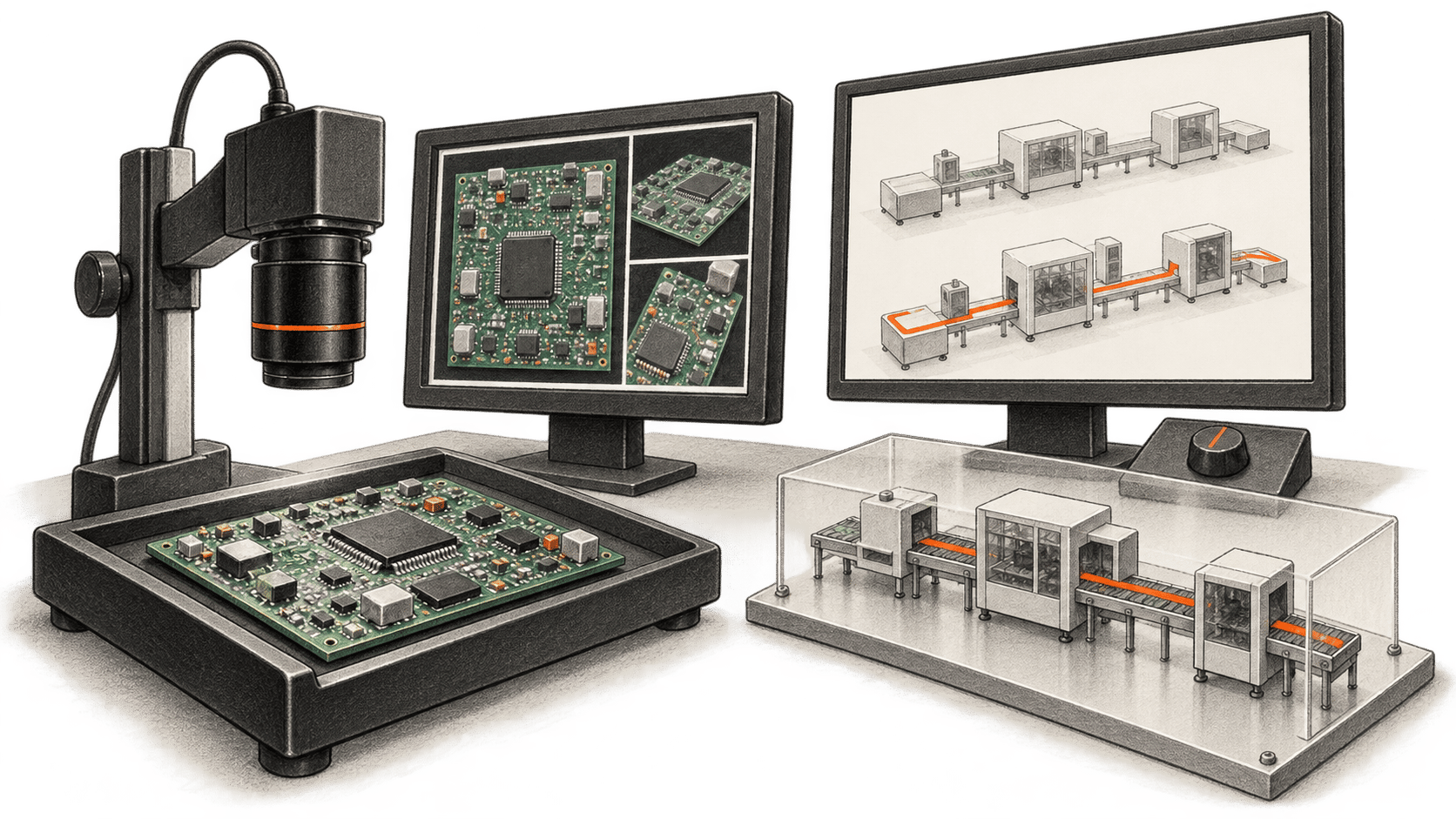
In the new workflow, a digital twin of the proposed board feeds the creation of photorealistic images for inspection preparation. Siemens’ event fact sheet says NVIDIA Cosmos world models help generate images of boards with and without potential defects. Engineers can use those images to train inspection equipment before the physical prototype exists. The release attributes the image generation to NVIDIA Cosmos; it does not disclose the training data, defect coverage or error rates of the resulting inspection system.
Siemens says this virtual production preparation can reduce engineering effort by up to 85% and time to market by up to 40% for new board assemblies. Those are company reported potential gains. The release gives no comparison protocol or independently verified result for the two figures. They should not be read as a measured improvement for every product introduced at Erlangen.
An agent offers plans for people to choose
The second workflow addresses production planning. A new order can change the balance among line capacity, material availability, cost and delivery dates. Siemens says an AI agent generates several scenarios and shows their effects through defined key performance indicators. Planners compare the options and choose a plan; the proposed plan is then checked against a digital twin of the factory before implementation. The fact sheet names Siemens Intelligence Center X Agents, built with the NVIDIA Factory Operations Blueprint, and describes the check as a physics based simulation. The release says NVIDIA Omniverse libraries support virtual testing with real factory data.
This is a narrower account than a factory making its own operational decisions. The public material describes agent generated proposals, a simulation check and human oversight. It does not say that the system independently approves schedules, changes equipment settings or runs the Erlangen site without planners. Siemens says the planning approach can enable cost savings of up to 20%, including capital and rush costs in the fact sheet. The company has not supplied a public baseline, measurement period or independent audit for that estimate.
The big change
The partnership announced in January set an ambition to build fully AI driven, adaptive manufacturing sites, starting with Erlangen as a blueprint. The October update supplies two concrete workflows being co-developed and tested in live production: synthetic board images used to prepare inspection, and an agent whose planning options are checked in a factory twin before people act on them. The practical shift is that teams can prepare and examine some decisions virtually before a physical board or a revised production plan reaches the line.
For other manufacturers, Erlangen is evidence of where Siemens and NVIDIA are applying these tools, not evidence that an autonomous factory has been proved at scale. Reproducing the workflows would depend on accurate product and factory models, production data, inspection validation and local operating controls. The companies have not published enough implementation or outcome data to establish the cost, reliability or transferability of this approach beyond the reported site. BIG CHANGE did not test either workflow.
Sources & further reading
- Siemens, “Siemens partners with NVIDIA to advance AI-driven, autonomous factories” (October 19, 2026). The main account of the Erlangen tests, the inspection and planning sequences, named NVIDIA technologies and Siemens’ projected gains. It is a company announcement, not an independent evaluation.
- Siemens, Erlangen event fact sheet (October 2026). Adds the planners’ selection step, the factory simulation description and detail on synthetic inspection images. It also frames the savings as potential or scaled gains.
- Siemens, Erlangen press hub (October 5, 2026). Identifies the October 19 factory event and Erlangen’s role as the partnership’s proposed blueprint.
- Siemens and NVIDIA partnership announcement (January 6, 2026). Establishes the earlier plan for AI driven manufacturing sites; that ambition is separate from what the October tests establish.