NVIDIA announced plans on November 9 to invest in three Korean AI startups. It also announced a Point2 Technology investment.
The big change
- The change: Three investments are planned.
- Why it matters: The companies build different kinds of AI technology.
- What to watch: The announcement gives no investment terms or closing dates.
A plan, not three completed deals
At the forum co-hosted with Korea’s science ministry, NVIDIA named Motif Technologies, RLWRLD and Upstage as companies in which it plans to invest. It did not disclose amounts, stakes or closing dates in the announcement. RLWRLD separately confirmed that its investment was planned.
Until a deal closes, customers cannot assume its financing is available to support a product roadmap.
Point2’s history calls for a separate qualification. In April, the company said NVentures, NVIDIA’s venture capital arm, participated in an extension of its Series B. The round had reached $76 million in total; that was not the size of NVIDIA’s individual contribution. The November announcement does not explain whether its Point2 investment is a separate transaction.
From model software to physical tasks
Motif’s model listings include text-generation and video models. Upstage’s existing Solar Decide documentation describes a beta endpoint that returns structured choices, scores or yes/no answers for uses such as classification. A business could use such an output to route a request for further handling; the documentation does not establish that a particular customer has done so.
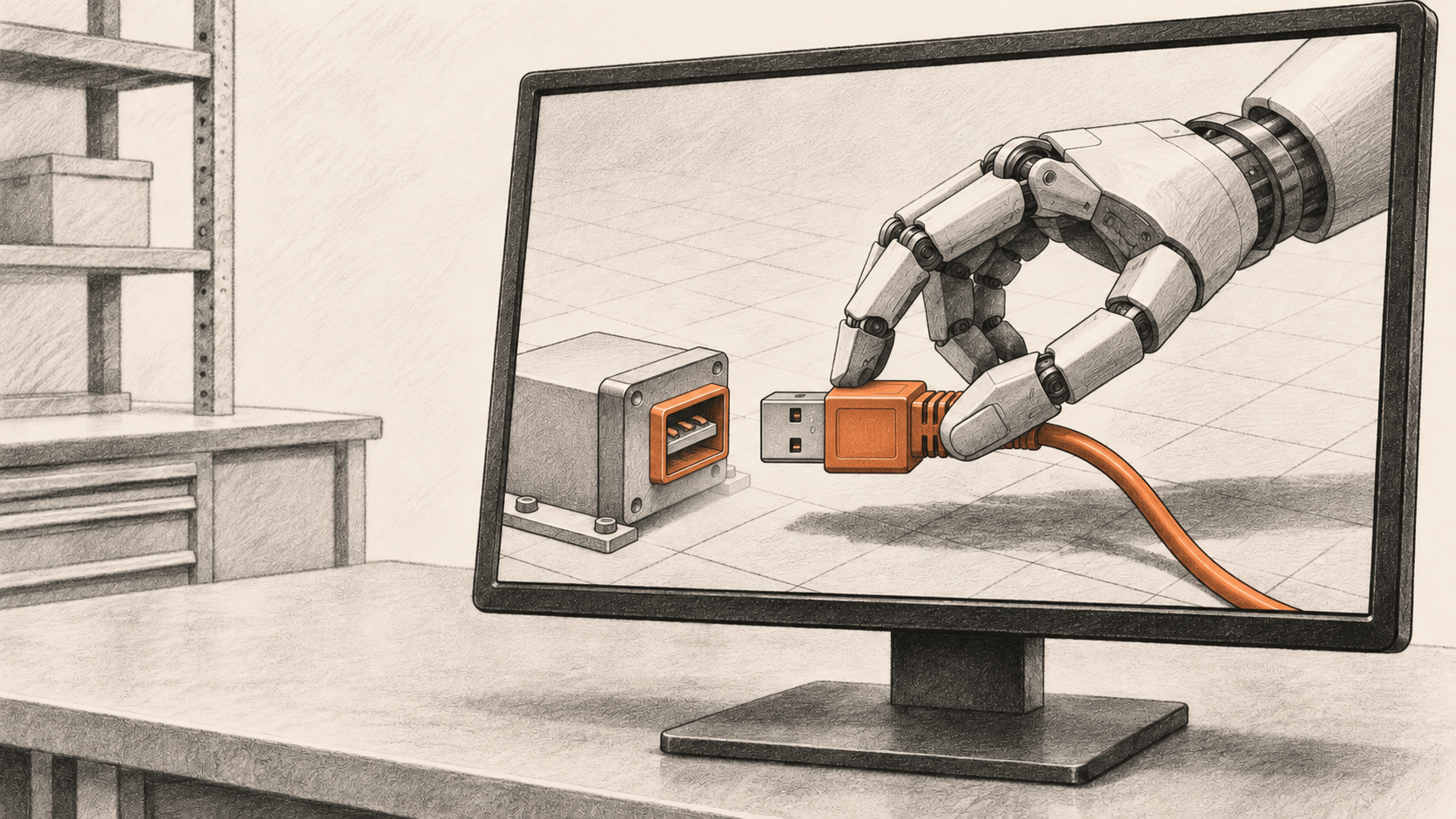
RLWRLD is working on robot manipulation. On November 9, it introduced DexBench, a simulated evaluation with 15 tasks across retail, logistics, assembly and hotel food service. One task is inserting connectors. The company says the benchmark tests whether skills generalize to unfamiliar objects, physical properties and spatial arrangements, and plans to release its code and other assets. A simulation benchmark can help developers compare approaches under defined conditions; it does not establish performance in a working factory.
Point2 addresses a different part of the system: moving data between computing components. Its e-Tube description says it sends radio-frequency signals through a plastic dielectric waveguide. This is infrastructure for connections, rather than a language model or a robot controller. Point2’s earlier funding announcement said it was moving toward productization and deployment; it did not establish results for a named customer.
The examples show what the companies work on today; they do not establish what the proposed financing will accomplish.