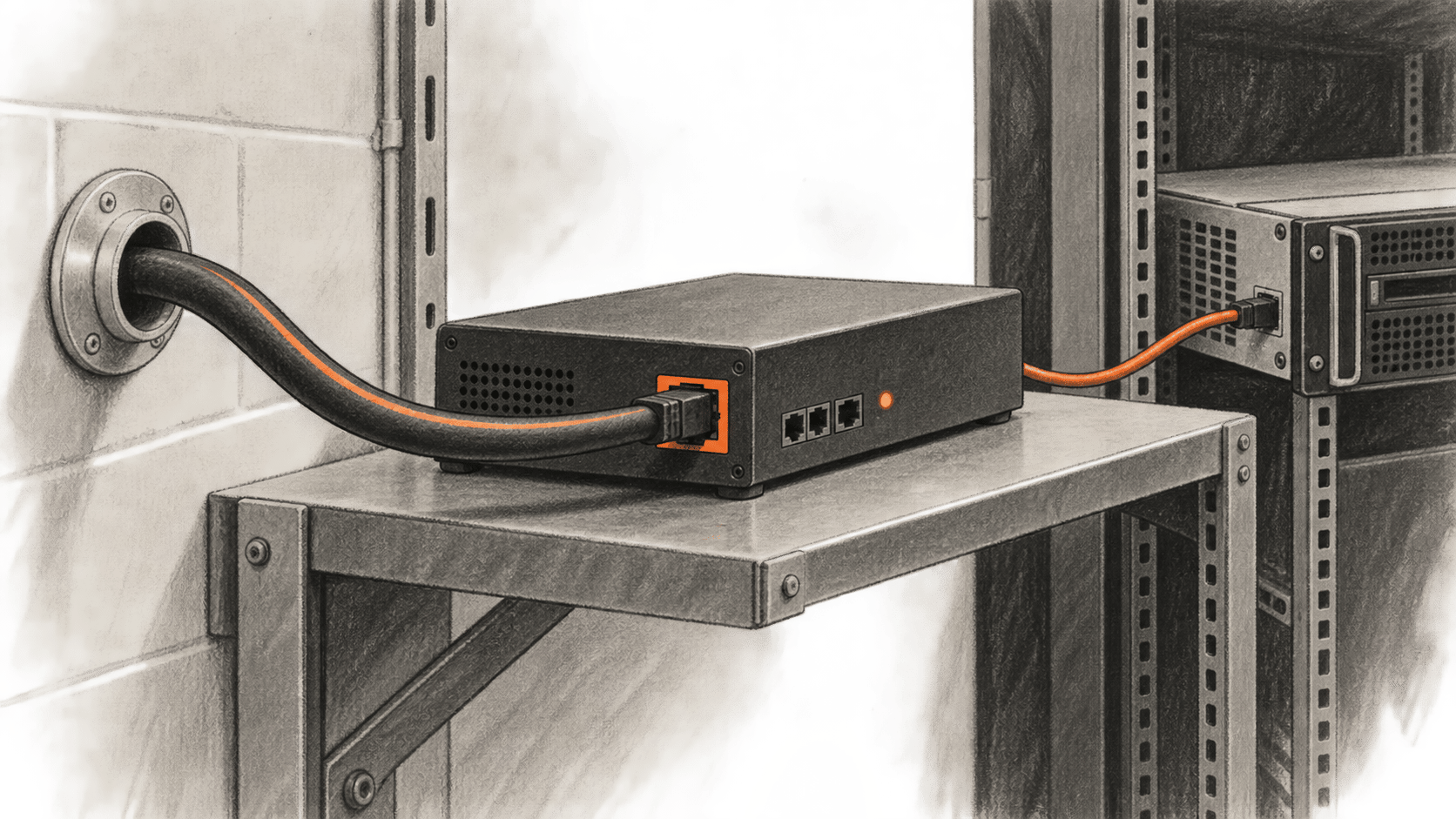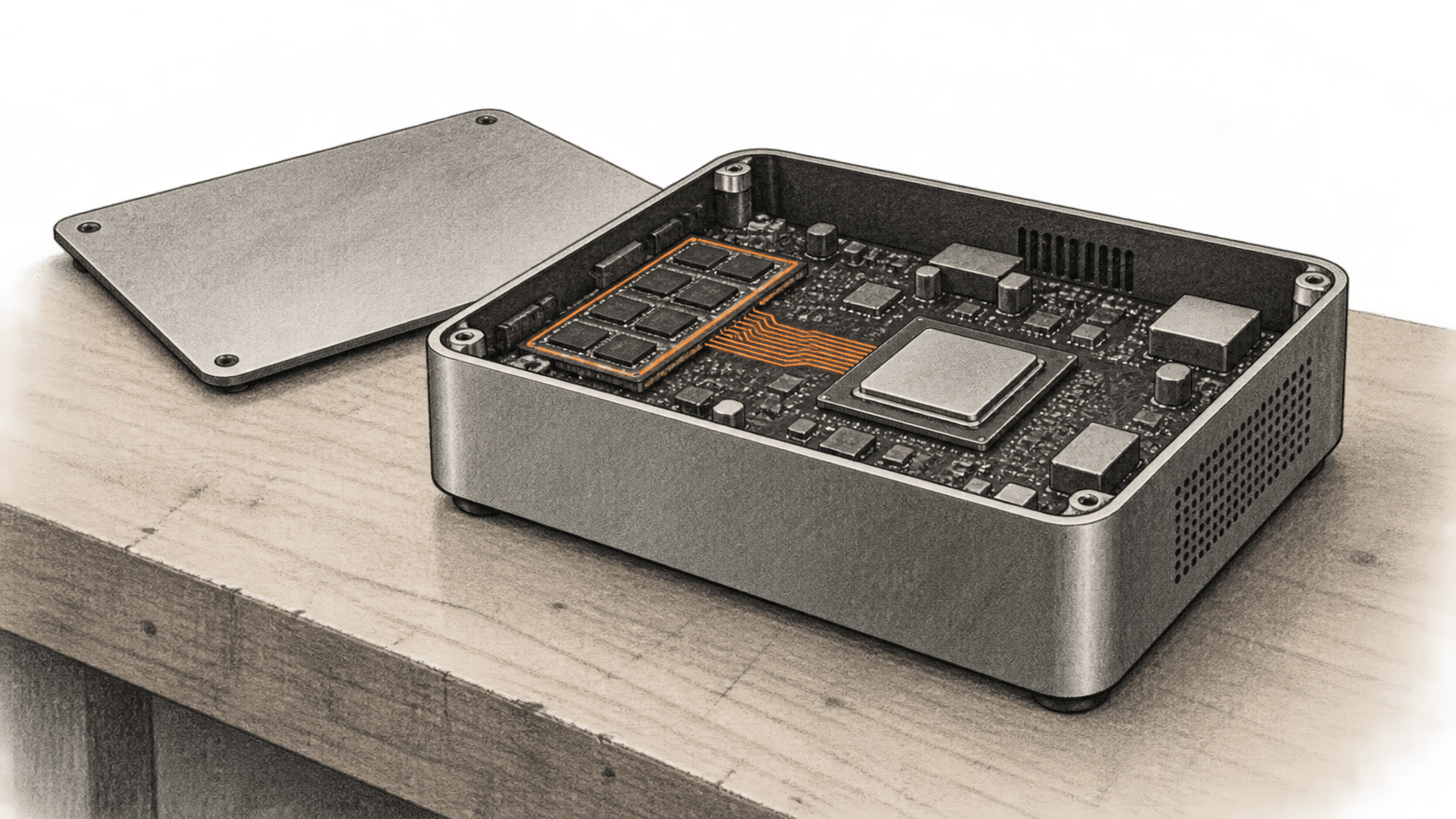
A 128GB computer can hold model files that would not fit on a conventional single graphics card. The number on the box still needs careful reading. AMD's Ryzen AI Halo, Apple's Mac Studio and NVIDIA's DGX Spark use unified system memory shared by the CPU and GPU. That differs from 128GB of dedicated memory on discrete graphics cards. The operating system, the model runtime and the conversation's working memory all need room too.
This guide is for a technically capable person choosing one local AI machine for private inference, coding or document work. The task is to identify a model and runtime that fit, price a machine that can run them, and check the result on the intended workload. BIG CHANGE did not test the hardware. The steps below follow vendor documentation and dated US store listings, with Repo Chad's October 2 video, Every Way to Get 128GB of VRAM for Local AI used as background on why older price advice can mislead. Its prices were checked September 30, so the current comparison uses listings checked October 10 UTC.
The big change
- What changed: A buyer can choose among several 128GB unified-memory systems for local AI, with different software stacks and very different prices. The advertised capacity is shared system memory, so it does not promise 128GB available to a model.
- Why it matters: Local inference can keep selected data on the owner's machine, subject to the runtime and any connected tools. The purchase decision turns on the model's actual memory use, prompt length, software support and acceptable wait time, rather than the largest memory number alone.
- What to watch: NVIDIA's lower-cost 64GB DGX Spark configuration is due October 23, and its proposed two-unit 128GB pool costs at least $9,998 by addition of the announced starting prices. Buyers who can wait should compare that released offer with a single 128GB machine when partner prices and availability are known.
What 128GB means on each machine
AMD's ROCm 7.2 Strix Halo guidance, dated February 20, describes up to 128GB of unified LPDDR5X. Its GPU virtual memory system maps portions of that shared RAM into GPU address space. The GTT limit controls what user processes can map; AMD says its default is approximately half the system RAM. A firmware reservation or a larger mapping limit does not turn the full installed memory into a separate pool of dedicated VRAM. AMD documents a Linux utility, amd-ttm, to inspect and adjust that limit, followed by a reboot. Change it only after checking the exact machine, OS and ROCm guidance, leaving memory for the OS and other processes.
Apple lists an M5 Max Mac Studio configuration with 128GB of unified memory. NVIDIA describes DGX Spark's 128GB as coherent, unified system memory. On all three, a model that fits its weights into a nominal 128GB figure can still fail to load or run poorly once context, key-value cache, runtime buffers and the rest of the system use memory. Quantization can reduce weight size, but it changes the file and can affect quality. A larger memory pool sets a capacity option; it does not establish generation or prompt-processing speed.
A dated US buying comparison
These are US prices before tax, checked October 10 UTC. Store stock and configure-to-order prices can change before checkout.
Route | Memory and software decision | Price and availability at check |
|---|---|---|
AMD Ryzen AI Halo Developer Platform | 128GB unified LPDDR5X, 2TB storage; check the intended AMD runtime and GPU mapping for the chosen OS. | Micro Center listed $3,999.99, available for in-store pickup at several listed locations when checked. Availability varies by store. |
Apple Mac Studio, M5 Max 128GB configuration | 128GB unified memory is a configure-to-order option on the specified M5 Max tier; confirm the model runtime supports macOS and the chosen model format. | The creator reported a $5,099 Apple checkout on September 30 for an 18-core CPU, 40-core GPU, 128GB/512GB configuration. BIG CHANGE could not confirm that exact total on Apple's current store page; verify the live configuration before buying. Apple's $2,499 M5 Max starting price is not the 128GB configuration price. |
NVIDIA DGX Spark 128GB | 128GB coherent unified system memory and NVIDIA's CUDA software stack. Confirm that the intended tools work on its platform. | NVIDIA Marketplace listed $6,950 and out of stock. Partner stock may differ. |
Two future DGX Spark 64GB systems | NVIDIA says ConnectX-7 and NVIDIA Sync can pool two 64GB systems to 128GB; this is a two-node setup, with workload compatibility to verify. | NVIDIA announced partner availability for October 23, starting at $4,999 each. Two starting prices total $9,998 before tax and any needed cable; this was a future offer at the check date. |
The table compares memory capacity and purchase access, not measured performance. The creator's video gives benchmark figures from several third parties, but engines, quantizations, context lengths and test dates differ. We cannot turn those figures into a controlled speed ranking or a cost-per-token claim for these exact configurations.
Choose and check a local setup
- Write down the actual task and data boundary. Name the model you want to run, the quantized file or format, the maximum context you need and whether the workflow depends on CUDA, ROCm or macOS tooling. Note whether prompts and documents must stay on the machine. A local model does not by itself keep data local if its application sends requests to an external service.
- Budget memory for the whole workload. Use the chosen model file's published size as the starting point. Add room for the runtime, context and key-value cache, operating system and other open applications. If that information is missing for your intended runtime, treat fit as unverified. On Strix Halo, inspect the GPU mapping limit against AMD's ROCm 7.2 instructions; this is a versioned guide, so check AMD's latest applicable instructions before treating all shared RAM as GPU-usable.
- Match a supported runtime to the platform. NVIDIA's DGX Spark getting-started guidance names llama.cpp, Ollama, vLLM and LM Studio as options; select one that supports the exact model format and platform. For AMD or Apple, use the runtime's current platform instructions rather than assuming a DGX command applies. Download the model from its original distributor, check its license and file size, and keep the model identifier with your notes.
- Run a representative prompt and check both fit and time. Confirm the model loads, produces a usable answer and stays within available memory at the intended context length. Measure prompt processing and generation separately for your own task. These are buyer acceptance checks, not results observed by BIG CHANGE. If loading fails, reduce context or choose a smaller quantization or model; on AMD, check the documented mapping setting and available system RAM before changing it. If speed is unacceptable, a memory increase alone does not establish that another 128GB box will solve it.
- Price the complete decision. Recheck the exact configuration, stock location, tax, storage, support and any required accessories at checkout. Keep the price and date beside your model and runtime notes so a later change in stock or software does not make an old comparison look current.
This procedure produces a short purchase record: exact machine configuration and checkout price, model and license, runtime and OS version, expected memory budget, and a measured acceptance result after access to hardware. The reader controls what data is submitted to the local application and any tools it connects to. Hardware purchase, installation and any data-sharing policy remain human decisions.
Sources & further reading
- Repo Chad, Every Way to Get 128GB of VRAM for Local AI, published October 2, 2026. Creator comparison and historical pricing background, with prices checked September 30. Its title uses “VRAM” broadly; the vendor specifications below give the precise memory type for each product. The video is not a BIG CHANGE hardware test.
- AMD, Strix Halo system optimization, ROCm 7.2 documentation dated February 20, 2026. Defines unified memory, GPUVM/GTT mapping, the approximate default limit and the documented Linux adjustment path. Check the applicable OS and version before changing settings.
- AMD, Ryzen AI Halo product page, checked October 11, 2026. Identifies the current developer platform; AMD's performance material is vendor testing, not an independent result used for this guide.
- Micro Center, AMD Ryzen AI Halo Developer Platform listing, checked October 10 UTC. Gives the $3,999.99 price, 128GB/2TB configuration and in-store pickup availability at multiple listed locations. Stock is store-specific and changeable.
- Apple, Mac Studio specifications, current US configurator and August 25 announcement, checked October 10 UTC. The specifications establish a 128GB M5 Max option. The announcement's $2,499 starting price does not price that option; the live configurator page read here did not expose the exact 128GB checkout total.
- NVIDIA Marketplace, DGX Spark, checked October 10 UTC. Establishes 128GB coherent unified system memory, the $6,950 listing and out-of-stock state at NVIDIA's own store.
- NVIDIA, 64GB DGX Spark announcement, October 2, 2026. Gives the October 23 partner release date, $4,999 starting price and claimed two-system 128GB pooling path. Availability and performance assertions are NVIDIA's, pending the release at the check date.