John Heibel has published the project files behind his music video “I’m Upping My P(doom).” He says Claude Opus 5.5 wrote its storyboard and JavaScript animation. The files show a browser drawing the frames and ffmpeg combining them with an existing song. The finished video is on YouTube.
The film is a documented example among creator posts following Opus 5.5’s September 22 release. “Claude made a video” can mean writing scenes and rendering code, rather than producing moving images directly as a video model would. That difference matters when judging how much of a clip came from the model and how much depended on music, tools and human direction.
The big change
- What changed: Creators are using an AI coding agent to build animations as software projects and render the results as videos. Heibel has published the code and a reusable starter kit for one such workflow.
- Why it matters: The storyboard, scene files and renderer expose the work behind the clip and the inputs supplied from elsewhere. A finished clip alone cannot show that division of labor.
- What remains uncertain: The public examples do not establish typical production time, cost, success rate or how readily another creator could obtain the same quality. BIG CHANGE did not reproduce either project.
What the P(doom) project actually contains
Heibel says the film took two generations in Claude Code. The first used Opus 5.5 at medium effort; he then directed a second pass to use p5 brushstrokes, make the scenes more interesting and link each scene to the next. According to the repository’s account, he did not specify individual scene ideas, but he did specify the Clawd character and ask for a distinct visual treatment of each lyric.
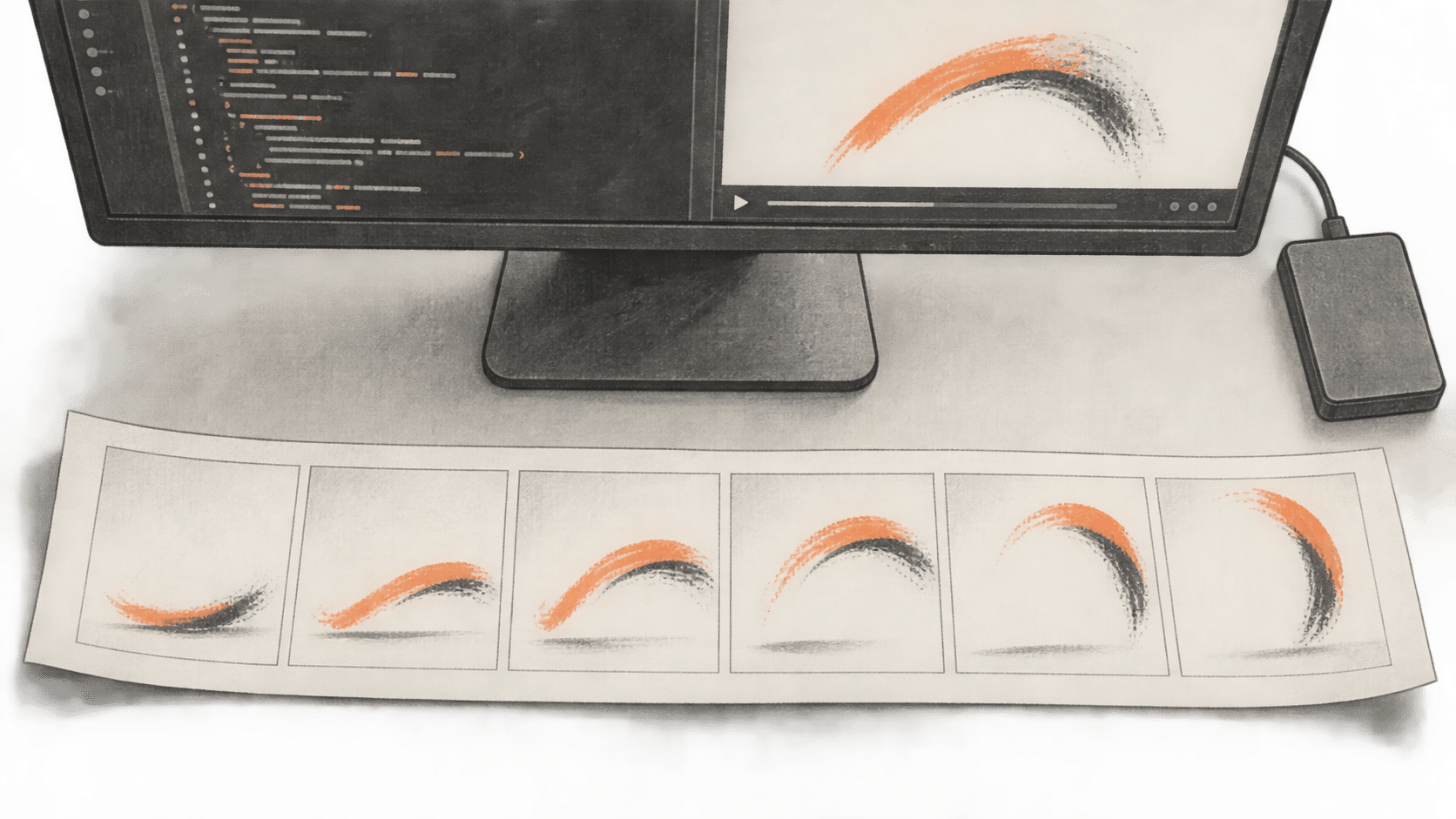
The resulting project has a shot-by-shot storyboard, an animation guide used to brief subagents, nine chapter files, shared character and timeline code, and a studio.html page painted with p5.js and p5.brush. Its render script captures frames in headless Chrome and uses ffmpeg to encode the MP4. The repository includes the song as an audio asset and credits an earlier recording; it does not present the song as an Opus 5.5 composition. Heibel also credits an earlier X post as inspiration.
Heibel has since released Claude Animation Base, a starter kit with character assets, a guide, a browser studio and rendering scripts. Its suggested first request is a 15-second Clawd cartoon. The README says the agent storyboards, builds shots and checks contact sheets before writing an MP4; it lists Node.js, Chrome and ffmpeg as requirements. Heibel reports that watercolor fills can take seconds per frame without a dedicated GPU.
Another music video makes the human direction visible
Joshua Ledbetter’s “Functional Emotions” project offers a useful comparison. The creator says an older Claude model wrote the song’s lyrics and Suno produced its track. Opus 5.5, working in Claude Code, then wrote the video project. Ledbetter rejected an initial lyric-video treatment, asked for stronger scenes and timing, and pointed the agent to Heibel’s P(doom) video for pacing. The repository contains that rejected version, a revised storyboard, chapter code and an offline renderer. Its account says seven subagents painted later chapters and the model reviewed contact sheets.
Ledbetter’s project uses a custom WebGL2 brushstroke renderer and aligns shots to the existing song with a beat grid and word-level timing. Its creator-posted film can be watched alongside the source. The disclosed revisions show the creative direction between the first request and the posted result. The repository documents the code, though it cannot independently verify every claim about authorship or production time.
The format also extends beyond music videos. A creator posting as criticasterdotcom shared a Headroom product explainer and a repository with two rendered versions. The files describe Canvas animation and a browser-to-ffmpeg export. The creator says a local Kokoro model voiced the piece, while sampled instruments and sound effects supplied parts of the audio. The post reports a 55-minute Opus 5.5 session and no additional asset charges; those time and cost figures are self-reports, not independently measured results.
Watch the examples, then look at the source
- “I’m Upping My P(doom)” on YouTube, with Heibel’s source code.
- “Functional Emotions” creator post, with Ledbetter’s source code.
- Headroom explainer films, with the creator’s account and source files.
- Donald Jewkes’s shared prompt post and Anabology’s shared video post, supplied as examples for this story. BIG CHANGE could not retrieve the X posts directly, so their specific claims and production histories are not verified here.
These projects let creators direct a video through an editable software pipeline. In the two documented music videos, Opus 5.5 wrote substantial animation code, while existing songs, prompts, references and review shaped the finished work.
Sources & further reading
- Anthropic’s Opus 5.5 announcement dates the model release and describes its coding focus. It does not document a native video-generation feature.
- John Heibel’s P(doom) repository provides the storyboard, chapter structure, renderer and the creator’s account of the two passes and supplied music.
- Claude Animation Base documents Heibel’s reusable workflow, dependencies and his reported rendering constraint.
- Joshua Ledbetter’s “Functional Emotions” repository documents a second code-based pipeline, its audio provenance and the creator’s rounds of revision.
- Headroom’s animation repository and the creator’s post provide an explainer example and its stated audio sources. The reported session time and cost remain unverified.