Swiss startup Coprod announced a $6 million pre-seed round on November 23 to fund a Lausanne prototyping facility and commercial robot components.
The big change
- Coprod's pitch is to make power, sensing and motion parts easier to combine. Its full commercial line remains planned; the funding announcement does not establish that those products have shipped.
- A shared clock helps control devices agree about when measurements and outputs occur. That addresses coordination inside a robot, rather than establishing how well the complete machine performs a useful task.
- The ETH Robotics Club's own report credits Coprod for a battery and maxon for actuators. It shows a specific component contribution, alongside the substantial engineering needed to build a complete research platform.
What is being combined
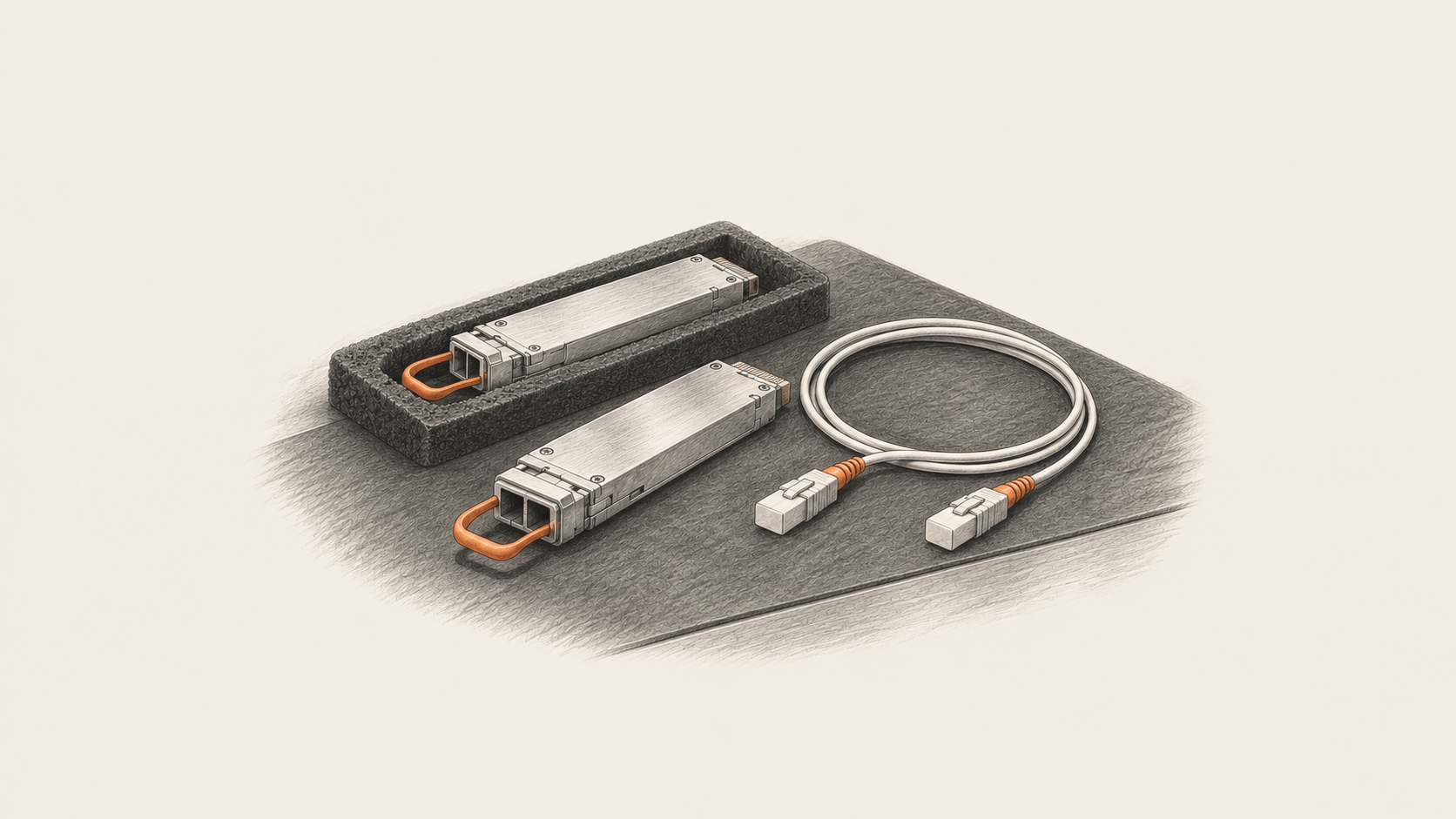
Coprod describes one EtherCAT control network and a shared C++/Python interface. Its co:power backplane carries electrical power and communication between units. The co:sense orientation sensor has incoming and outgoing EtherCAT-and-power ports for chaining modules.
The live catalogue offers that sensor for preorder while marking other component families “coming soon.” Coprod targets qualification, certification and a full component line on the market by the end of 2027. Those are plans, not a completed commercial rollout. BIG CHANGE has not tested the components.
Why timing belongs in the interface
EtherCAT is an industrial communication network. Beckhoff's original technical documentation explains its distributed clocks: supporting devices keep local clocks aligned with a selected reference clock, with the controller maintaining synchronization. The reference can be a clock in a connected device rather than the control computer.
This allows supported devices to sample inputs or apply outputs at scheduled times. Simply acting whenever a message arrives introduces variation from transmission and computer processing. A shared time basis lets an application distinguish when a measurement was taken from when its data reached the controller.
For an illustrative robot joint, an angle reading taken before movement and one taken after movement describe different states. Keeping those readings aligned with control events helps software interpret the sequence. This is a timing principle, not a measured Coprod performance result. The documentation makes support by both the controller and relevant devices a condition of using distributed clocks.
What the student robot demonstrates
The ETH Robotics Club's 2026 annual report describes a full-size humanoid with a Coprod battery, maxon actuators to move its joints, custom power-distribution boards and an NVIDIA Jetson AGX Orin computer. Its modular design lets subsystems be tested before integration into the complete robot.
The hardware team combined printed parts, machined components and sheet metal for different structural jobs. It also built a supporting gantry for early standing and walking trials. Those choices show why selecting components and making them operate as a physical system are separate engineering tasks.
At the report's cutoff, assembly was complete and walking had been demonstrated in simulation; untethered, battery-powered operation remained a next step. Coprod now reports first steps; that later claim is not independently tested here. The club's account documents a research build, rather than commercial uptime, task economics or a controlled comparison of development speed.
A software boundary still needs hardware behind it
The independent ros2_control framework offers a useful example of hardware abstraction. Its Lyrical documentation distinguishes state interfaces, which expose measurements, from command interfaces, which carry requested behavior to hardware drivers. Its control loop reads hardware data, updates controllers and writes their outputs back to components.
The framework's manager matches the interfaces controllers need with those the hardware provides. Sensors have reading capabilities; actuators can expose both reading and writing. This lets software reuse an agreed boundary while a driver handles the particular equipment behind it.
A command is a requested change, not proof that a joint reached its target; that requires returned measurements. This documents ros2_control, not Coprod's implementation. For a developer, the useful question is which integration work has been standardized and which still needs to be implemented, checked and measured on the intended robot.