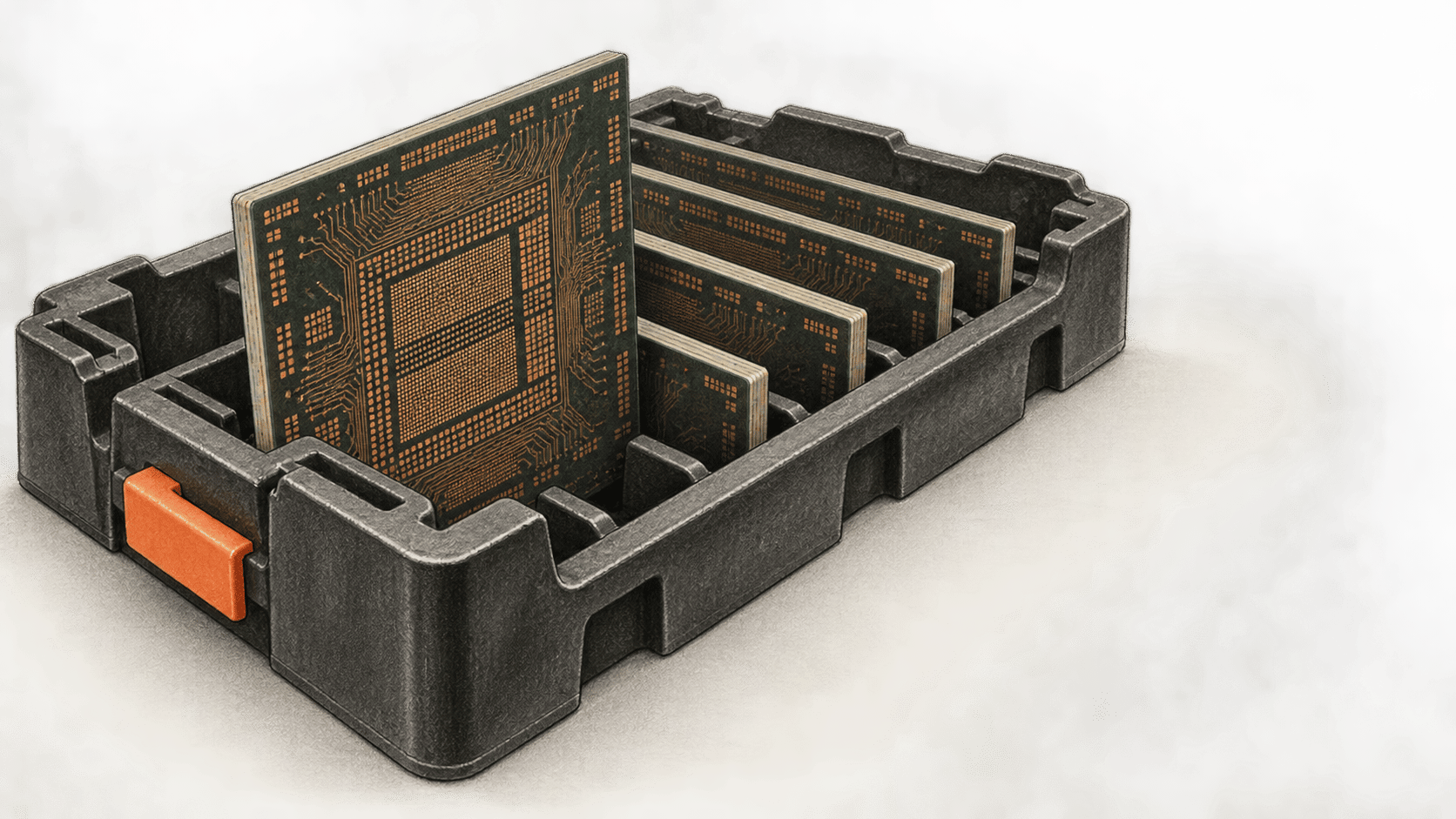
At NVIDIA GTC Berlin on October 21, Google Cloud announced A5X bare-metal instances based on NVIDIA's Vera Rubin NVL72 platform. The offering combines the hardware with Google's Virgo network, storage and workload software. Google says the instances will become generally available in November, with expansion into new local regions for customers with European data-residency requirements. Neither company has disclosed a public A5X price or a timetable for each region.
The distinction between an instance and a usable cluster matters here. A rack can offer fast links among its GPUs, but a training job spread across buildings also depends on the network between racks. Inference needs a different flow: model data and reusable context must be available when requests arrive. Google's announcement addresses those connections alongside the new hardware, although it gives no independently measured A5X result for the whole system.
The big change
- What changed: Google is packaging Vera Rubin rack hardware with its own scale-out network, data paths and cluster software in a cloud offering planned for general availability in November. Its largest GPU figures describe the network design, not installed capacity.
- Why it matters: For teams planning distributed training or long-context inference, useful capacity depends on moving data, placing workloads and connecting GPUs beyond a rack. The announcement describes those parts together, but does not measure how the complete A5X system performs for customers.
- What to watch: November availability will clarify which regions and capacity customers can obtain, along with the launch status of GPUDirect Storage, key-value caching and GKE integration. Google has not published A5X prices or a timetable for each region.
What the pieces are meant to do
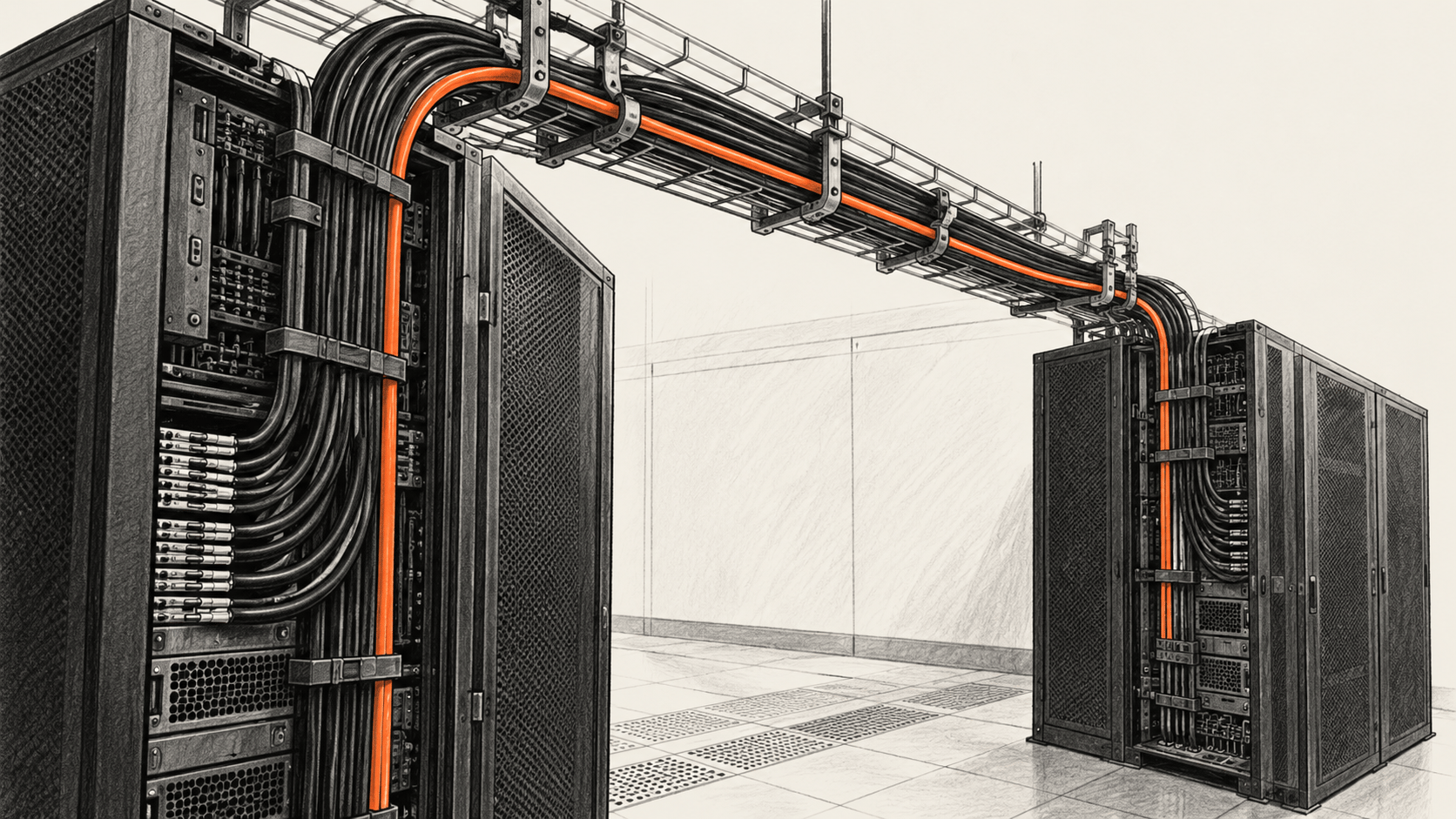
A5X uses NVIDIA's Vera Rubin NVL72 rack-scale platform. NVIDIA says the configuration also brings its ConnectX-9 network adapters and Google's fourth-generation liquid cooling. Virgo is the network that connects accelerators beyond a rack. Google describes a mesh fabric for connections within and between buildings and says the design can support clusters of up to 80,000 Rubin GPUs at one site and 960,000 across multiple sites. Those figures describe an architectural scaling target, not a count of installed or available GPUs. The announcement provides no site-by-site inventory or customer allocation at that scale.
Data movement is the other part of the design. Google says its Managed Lustre file system will support NVIDIA GPUDirect Storage on A5X, providing a direct RDMA path into GPU memory that bypasses the CPU and system memory. For long-context inference, Google says A5X will support a key-value cache that can move and reuse context beyond GPU high-bandwidth memory. The company expects less repeated computation and better serving economics, but published A5X measurements are absent from the announcement. A network that can connect GPUs at scale does not by itself show how quickly data reaches a training job or how a particular model performs.
Google also names Google Kubernetes Engine as an orchestration layer. Its existing Managed DRANET documentation describes allocating network devices to Kubernetes workloads, while its topology-aware scheduling guide explains how Kueue can place distributed workers according to physical network location. The October announcement proposes GKE with A5X; it does not establish that every documented GKE feature is generally available on A5X at launch. That distinction will matter to teams planning a job that needs both reserved compute and predictable placement.
Access now and the scale still ahead
NVIDIA says London-based Ineffable Intelligence was the first A5X customer and is using the platform for reinforcement-learning research. It also reports that WPP demonstrated a creative-agent reference architecture on A5X, and that WPP's initial tests moved workloads that had needed multiple nodes to one instance. Those are company-reported customer examples, without a published workload definition or independent benchmark. WPP's quoted expectations about reliability, scale and security likewise do not establish measured production outcomes.
For a prospective customer, the immediate questions are more modest than the headline scale: which A5X capacity and regions will be offered in November, under what reservation and price terms, and which storage, caching and scheduling capabilities will be ready with it. Google directs interested customers to its sales team. The answer today is a disclosed system design and an announced access window, plus limited examples of early use. The performance and economics of a deployed multi-site A5X cluster remain to be shown.
Sources & further reading
- Google Cloud's October 21 infrastructure announcement gives the A5X access window and describes Virgo, Managed Lustre, planned cache support and GKE integration. Its scale and efficiency descriptions are vendor claims.
- NVIDIA's October 21 A5X announcement identifies the platform components and reports Ineffable's access and WPP's demonstration. It does not publish an independent benchmark or deployed fleet count.
- Google's Virgo architecture explanation explains the scale-out network design. Its performance figures concern earlier accelerator configurations and are not A5X results.
- Google's GKE topology-aware scheduling guide describes how Kueue handles placement and quotas in supported GKE configurations; it does not certify A5X launch readiness.