The International Energy Agency's World Energy Outlook 2026, published November 19, projects global data-centre electricity consumption doubling to 1,000 terawatt-hours by 2030 in its Stated Policies Scenario. Around three-quarters of the increase comes from capacity designed for AI training and use. IEA report
The big change
- The outlook distinguishes conventional digital services from AI-optimised computing. AI drives most of the projected increase, making the electricity to operate new capacity a material part of the AI build-out.
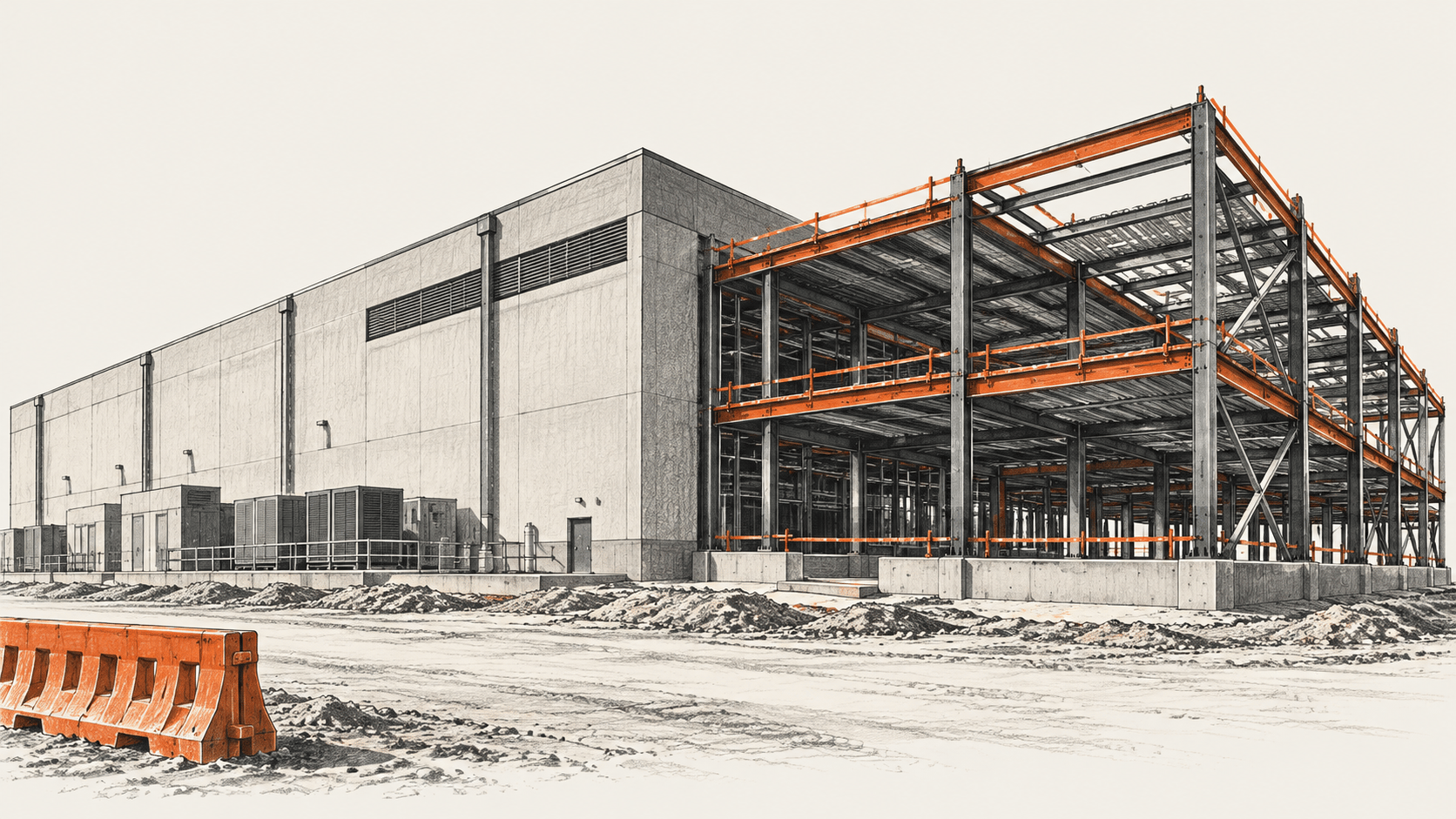
- Data halls can be built faster than the networks supplying them. The mismatch makes a credible electricity connection, and the conditions attached to it, part of a project's delivery schedule.
- Ireland already ties new connections to generation or storage and additional renewable electricity. Its policy shows how local constraints can shape the terms under which computing capacity expands.
What the projection counts
The 2030 figure measures electricity used over a year. The IEA starts its data-centre demand model with annual server shipments. Conventional capacity serves activities such as cloud storage and streaming, and AI-optimised servers handle model training and use. The report says shortages in advanced chip packaging, memory and power equipment moderate its outlook. Its Stated Policies Scenario explores how the energy system could evolve under prevailing policy settings, with outcomes dependent on those assumptions. IEA report
A global total can conceal a local problem
The IEA's separate 2025 Energy and AI study explains why location matters. Data centres accounted for around 1.5% of global electricity use in 2024, yet nearly half of US capacity was concentrated in five regional clusters. Large facilities can therefore place much greater demands on their immediate networks than a world average suggests. Energy and AI
That study identifies location and flexibility as options for reducing connection delays. A developer can seek a site with available power or arrange more flexible server, generation or storage operation. It also warns that interrupting expensive AI computing can be costly. The ability to vary consumption has to fit the operation being supplied. Energy and AI
The network moves on a different timetable
In its separate Electricity 2026 analysis, the IEA puts planning, permitting and completion of new grids at five to 15 years, compared with one to three years for data centres. Building the facility can consequently outpace the infrastructure needed to connect it. Electricity 2026
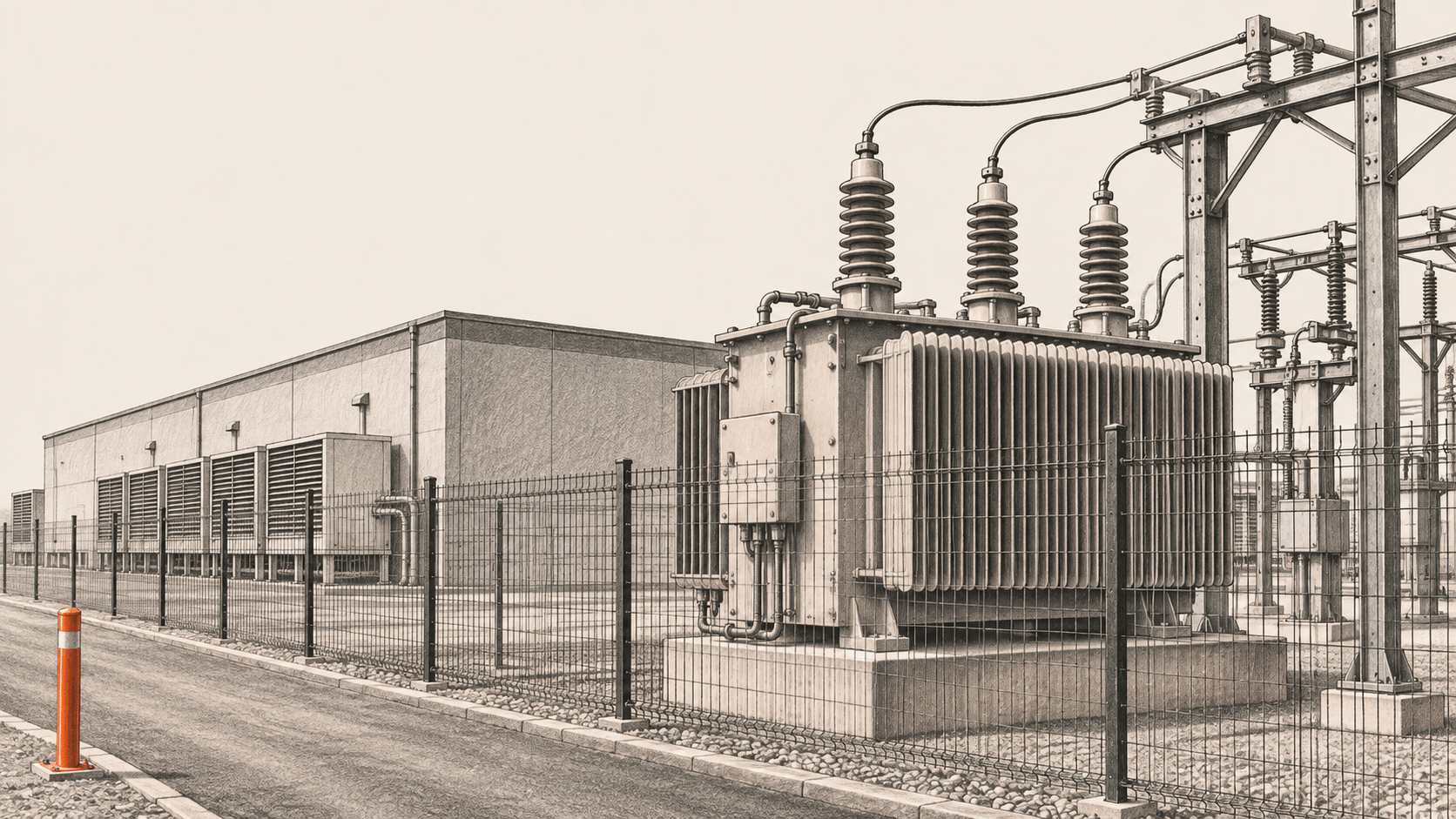
One response is a connection that permits an operator to limit consumption at certain times. The IEA calls this a non-firm agreement. Accepting that restriction can allow a project to connect before major network reinforcement is finished, using spare capacity when it is available. The trade-off becomes an operating condition the customer must accommodate. The report also describes upgrades to existing lines and equipment, whose usefulness depends on the specific network constraint. Electricity 2026
Ireland shows what connection conditions mean
Ireland's Commission for Regulation of Utilities adopted an updated data-centre connection policy in December 2025. New connections require generation and/or storage capacity, onsite or nearby, matching the site's maximum requested import capacity. Generation must participate in the wholesale market to support the wider system. CRU decision announcement
The policy also requires at least 80% of annual demand to be met with additional renewable electricity generated in Ireland. Developers have a six-year period for those renewables to start generating and must present a credible development plan. System operators must assess the constraints at the particular connection location and publish information about available capacity. CRU decision announcement
For a developer assessing an Irish site, the practical questions therefore extend from the building to the associated energy projects, their delivery timetable and the capacity at that connection point. The policy makes those requirements part of the route to bringing a new facility online. CRU decision announcement