THE WORLD IS NOT STANDING STILL.RSS
BIG CHANGE.
BIG CHANGE, one tap away

Make room for the big picture.

Add BIG CHANGE to your home screen or desktop. It opens in its own window, with the latest stories when you’re online.

iPhone & iPad
Open bigchange.ai in Safari. Tap Share, then Add to Home Screen. Turn on Open as Web App if shown, then tap Add.
Android
Open bigchange.ai in Chrome. In the browser menu, choose Install app or Add to Home screen.
Desktop
In Chrome or Edge, use the install icon in the address bar or the browser’s app menu. In Safari on Mac, choose File → Add to Dock.
All briefings

Follow the change ·

The day,
in perspective.

What happened in AI and robotics — and the change behind it. A reading path through 19 stories from BIG CHANGE.

Ordered using RADAR attention, story opens and likes. Excerpts from our published reporting; open a story for the full context and sources. Dates in UTC.

Original story: analysis

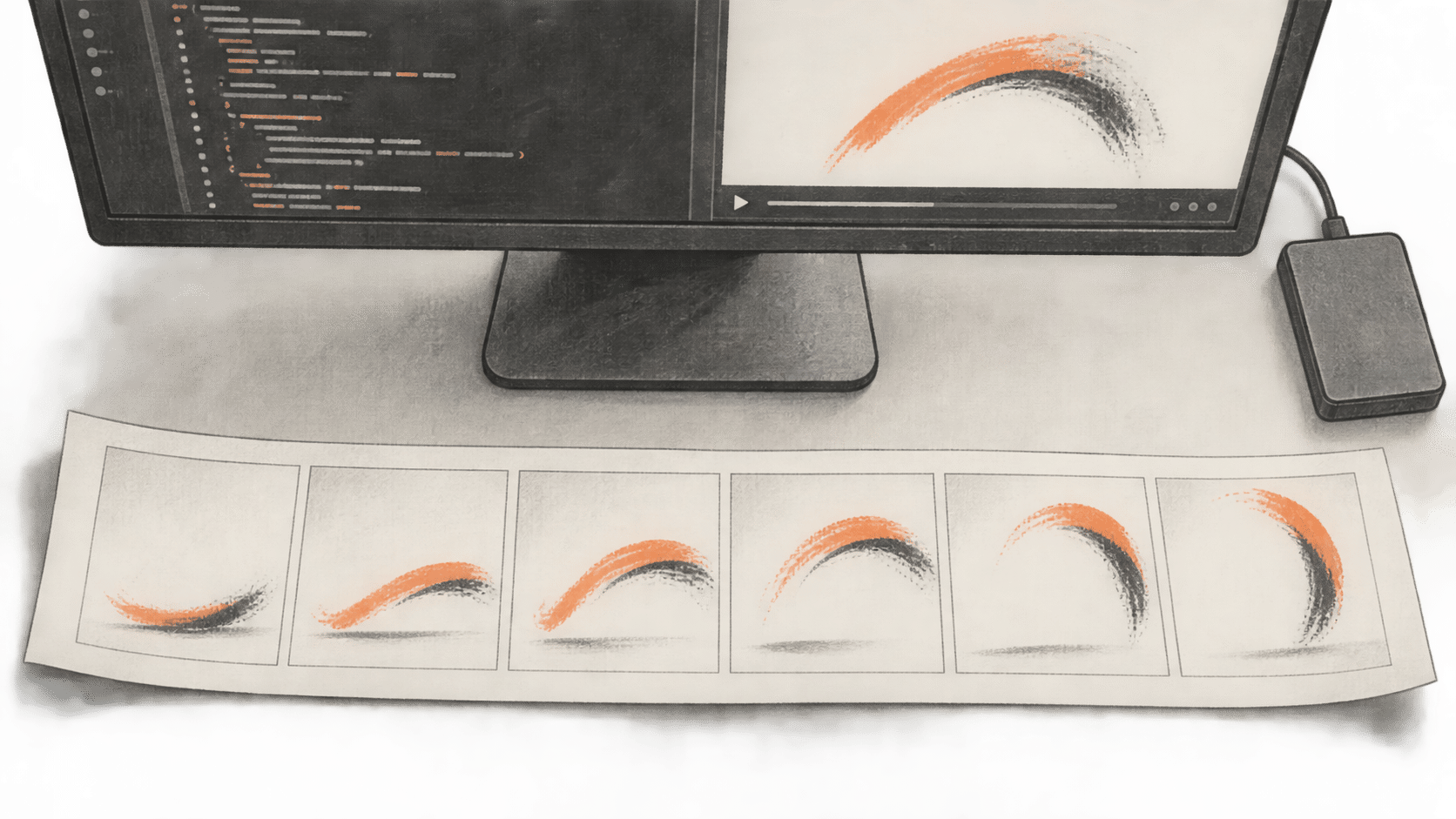
Claude’s pop videos are animations written as code

Creator repositories show how Claude Opus 5.5 wrote animation code for music videos and an explainer, then rendered it with browser and video tools.

The big change

What changed: Creators are using an AI coding agent to build animations as software projects and render the results as videos. Heibel has published the code and a reusable starter kit for one such workflow.

Why it matters: The storyboard, scene files and renderer expose the work behind the clip and the inputs supplied from elsewhere. A finished clip alone cannot show that division of labor.

What remains uncertain: The public examples do not establish typical production time, cost, success rate or how readily another creator could obtain the same quality. BIG CHANGE did not reproduce either project.

Read the full story
—
Back to the briefing
Original story: analysis

Boris Power says OpenAI research mostly targets later GPT generations

At Fellows Forum, Boris Power estimated that 80–90% of OpenAI research targets later GPT generations. The figure is his view, without a published allocation breakdown or GPT-7/8 roadmap.

The big change

What changed: Power described two connected tracks: improvements to models people use now, and research aimed at later generations. He estimated that the latter accounts for most OpenAI research.

Why it matters: A stronger large model can supply training examples for a smaller, cheaper model on a defined task. That gives developers a reason to follow frontier research even when they rely on smaller models in their products.

What to watch: Future model releases and technical disclosures can show whether advances in large models reach smaller ones. The interview supplied no GPT-7 or GPT-8 release dates, specifications or results.

Read the full story
—
Back to the briefing
Original story: analysis

Authors Guild filings challenge how OpenAI acquired books

Newly public book-copyright filings dispute whether acquiring books and training AI require separate legal analysis. OpenAI and Microsoft contest the authors’ case.

The big change

What changed: Authors can now point readers to a fuller public account of the book acquisition decisions they are challenging. The September filings expose more of the dispute over where training books came from and how companies handled them.

Why it matters: For writers seeking payment and developers defending their use of books, the legal treatment of acquisition matters alongside the treatment of training. The parties disagree about whether a model's purpose can justify earlier copying.

What to watch: The next briefs will contest both that legal argument and the evidence of harm to authors. Which evidence the judge permits, and which uses he evaluates separately, will shape the claims he can resolve without trial.

Read the full story
—
Back to the briefing
Original story: opinion

AI risk deserves public attention and accountability

A Saturday Night Live sketch makes AI risk a punchline. Anthropic’s early biology report and documented agent incidents show why the public should stay engaged without treating forecasts or company claims as settled fact.

The big change

What changed: SNL has turned a real argument about advanced AI risk into comedy, while Anthropic is promoting an early research result in which Claude agents helped identify a previously uncharacterized biological system.

Why it matters: Comedy can expose self-importance and deflate exaggerated claims. It can also leave an audience with the impression that serious risks are just another performance. The research claim deserves interest and scrutiny at the same time.

What to watch: Independent review of the ART research, stronger public evidence about how agent systems behave under limits, and rules that give governments and affected people a meaningful say before deployment.

Read the full story
—
Back to the briefing
Original story: guide

NVIDIA releases Nemotron 3 Diarization for eight-speaker audio

NVIDIA's September 23 open-weight diarization model labels up to eight speakers in recorded or streaming audio. Its shortest recommended 0.32-second setting measures buffered input, while accuracy figures come from NVIDIA's own tests.

The big change

What changed: NVIDIA's previous streaming Sortformer checkpoint supports four speakers. This release offers eight arrival-ordered speaker channels from one checkpoint that works with both recorded audio and incoming chunks.

Why it matters: A developer building meeting or call transcription can use the model to assign generic speaker labels to time intervals, including overlapping speech, then combine those intervals with a separate recognizer's words. The release widens the documented speaker limit for that task.

What to watch: The practical choice is how much audio to buffer before each streaming result. NVIDIA's shortest recommended setting waits for 0.32 seconds of audio before computation begins, and its own accuracy tables show a cost to using that setting. Teams still need to measure the complete pipeline on their recordings.

Read the full story
—
Back to the briefing
Original story: analysis

Sanders and Casar propose a US ban on AI superintelligence and a pause on advanced models

The introduced Sanders–Casar bill proposes a temporary pause for advanced models and prohibitions covering superintelligence, listed precursor capabilities and systems foreseeably modifiable to produce them. It is not law.

The big change

What changed: Sanders and Casar moved from a September 3 announcement of planned legislation to a September 23 announcement that they had introduced it, with a public text spelling out the proposed definitions and enforcement powers.

Why it matters: The proposal reaches beyond an undefined future superintelligence. It would also prohibit systems with listed precursor capabilities and temporarily pause models trained above a specified compute threshold. Those provisions could affect developers well before any system meets the bill's definition of superintelligence, if Congress enacts the text.

What to watch: Congress would have to advance and pass the measure before it could create duties for developers. The public text still has a blank Senate bill number; a numbered congressional record and any amended text would clarify its next formal stage.

Read the full story
—
Back to the briefing
Original story: guide

A practical guide to Rive CLI and coding agents

A practical guide to using Rive CLI and RML with a coding agent to build, inspect and test interactive graphics, including account, signing and export limits.

The big change

What changed: Rive scenes now have a text-based path for coding agents. An agent can edit RML in a project folder, while the CLI compiles a .riv for runtimes or a .rev for further work in the Editor.

Why it matters: Designers and front-end or game developers can review source changes alongside their other project files and use CLI checks while iterating. They still need to judge the rendered design and interactions before using the asset in a product.

What to watch: Moving a local prototype to the web is a separate decision. Files with scripts need a signed --publish build; a clean .riv also needs an account-file binding and a Cadet-or-higher workspace. Check those conditions and the final graphic before deployment.

Read the full story
—
Back to the briefing