THE WORLD IS NOT STANDING STILL.RSS
BIG CHANGE.
BIG CHANGE, one tap away

Make room for the big picture.

Add BIG CHANGE to your home screen or desktop. It opens in its own window, with the latest stories when you’re online.

iPhone & iPad
Open bigchange.ai in Safari. Tap Share, then Add to Home Screen. Turn on Open as Web App if shown, then tap Add.
Android
Open bigchange.ai in Chrome. In the browser menu, choose Install app or Add to Home screen.
Desktop
In Chrome or Edge, use the install icon in the address bar or the browser’s app menu. In Safari on Mac, choose File → Add to Dock.
All briefings

Follow the change ·

The day,
in perspective.

What happened in AI and robotics — and the change behind it. A reading path through 9 stories from BIG CHANGE.

Ordered using RADAR attention, story opens and likes. Excerpts from our published reporting; open a story for the full context and sources. Dates in UTC.

Original story: news

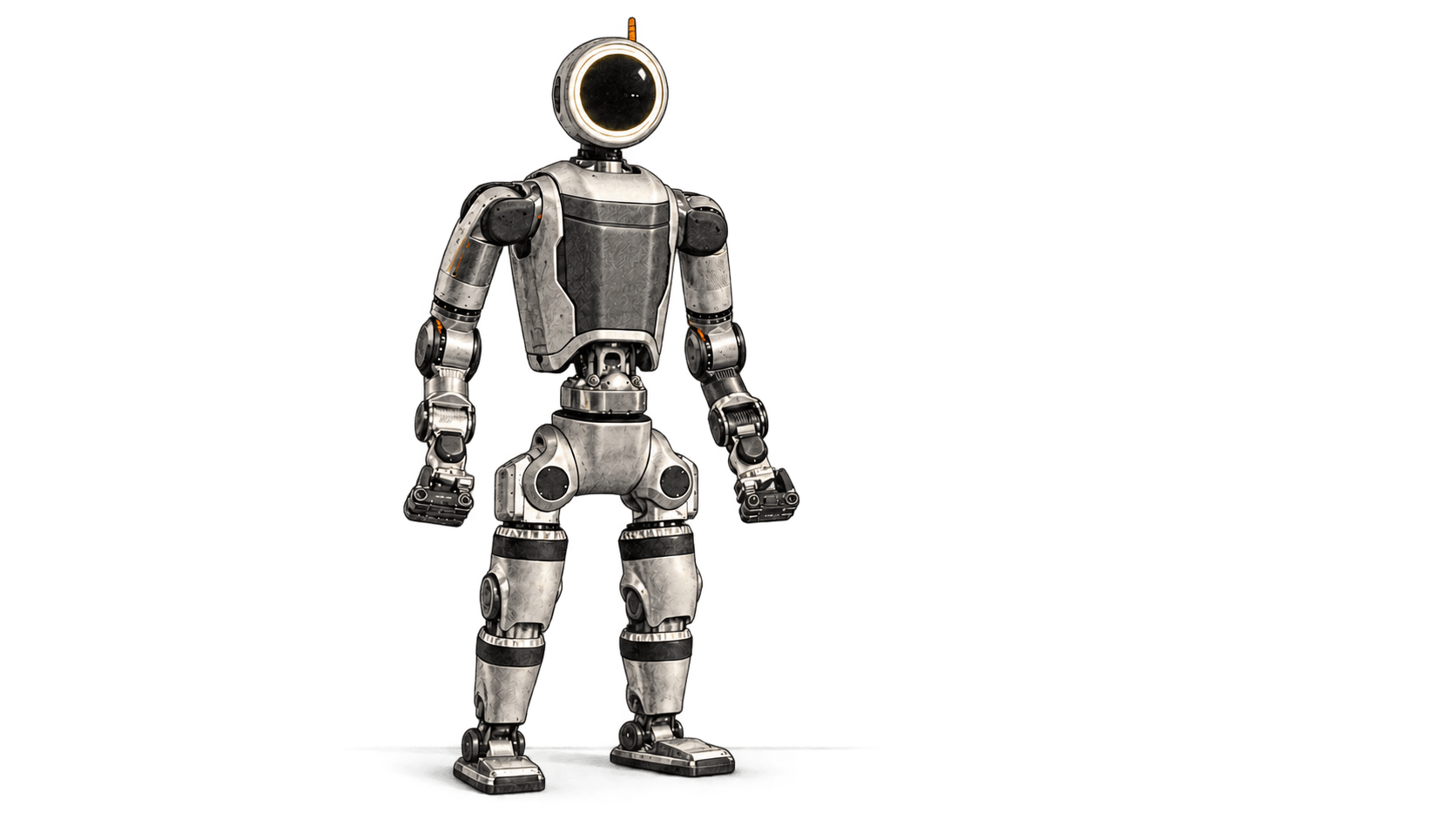
Boston Dynamics names Rohit Prasad CEO as Atlas remains in development

Boston Dynamics named Rohit Prasad CEO effective October 7. Spot and Stretch are marketed for industrial tasks; Atlas remains in development and field testing.

The big change

What changed: Prasad takes over as CEO on October 7. Boston Dynamics explicitly connects his AI product experience to its plan to develop and commercialize robots with more advanced AI.

Why it matters: The strategy spans products at different stages. Industrial buyers can discuss inspection work with Spot's sales team or case handling with Stretch's; the Atlas path described by the company starts with selected early adopters. That distinction determines which customer route the company offers today.

What to watch: Boston Dynamics plans to build Atlas' skills with selected customers before expanding deployments. Reports from those applications would help buyers assess the humanoid's industrial role. The CEO announcement adds no release date or measured operating result.

Read the full story
—
Back to the briefing
Original story: guide

Make, revise and share a game with Google Playground

Google's experimental Playground turns text prompts into playable browser games. This guide covers access, revisions, testing, sharing and export, then examines the platform's gaming implications.

The big change

What changed: Google has put prompt-based game creation, browser play and a public game gallery in one experimental service. Eligible creators can also export a game's web files.

Why it matters: A creator can move from an idea to a playable draft and revise its rules without first writing code. Google's sharing and discovery controls then make distribution part of the same workflow. That could make small-game prototyping more accessible, though the quality of finished games has not been independently established here.

What to watch: The useful test is whether creators can reliably revise and develop games people want to keep playing. Google and Unity also plan a more advanced creation path through Unity Spark, which remains in testing; its promised production features are not available as a general Playground workflow today.

Read the full story
—
Back to the briefing
Original story: guide

Claude for Google Workspace: edit open files with approval

Claude for Google Workspace is in public beta for paid plans. This documentation-based guide covers editing an open Google file, approval controls, setup and limits.

The big change

What changed: Claude can act inside Google's document editors. For users who want to keep their work in those files, the sidebar provides a direct editing path alongside the existing editor.

Why it matters: The approval decision now sits next to the content being changed. Asking for a proposed change and allowing it are separate actions in the default mode, giving users a chance to inspect the action before it affects their file.

What to watch: Choose the editing mode deliberately. Switching to automatic acceptance changes when review happens, while beta restrictions still determine which tasks the sidebar can complete.

Read the full story
—
Back to the briefing
Follow-up story: analysis

OpenAI's math repository: manuscripts, versions and Lean proofs

OpenAI's collection contains 722 manuscripts in 372 families. A close look at one Lean proof configuration shows how to inspect versions, scope and checking requirements.

The big change

What changed: Researchers can now trace hundreds of AI-produced manuscripts through a shared public catalogue to supporting files and, for some results, formal statements and proposed proof implementations.

Why it matters: A mathematician deciding whether to use a result can inspect the statement actually selected for checking, its assumptions and its relationship to the paper. The repository's organization helps identify where a narrower formal result ends and further mathematical review begins.

What to watch: OpenAI plans to add formalizations and preserve revisions. Those updates matter to anyone citing or building on this work: a review needs to identify the version and theorem it examined.

Read the full story
—
Back to the briefing
Original story: analysis

Common Sense Media tests the limits of ChatGPT’s teen safety alerts

Newly linked teen test accounts received no parental alerts during scripted crisis conversations, the Youth AI Safety Institute reports. OpenAI disputes the test timing.

The big change

What changed: An independent assessment now puts OpenAI’s teen safety alerts and study controls through documented, scripted tests. Newly linked test accounts received no alerts during explicit crisis conversations; OpenAI says some tests may have preceded full alert activation.

Why it matters: Parents can link accounts to receive limited safety notifications. OpenAI says those alerts are not real-time monitoring and may miss concerns, so families cannot treat them as a live warning system. Study Hours start eligible chats in Study mode without restricting access.

What to watch: The alert dispute turns on activation timing. Some test accounts had been linked longer than OpenAI’s stated three-hour interval, and none in that dedicated test received an alert. At least some therefore went without an alert beyond the interval. The report omits the subgroup count and account-level timing, leaving the delay’s possible effect on the full result unquantified.

Read the full story
—
Back to the briefing
Original story: guide

Find the spoken moment before editing a video

Arcmira's n8n workflow returns up to three timestamped transcript passages. Editors still need to check the source, speaker, cut and reuse rights.

The big change

What changed: Arcmira's public n8n example turns a topic and date window into a shortlist of up to three source-linked transcript passages.

How it works: An inactive, manually started workflow sends one search request and preserves both the passages and the search coverage metadata in one JSON item.

Why it matters: Editors can navigate to candidate moments without treating a transcript match as a verified quote, speaker, usable cut or licensed clip.

Read the full story
—
Back to the briefing
Original story: guide

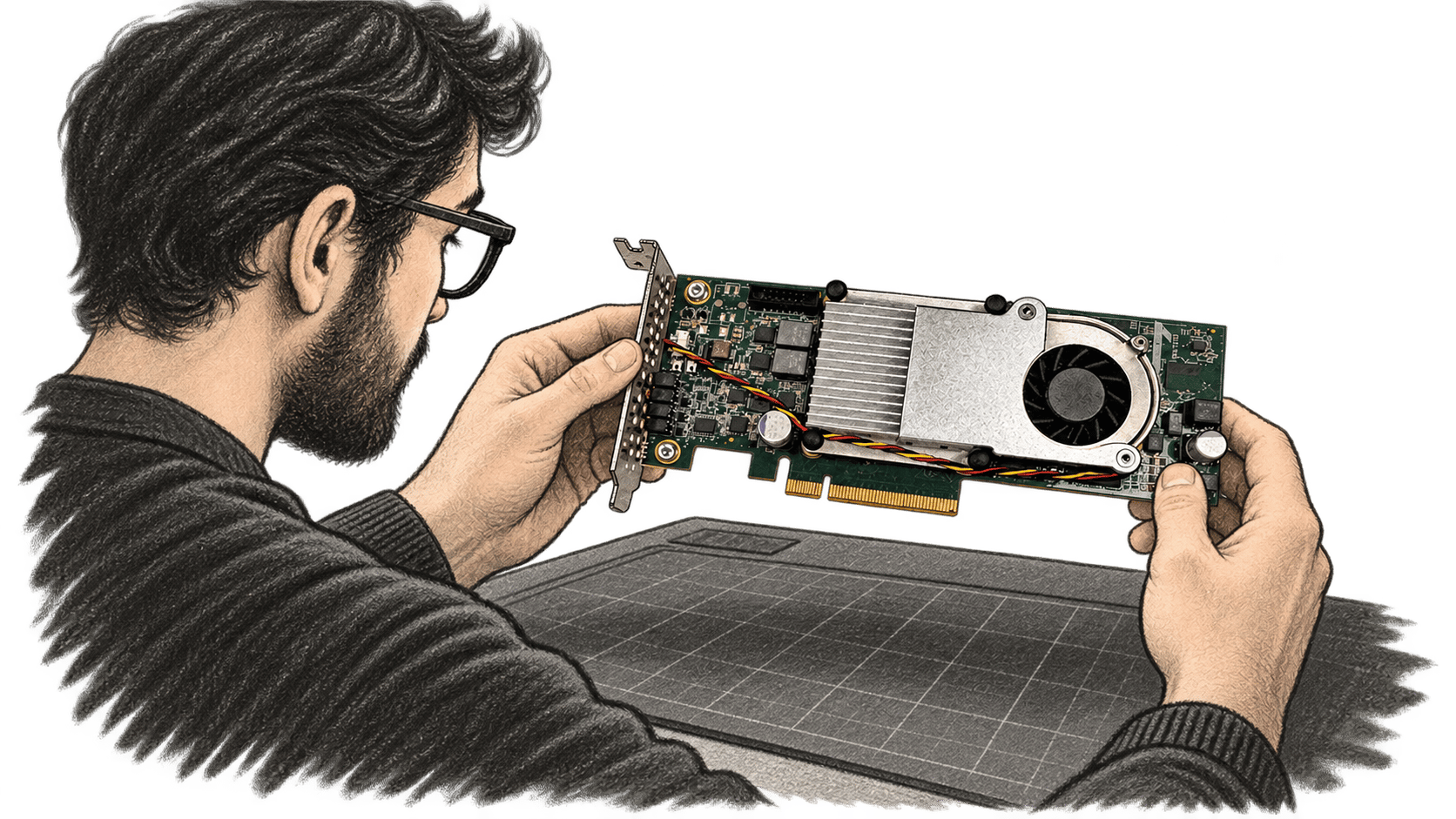
How to run openTPU’s simulator and assess its FPGA requirements

openTPU documents a Python simulator for language-model inference and a separate path to an Inspur Kintex-7 card. This guide maps the commands, expected output and hardware requirements from the repository.

The big change

What changed: openTPU publishes an accelerator’s instruction set, simulator, compiler, RTL and board integration together. An engineer can inspect the path from a model operation to simulated instructions before acquiring the supported card.

Why it matters: The documented simulator gives hardware learners a concrete way to study the design and run a small language model using ordinary host software. The project says AI agents helped produce the hardware stack; the inspectable artifacts make that development claim worth examining, while the reported card results remain the project’s own measurements.

What to watch: Reproducing the physical result depends on a Kintex-7 board, a licensed Vivado build and working PCIe bring-up. The repository supplies commands and self-tests for that work. An independent run on a pinned revision would establish how readily other engineers can repeat it.

Read the full story
—
Back to the briefing
Original story: guide

Nano Banana 2.1 is available in Google's API: access, prices and limits

Google released Nano Banana 2.1 as a generally available image model. Its official documentation sets out where to try it, the API model ID, image prices and limits; quality comparisons remain Google's own tests.

The big change

What changed: Google released Nano Banana 2.1 as a generally available image generation and conversational editing model on October 6, 2026. Its model card says it is based on Gemini 3.6 Flash and lists the Gemini app, AI Studio, Gemini API, Search AI Mode, Ads, Flow and Stitch as distribution channels.

How it works for a reader: In the API, a developer selects gemini-nano-banana-2.1, supplies text and optionally an image, then reads image and text output. The image generation guide documents up to 14 reference images, output size and aspect-ratio controls, optional search grounding, and three thinking levels. A creator can instead check the model in Google AI Studio or another listed Google product; the card's channel list does not establish that every account has identical access or controls.

Why it matters: The paid API price for a standard 1K output image is $0.0336, compared with $0.067 for Nano Banana 2 on Google's price page. That is a price comparison for the specified API output, not a measured comparison of image quality or latency. BIG CHANGE reviewed documentation and…

Read the full story
—
Back to the briefing