Boston Dynamics designs Atlas’s new hand for learned tool use
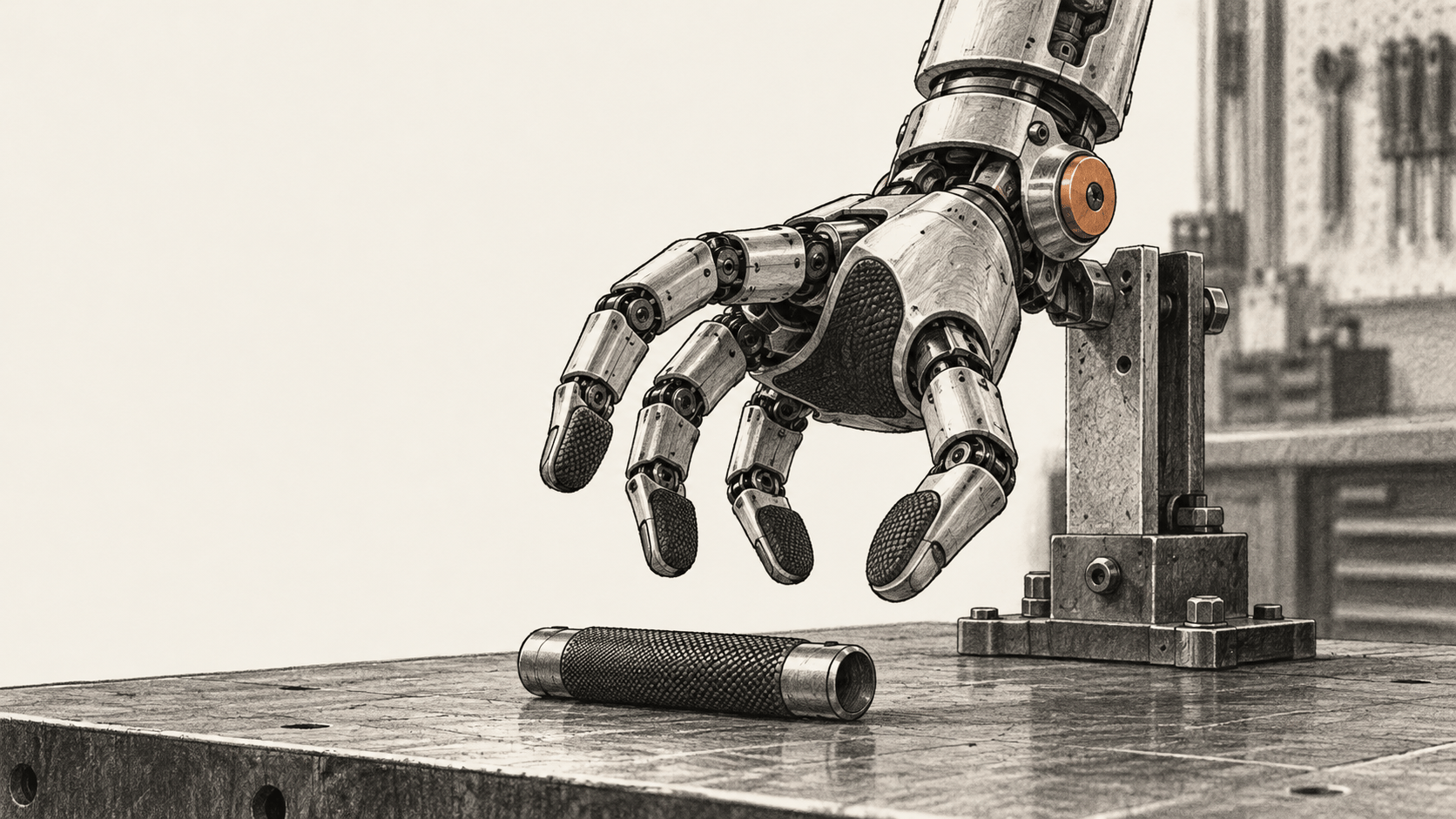
Boston Dynamics’ four-finger Atlas hand pairs 13 degrees of freedom, backdrivable actuation and tactile sensing with reinforcement learning in simulation. The company reports initial transfer results but no benchmark or commercial deployment.
The big change
What changed: Boston Dynamics describes a new-generation Atlas hand with more joints than its earlier seven-degree-of-freedom version, direct actuation and dense tactile sensing.
How it works: The company says it models the hand’s geometry, motor behavior and contact with objects, then trains reinforcement-learning policies in simulation with randomized conditions before running them on hardware.
Why it matters: Manipulation depends on how fingers move, feel contact and respond to force. A hand that behaves predictably in simulation could let engineers train more of that control before using the physical robot.