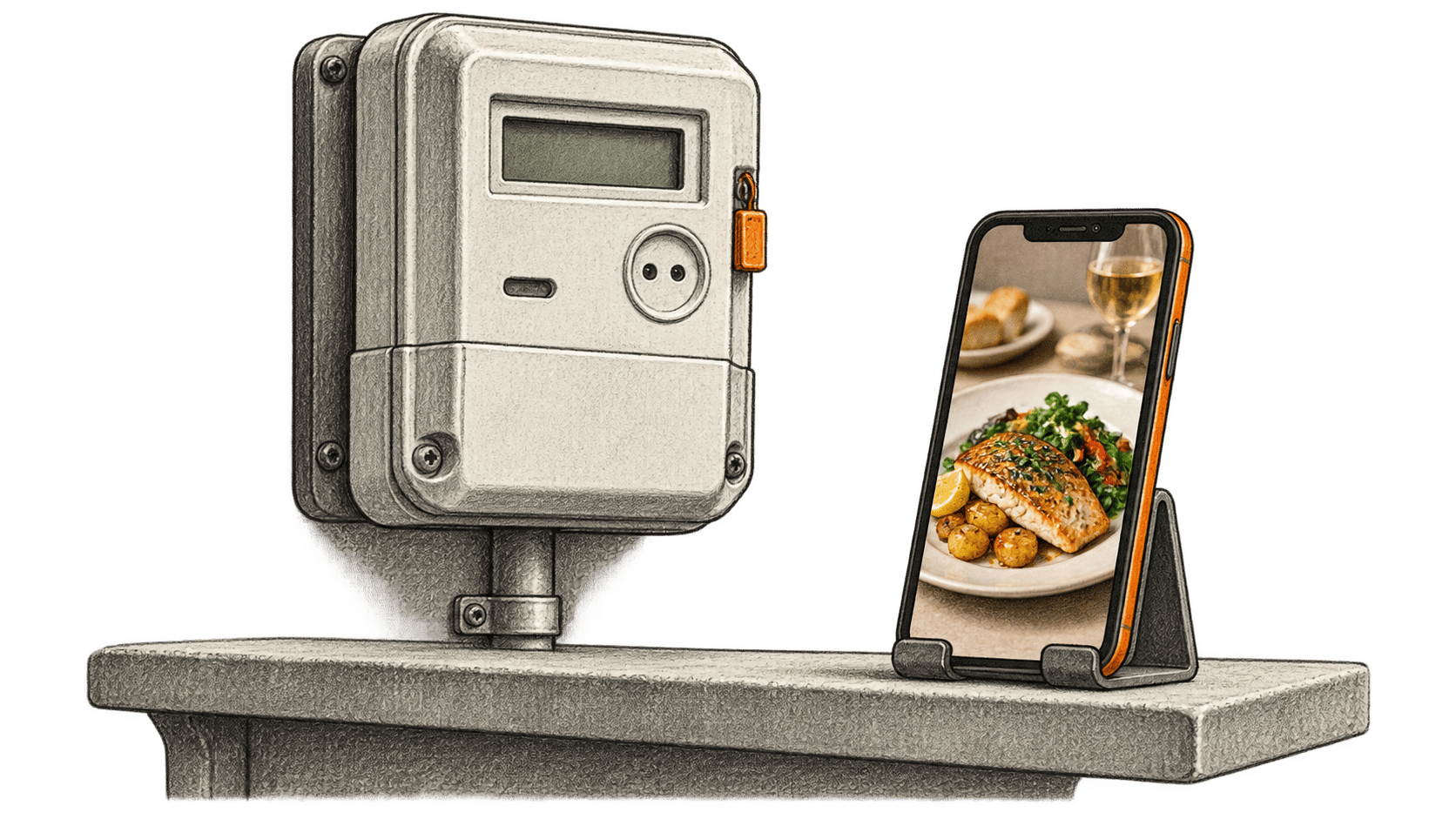
Endesa says it used public social-media posts and an AI tool to help prioritize electricity-fraud inspections at restaurants around Barcelona. In its October 8 report on the case, El Periódico said investigators reviewed 25 electricity supplies, inspected 19 locations and found what the company classified as fraudulent activity at 16.
The numbers describe a targeted investigation, not a test of the AI system. The report does not explain how the tool was built, how it weighted its inputs, or how often its suspicions were wrong. It also does not establish that the restaurants were convicted in court.
The big change
- What changed: Endesa's investigators added public restaurant promotions on Instagram and TikTok to signals they use to decide which suspected electricity irregularities to inspect.
- Why it matters: Social posts can reveal visible activity at a business. When a utility uses them alongside private consumption records to direct inspections, the method and its safeguards matter to businesses and the public.
- What remains unknown: The company has not publicly described the AI model, its accuracy, false-positive rate, data retention or independent audit in the reporting reviewed here.
According to El Periódico's account of Endesa's investigation, Endesa investigators examined social-media posts promoting restaurants and compared the apparent business activity with electricity-use patterns available to the company. The report says the AI tool considered signals such as low-priced menus, the size of a venue, occupancy and intensity of use when estimating energy consumption. Endesa investigators told the paper that a mismatch between what a restaurant appeared to be doing and its recorded consumption could raise an alert.
That is a screening process, as described by the company. The case report says technical visits were decisive: after reviewing 25 supplies considered suspicious, Endesa inspected 19 and identified irregular activity in 16. El Periódico reports that the suspected methods included operating without an electricity contract, altering meters or using a hidden second connection. It says the restaurants later regularized their situations. The paper does not report court findings for each business, and it says details of the investigated restaurants are confidential.
The 16-of-19 result is not an AI accuracy measure. Investigators selected the cases for inspection after screening, and the article provides no unflagged comparison group, model output, false-alarm count or independent evaluation. The figure describes what the reported process found among the locations visited; it cannot show how the tool performs across restaurants generally.
For a restaurant owner, the report offers no way to audit a particular alert or determine how a public post was interpreted. It does not say whether a post alone can trigger an inspection, how long public posts or derived assessments are retained, or what review takes place before an inspection. Endesa's sources describe social-media activity as one signal among consumption patterns, and the report says the physical inspection supplies the confirming evidence in this investigation.
The report does not establish a direct effect on customers' bills or restaurant prices. It documents a utility's use of publicly visible business information and an AI-assisted comparison to prioritize technical checks. Without more detail about the model and review process, readers cannot assess how consistently it separates a genuine mismatch from an unusual but legitimate business pattern.
Sources & further reading
- El Periódico: “Els ‘influencers’, claus per detectar les noves estafes” (October 8, 2026). Original Catalan reporting on Endesa's use of social-media signals and its AI-assisted comparison. The article attributes the method to company investigators; no model documentation or independent performance audit is supplied.
- El Periódico: “El frau elèctric aflora entre els nous bufets lliures ‘low cost’ de BCN” (October 8, 2026). Companion report with the 25 supplies, 19 inspections and 16 findings, plus the methods Endesa investigators identified. These two articles are from the same reporting organization and are not independent corroboration of each other.