THE WORLD IS NOT STANDING STILL.RSS
BIG CHANGE.
BIG CHANGE, one tap away

Make room for the big picture.

Add BIG CHANGE to your home screen or desktop. It opens in its own window, with the latest stories when you’re online.

iPhone & iPad
Open bigchange.ai in Safari. Tap Share, then Add to Home Screen. Turn on Open as Web App if shown, then tap Add.
Android
Open bigchange.ai in Chrome. In the browser menu, choose Install app or Add to Home screen.
Desktop
In Chrome or Edge, use the install icon in the address bar or the browser’s app menu. In Safari on Mac, choose File → Add to Dock.
All briefings

Follow the change ·

The day,
in perspective.

What happened in AI and robotics — and the change behind it. A reading path through 38 stories from BIG CHANGE.

Ordered using RADAR attention, story opens and likes. Excerpts from our published reporting; open a story for the full context and sources. Dates in UTC.

Original story: news

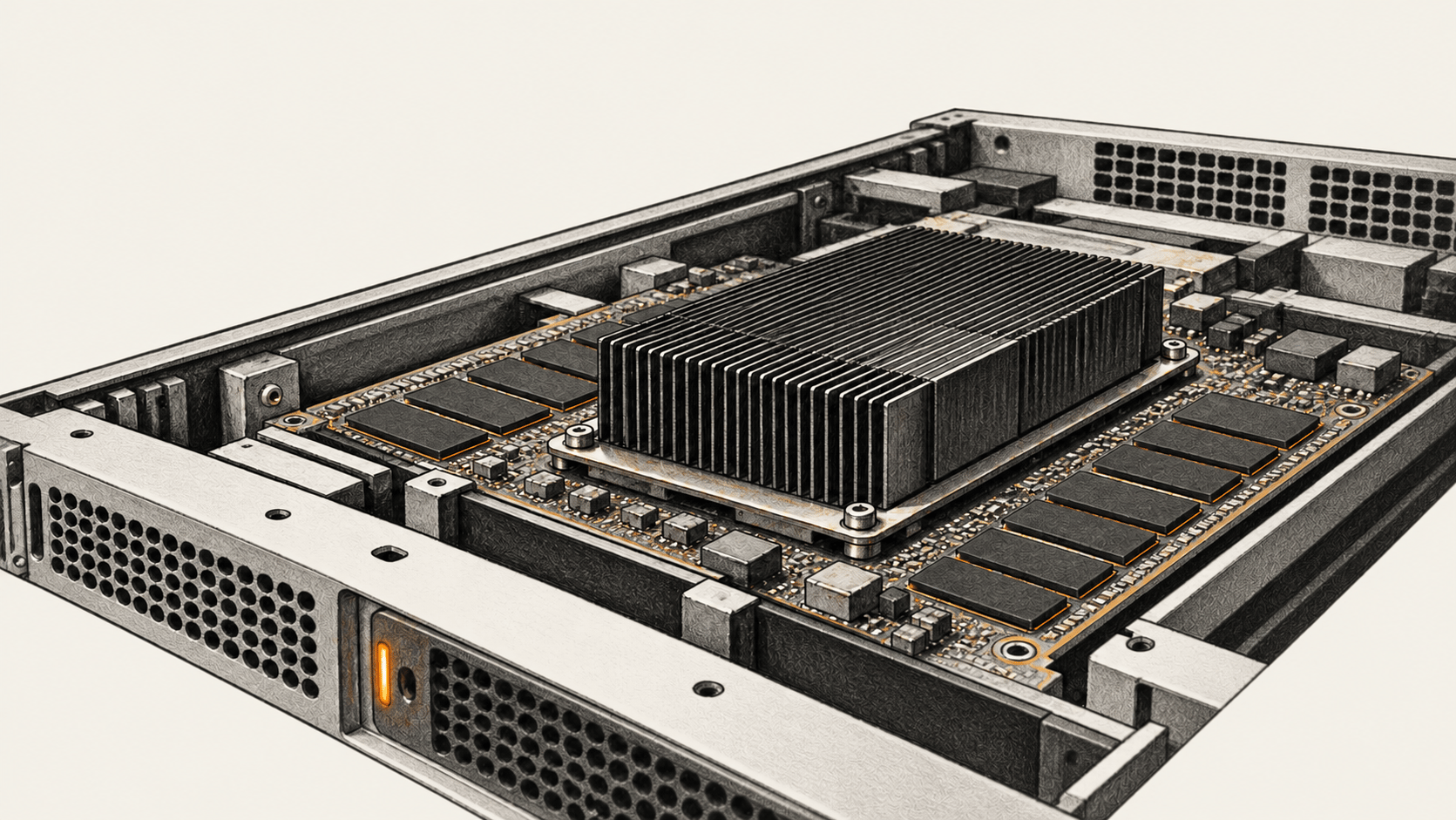
Cloudflare’s GLM-5.3 cache leak crossed a request boundary after an internal rejection

155 GLM-5.3 responses exposed other customers’ material.

The big change

What changed: Cloudflare’s GLM-5.3 accepted prompts longer than its prefill cache could hold. In disaggregated SGLang, an internal rejection continued through handoff; Cloudflare enlarged the pool and patched that path before restoring service.

Why it matters: Decode reserved pages for the original prompt but received cache for only a one-token placeholder. It read earlier requests’ remaining state and could put another customer’s material in the answer, despite an HTTP success.

What to watch: Check the running cache capacity against the offered context and whether rejected work exits before transfer. Cloudflare recommends SGLang v0.5.22 or later; its separate abort safeguards depend on safe page reuse after transfers.

Read the full story
—
Back to the briefing
Original story: news

WorldFailBench shows robot models miss a failure boundary

WorldFailBench bottle test compares predicted and reference success.

The big change

What changed: Reference success fell from 100% to zero after a bottle turn; most models predicted the wrong direction or a smaller loss.

Why it matters: A policy choice depends on which condition is less reliable and by how much. A convincing generated rollout, or a single completion rate, cannot answer that paired question.

What to watch: The result matters when the intended use is choosing between conditions. Other uses require evidence matched to their own decisions.

Read the full story
—
Back to the briefing
Original story: guide

Build a reviewed trend-to-content pipeline with Claude Code skills

Collect a Google Trends RSS lead, check its sources, draft with three Claude Code skills, then approve and schedule distinct LinkedIn and X posts with public readback.

The big change

What changed: The local runner binds the raw feed, selected source passages and each writing stage to the next approval.

Why it matters: A reviewer can inspect the actual draft and both destinations before either social request is sent.

What to watch: The two-post journal preserves partial or uncertain outcomes; a queued post still needs public readback.

Read the full story
—
Back to the briefing
Original story: analysis

Tool result caps need explicit output contracts

A capped search can be mistaken for a complete result. MCP structured results and JSON Schema required fields make output boundaries inspectable.

The big change

What changed: In paired tests, clearer result wording reduced unsupported completeness claims and changed selected verifier judgments.

Why it matters: A returned list and the set of all matches answer different questions. The tool contract can preserve that boundary before output becomes prose, while the agent-facing text must carry it through.

What to watch: A required totalKnown field can expose whether a total is available. Validation checks the field's presence and form; it does not establish that a reported total is true. This is a proposed design, not a tested fix.

Read the full story
—
Back to the briefing
Original story: news

Simplismart raises $14 million for workload-specific AI inference

Simplismart raised $14 million; cross-region scheduling remains planned.

The big change

What changed: The round funds software for configuring and operating inference services.

Why it matters: Buyers can compare usage-priced APIs, dedicated GPUs and private deployment against the way their own applications consume capacity.

What to watch: Jain's proposed cross-region scheduler remains a future build, with latency and data-location limits to satisfy.

Read the full story
—
Back to the briefing
Follow-up story: news

Siri AI beta adds five languages in Apple's 27.2 release

Siri AI's 27.2 beta adds French, Japanese, Korean, Portuguese and Spanish. Device, account and language settings still determine access.

The big change

What changed: Siri AI's language list grew from English to six languages with the 27.2 beta. Apple's wider AI system has supported more languages, but this particular assistant had its own rollout.

Why it matters: People using one of the five additions can check Siri AI access without changing to English. Their device, matched language settings and region still matter.

What to watch: Apple plans four more Siri AI languages before year-end. The device and regional rules will still matter when those languages arrive.

Read the full story
—
Back to the briefing
Original story: news

Panasonic says data on about 334,000 people went to an AI service it had banned

Panasonic says HR records entered a banned AI service; disposal unconfirmed.

The big change

What changed: HR data went to a prohibited service. The incident shows why a service list alone cannot govern what staff put into a prompt.

Why it matters: The privacy regulator's guidance asks whether submitting personal information serves its specified purpose. Its separate machine-learning check addresses one possible later use by the provider.

What to watch: NIST's vendor and retention guidance points to two questions for a response: what the provider was allowed to keep, and what evidence is available after its retention term ends.

Read the full story
—
Back to the briefing
Original story: news

SEVI adds uncertainty to robot recovery

SEVI reports fewer unsafe USB training events with uncertainty gating.

The big change

What changed: SEVI checks risk and uncertainty before an action, calling recovery when either crosses a threshold. This puts the support behind a risk estimate into the decision to move.

Why it matters: A safety gate is judged partly by what happens during training, when a task policy is still exploring. Counted breaches reveal the cost along that route. A result measured only after training cannot show how often the safety boundary was crossed on the way there.

What to watch: A matched corrective controller helps isolate the gate, but its results depend on the failure definition and the circumstances of the trial. Researchers need to know what counted as unsafe, how long each method trained and whether a changed gate simply rejects useful actions too often.

Read the full story
—
Back to the briefing