Eko, an Opus 4.7 coding agent in an October 5 preprint, kept files through hourly session and simulated island resets. Four tasks compared thirteen 30-hour histories with thirteen fresh agents.
The big change
- What changed: Text preserved techniques across resets; weights stayed fixed.
- Why it matters: Builders can isolate useful notes; false notes can hurt tasks.
- What to watch: Validate stored rules before reuse.
Evidence from tasks and memory edits
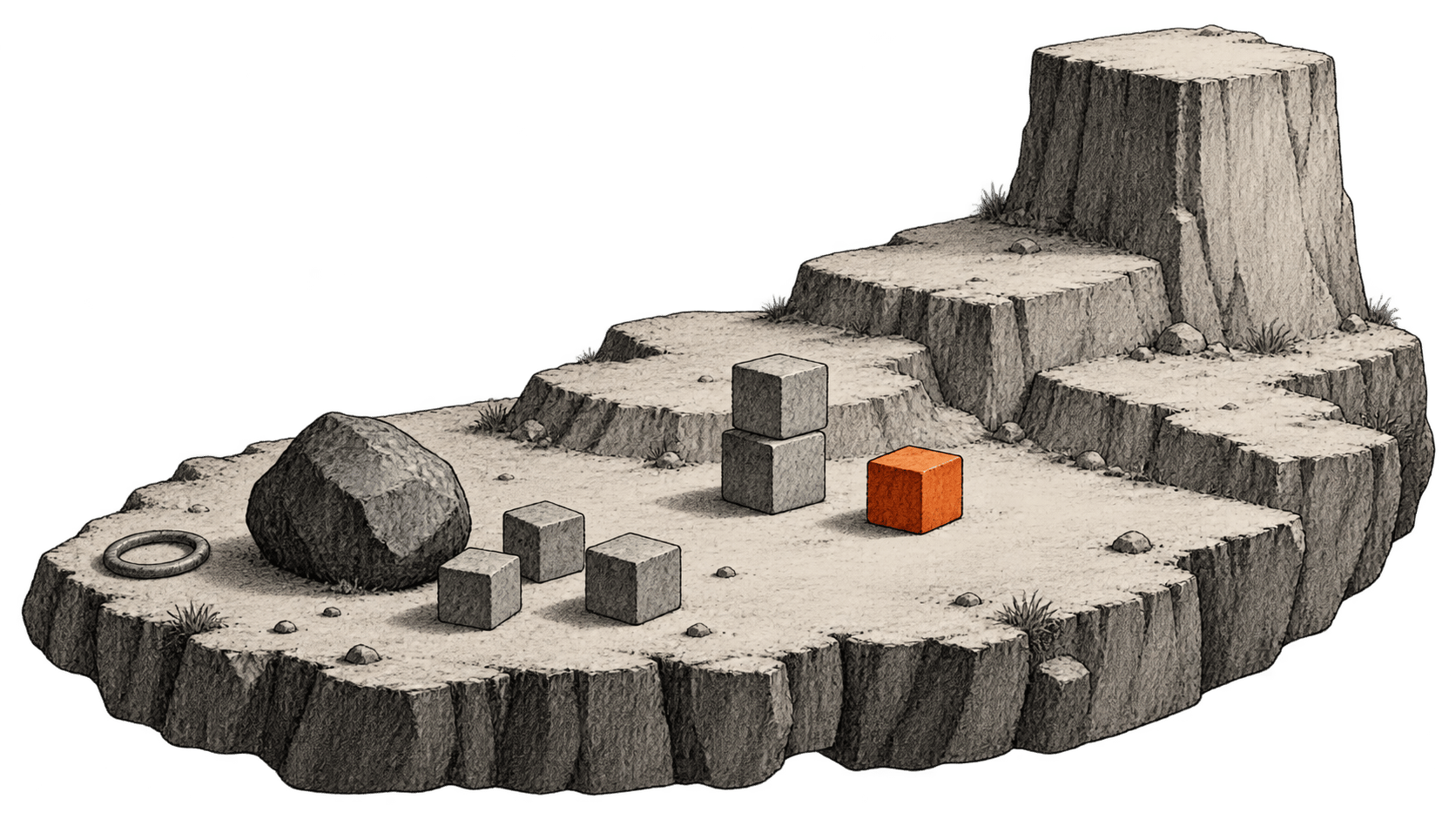
Experienced agents built more towers and placed more on the Spire, a high platform. More threw a block onto it without climbing. Tallest-tower scores stayed similar.
Three histories had five intact and five edited tests per goal. Erasing rock-throw notes about extra blocks reduced towers. Removing a false belief that placing could not reliably stack blocks improved another tower; a third edit slowed throwing but helped placement. Repeats were not independent histories. Physical transfer and subjective experience remain untested.
The Clawblox repository contains the public engine and mesa-island world. The supplementary dataset lists hourly recordings, session logs and workspace snapshots; each agentXX is one trajectory. The authors’ replay site shows the world and interface. These artifacts support inspection, although BIG CHANGE did not run the code or recompute the scores.