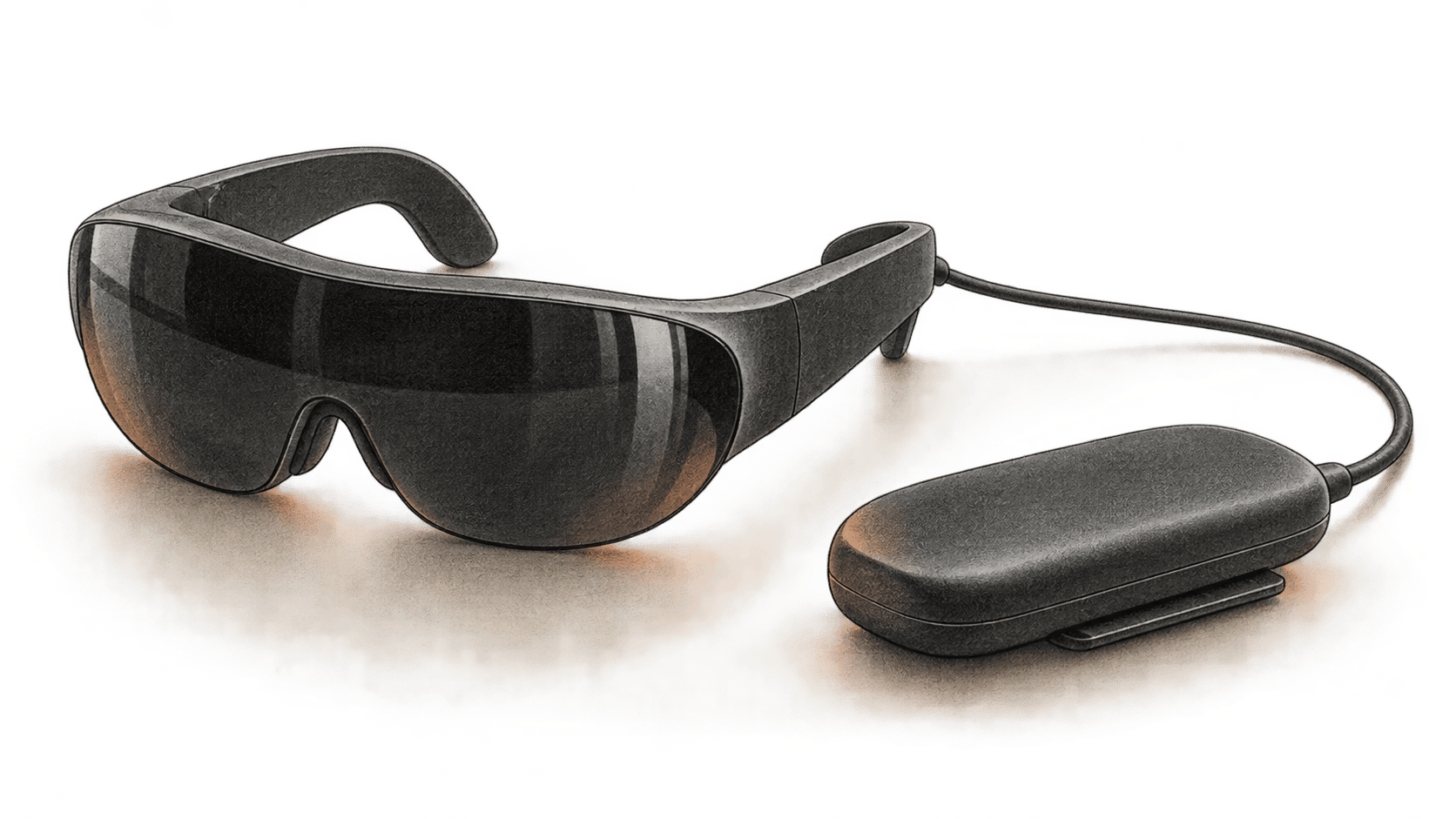
Meta announced VR Glasses on September 23 with Meta AI built into the operating system. It pitches the device for movies, games and computer screens. The two-part system is planned to go on sale in spring 2027 for $1,299.99 USD. It is not yet for sale, and brief press demonstrations cannot establish how it will perform in daily use.
The big change
- What changed: Meta is putting its AI assistant inside the controls of a VR device. The company says people can use voice, gaze and hand gestures to open apps, play media and arrange screens without controllers.
- Why it matters: The glasses combine an assistant with a private display for work and entertainment. That gives the AI a direct role in navigating the device, while the people considering it still need to judge the complete system: glasses, tethered computer, apps and available content.
- What to watch: The spring 2027 release will show whether Meta delivers the announced AI controls and partner services together. Regional access, subscriptions and the experience beyond supervised demos remain relevant to a purchase decision.
Glasses on the face, computer in a pocket
The glasses contain displays and sensors. An optical cable connects them to a puck holding the processor, battery and storage. Meta says the glasses weigh about 100 grams, a figure for the part worn on the face rather than the entire system. It specifies micro-OLED displays at 37 pixels per degree, a Qualcomm Snapdragon Reality Elite processor and up to three hours of high-resolution media playback. These are Meta's specifications, not measurements by BIG CHANGE.
The integrated Meta AI agent is pitched as a way to play a movie, open an app, adjust a workspace or search by speaking to the device. Eyes and hand gestures provide other controls. Meta has not shown that this announcement makes broader autonomous tasks available on the glasses. In GadgetGuy's half-hour hands-on, reporter Valens Quinn said the AI in his demo was a chatbot; he described the more task-oriented Muse integration as a plan. He tested gaze and gesture navigation and virtual displays, but could not walk around to check how virtual objects held their position during movement.
The Independent's hands-on likewise describes a supervised demo of games, media and hand controls. Its reporter found the field of view narrower than on a full-size headset, with the edges visible. Those reports give readers evidence that working prototypes were demonstrated, while leaving sustained comfort, battery life and the finished software to be judged later.
Media, work and games depend on more than the hardware
Meta says the device can create several virtual screens and turn a flat surface into a keyboard and touchpad. It promises 3D films, an IMAX Enhanced viewing mode, and more than 100 immersive live US sports events a year after launch through partners including MLB, NBC Sports, TNT Sports and UFC. The sports number is a future lineup claim, not an event count already available on these glasses.
Some content has separate timing and access limits. Meta says Disney+ subscribers in select countries can start streaming certain films in 3D in November, ahead of the glasses' planned release. The company also describes a Disney Immersive Cinema by ILM app and partnerships with other streaming services; titles, subscriptions and regional catalogs will determine what an eventual buyer can watch. Its announced gaming offer includes more than 75 hand-controlled games at launch and access to further titles through Xbox Cloud Gaming. UploadVR reports that traditional Touch Plus controllers are optional rather than included by default, which matters for games that require them.
Meta has provided a price and a season, but no precise sale date or full country-by-country content list. A buyer will need to check which services arrive in their region when the glasses ship.
Sources & further reading
- Meta's September 23 announcement states the $1,299.99 USD price, spring 2027 sale plan, hardware design, AI controls and proposed media, work and game services. It is the company's account of what it plans to deliver.
- GadgetGuy's hands-on and interview describes a half-hour demo, identifies the chatbot shown in place of the planned Muse agent, and records what the reporter could not test. The reporter attended as Meta's guest.
- The Independent's hands-on describes the prototype's controls, entertainment demos and narrower field of view. It is an early impression, not a long-term review.
- UploadVR's hardware report details the puck, display and optional controllers, helping distinguish hand-controlled games from the broader Quest catalog.