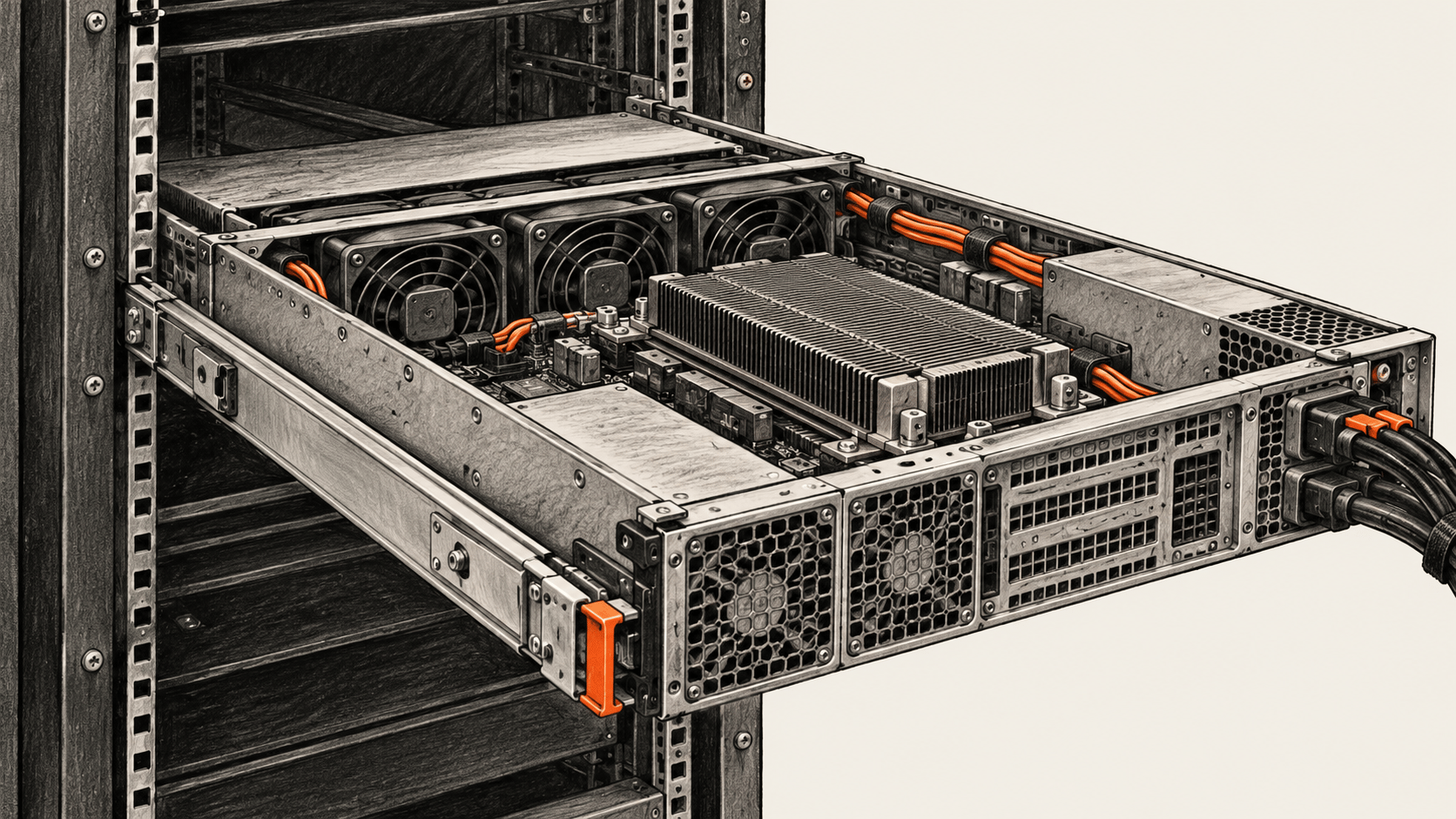
On October 27, Oracle and Cerebras announced plans to bring Cerebras inference to Oracle Cloud Infrastructure (OCI) in 2027. OCI already offers on-demand and dedicated model serving; customers could evaluate this hardware approach against their latency needs. Cerebras places memory close to compute to reduce the movement involved in generating model output.
The big change
- What changed: If delivered, the service would add another hardware approach for OCI developers to evaluate against their application requirements.
- Why it matters: Faster generation can shorten a workflow’s wait across successive model calls. Network and tool delays still contribute to the total.
- What to watch: The buying decision turns on supported models and regions, price, access controls and performance under a customer's request sizes and concurrency. Existing OCI modes do not establish its terms.
What Oracle and Cerebras actually announced
Inference is the computation performed when an already trained model processes an input and produces an output; it is distinct from training the model.
The release disclaims a delivery commitment and omits SKU, model, region, interface, price and service-level details. BIG CHANGE reviewed the sources cited here; we did not test the planned OCI offering.
How wafer-scale inference is intended to work
Generating text involves applying a model's learned parameters, or weights, to a request. Moving those weights to the processors that use them is one part of the work. Cerebras designs a large processor that places memory close to compute, with the aim of reducing the movement required during inference.
In an October 22 technical explanation, Cerebras describes how it maps a large model across multiple wafers when it cannot fit on one. Each stage holds its weights locally; intermediate results travel between stages to produce the next token. The company describes a pipeline in which different requests can occupy different stages at the same time. Its illustrated mapping depends on assumptions about model size, weight precision and request context, and is a vendor explanation of its architecture, not a specification of the Oracle deployment.
This distinction matters for performance. A token-generation rate describes only part of the experience: input processing, queueing, network travel, other application work and the number of simultaneous requests also affect what a user waits for. Other Cerebras results cannot establish the planned service’s speed.
What an OCI buyer can evaluate now
Oracle's existing OCI Generative AI documentation describes on-demand access to supported models without provisioning a dedicated cluster and a separate dedicated mode for supported deployments. Its model-discovery documentation lists distinctions such as regional availability, supported capabilities and hosted versus provider-hosted proxy access. Those are existing OCI service features; the announcement does not say which apply to Cerebras inference.
For a developer or buyer, that makes the near-term work a requirements exercise. The model, input and output lengths, concurrency, geographic processing requirements and acceptable end-to-end latency determine what evidence is useful. Once an actual offering and terms are published, its interface and operating limits can be compared with those requirements and tested using the application's own workload. A high output-token rate alone would leave the costs and behavior of the complete workflow unresolved.