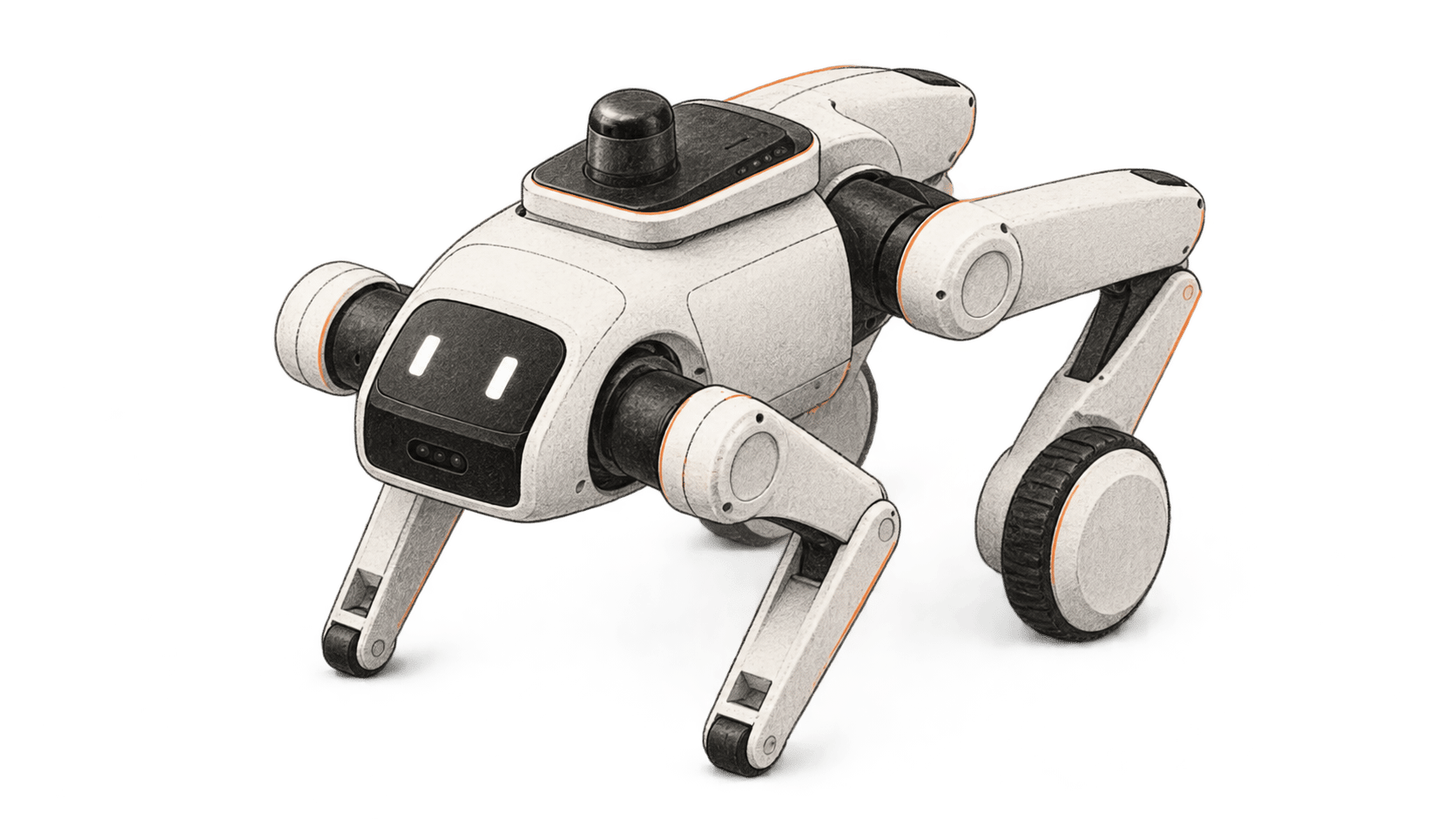
PrimeBOT's transformable T1 has an announced Chinese price equivalent to about US$2,980 and a shipment start scheduled for October 1. The dollar figure converts the domestic list price at the September 23 USD/CNY rate; it is not an overseas offer. That is a more concrete offer than the exhibition demonstrations that preceded its September 20 launch. For a buyer, the open questions are whether the base model can be ordered at that price through an official channel today, what functions come with it, and whether the production numbers circulating online describe actual output.
Contemporary launch coverage gives the base T1 a Chinese list price equivalent to about US$2,980 and the T1 Pro one equivalent to about US$4,470, with orders to ship sequentially from October 1. These dollar amounts use the same September 23 exchange rate; an overseas retail price has not been announced. An August report said PrimeBOT had opened preorders through its official mini program, stores on Tmall, Douyin and Bilibili, and in-person events. We could verify the announcement and reported channels, but did not find an accessible official product page confirming that the base T1 can currently be ordered at that price. Stock and a firm delivery date for a new order remain unverified. The October date is a company schedule, and it had not arrived as of September 23.
The big change
- What changed: PrimeBOT, called Qiyuan in China, announced retail prices and an order-to-shipment timetable for its T1 personal robot on September 20. That gives prospective Chinese buyers a named base model and a domestic list price equivalent to about US$2,980 at the September 23 rate, subject to confirmation on the actual order page.
- How it works: The approximately one-meter-tall T1 changes between an upright wheeled form and a lower quadruped form. PrimeBOT markets following, filming and voice interaction; more advanced navigation, recharging and developer functions are described specifically for the Pro model, with a Chinese list price equivalent to about US$4,470.
- Why it matters: The sale announcement creates a chance to judge this robot by delivered units and usable functions rather than stage movement. Neither a completed delivery nor sustained monthly factory output is established by the sources reviewed here.
What the T1 has shown
T1 is a personal mobility and interaction robot, roughly 100 centimeters tall and 16 kilograms according to launch reporting. In its upright form it moves on wheel feet; it lowers into a four-legged arrangement for different terrain. IT Home reported from the September 20 launch that PrimeBOT demonstrated the change of form onstage. Its developer community's account of the event also lists transformation, dance, skating, a backflip and interaction games among demonstrations by the Q1 and T1; it does not assign every move to T1 alone.
PrimeBOT's own IFA description lists intelligent following, autonomous filming, at least 15 camera-movement templates and educational interaction for T1. A Gadget Flow writer who saw it at IFA described watching it transform, but that account does not establish performance during sustained home use. We found no independent buyer test of its battery life, obstacle avoidance, load carrying or filming quality across normal indoor and outdoor conditions. The launch material describes a moving, interacting camera companion rather than a robot proven to perform household chores.
The base and Pro models need careful separation. IT Home's launch account attributes an Nvidia Orin Nano chip, 360-degree obstacle avoidance in both forms, automatic return to charge when low on power, voice summons, carrying while following and open secondary-development interfaces to T1 Pro. Those features should not be assumed to come with the roughly US$2,980 base T1. The reports reviewed here do not give a complete base-model contents list, terms for software services or a verified support policy.
A line cadence is not a delivery count
The Instagram post that prompted this story credits an X post by Eren Chen and says a robot rolls off the line every 2.5 minutes, with capacity up to 10,000 a month. An indexed repost of Chen's wording uses the stronger phrase “producing one humanoid robot off the line every 2.5 minutes.” We could not independently inspect the original X post or its attached footage.
The 2.5-minute figure has a clearer provenance than the monthly total. IT Home and 36Kr report that Qiyuan announced the cadence at its launch as part of its manufacturing system. Neither provides audited output logs, a line operating schedule or delivered-unit totals. The 10,000-a-month number appears in Chen's post and a separate LinkedIn claim discussed by Humanoid.guide; we did not find it in the company launch accounts reviewed here. It is best read as an attributed capacity claim, not a count of robots already built or shipped. The reported 2.5-minute cadence is attributed to PrimeBOT and should not be mixed with reports about another robot maker's factory.
For a prospective buyer, the next evidence will be a working official listing for the exact configuration, a confirmed order and shipping window, and independent use of delivered T1 units. For everyone following the manufacturing claim, monthly completed-unit and delivery figures would make the announced cadence testable. PrimeBOT has announced a Chinese entry price; as of September 23, the public evidence goes no further than launch-stage availability and demonstrations.