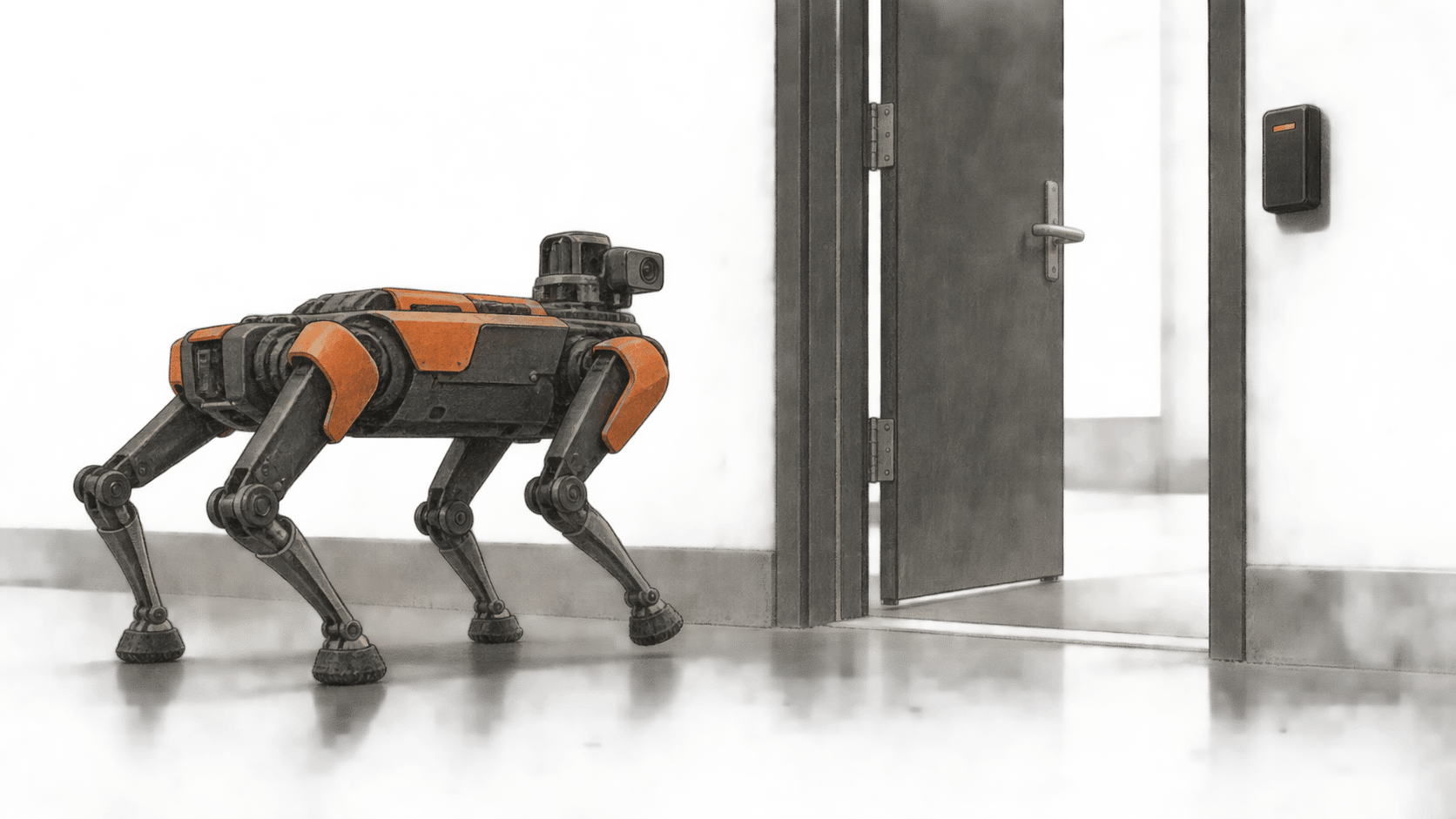
An ANYmal inspection robot used a digital credential to pass controlled doors and continue its route at the Whitegate power plant in County Cork, Ireland, according to a September 17 announcement by dormakaba, ANYbotics and LEGIC. The companies say the test ran for several weeks in an operating plant. They have not published its start date or a measured inspection, safety or reliability result for this access system.
The big change
- What changed: In one plant pilot, an inspection robot crossed a controlled door by presenting a credential to the site's access system. The system checked its permission and operated the door, so the route could continue without someone opening it.
- Why it matters: A robot's navigation alone cannot get it through a restricted area. This integration lets plant staff govern a robot's access through the permissions already used for people, according to the partners, while leaving the access decision with the plant's system.
- What to watch: The partners are developing the controlled-door feature as a commercial ANYmal add-on. Its terms, supported doors and operating requirements have yet to be published; the Whitegate pilot establishes a working integration at one site.
The credential reaches the door system
The arrangement joins three products with distinct roles. ANYbotics supplies the robot and its inspection platform. LEGIC supplies the secure credential technology. dormakaba supplies access management and automated doors. At a controlled doorway, ANYmal requests entry electronically; dormakaba's system checks predefined permissions and opens the door when access is allowed. The robot then continues its inspection route, the joint announcement says.
That design puts permission in the plant's access system. ANYbotics CEO Péter Fankhauser says the robot's credential is managed there under the same rules and audit trail as a worker's credential. The release does not spell out the robot's permitted zones or times, who issued or could revoke its credential, the exception process, or the level of human supervision during the pilot. It reports that door passages and route continuation required no manual intervention; that is narrower than a claim that the entire inspection program ran without people.
What Whitegate demonstrated
The partners say ANYmal repeatedly requested access, passed through controlled doors and resumed inspection routes over several weeks at Whitegate. They give no count of doors, passages, completed routes or failed requests. They also provide no before-and-after measure of asset coverage, worker exposure, plant uptime or cost for this door integration. GE Vernova, whose broader ANYmal inspection case study describes separate inspection and asset-management results, has not published a direct account of this access pilot that we could verify. Those broader results cannot be assigned to the controlled-door test.
The companies say they are working toward commercial availability, and Fankhauser describes a planned add-on across the ANYmal fleet. Neither statement says the controlled-door feature is generally available now or gives a release date. Access to elevators, gates and turnstiles remains an application the partners are exploring.