How to run a local forecast with Mistral Timestral
Mistral's Timestral package produces 21 quantiles per forecast step. This documentation-only guide covers local setup, output axes, covariates and a held-out comparison.
The big change
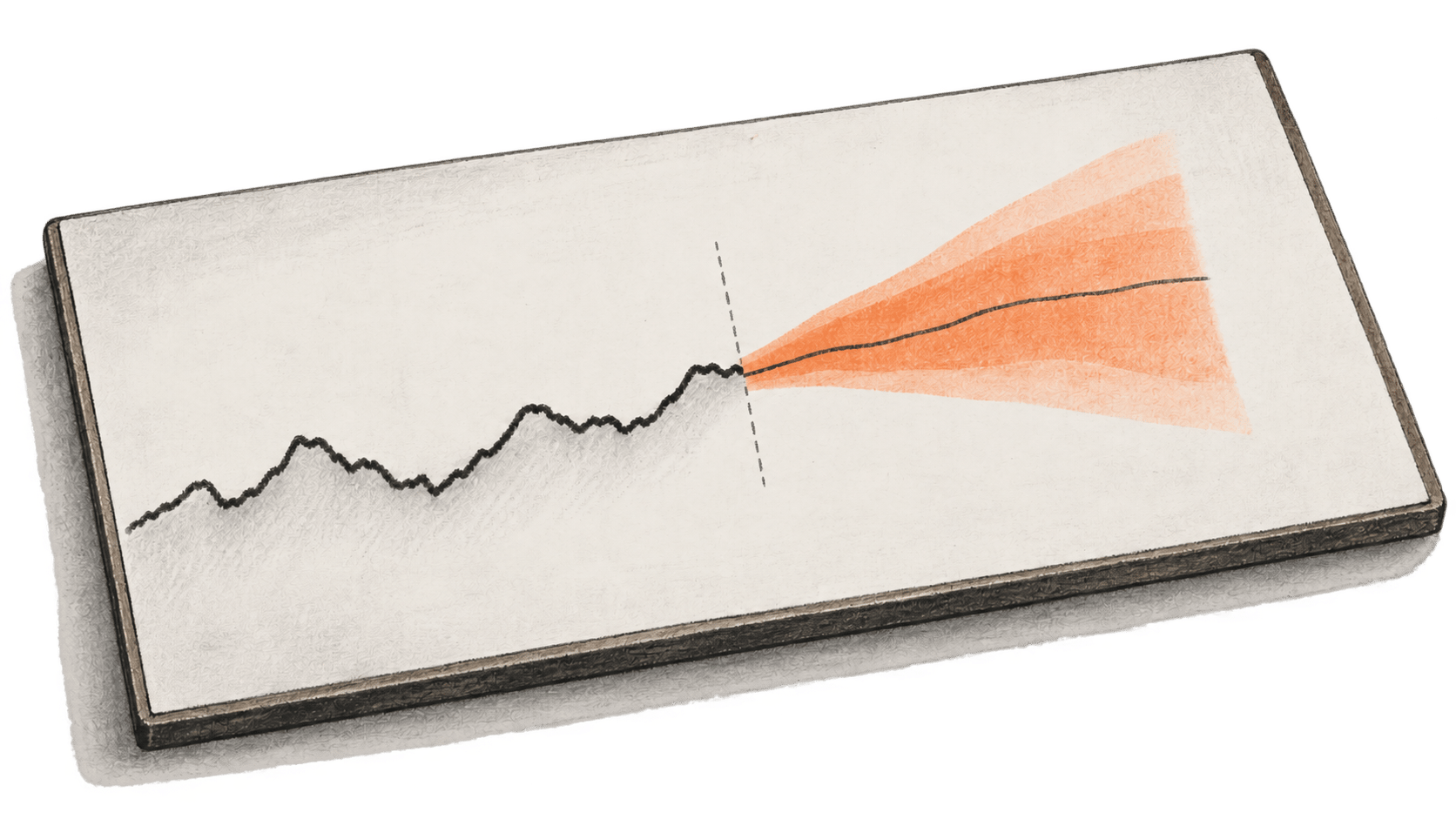
What changed: Mistral's October 15 release makes Timestral checkpoints available through a standalone Python forecaster. A local call takes numeric history, optionally conditions on past-only or genuinely known-future data, and returns 21 quantiles per future step.
Why it matters: An analyst can inspect forecast ranges for several related variables on local hardware. This provides a way to evaluate probabilistic forecasts without sending the history to a hosted inference API. The documented shape check shows how to read the output; it does not establish accuracy.
What to watch: The decision to use Timestral for a particular series turns on repeated time-ordered holdouts. Compare median error and interval coverage with an appropriate baseline across several cutoffs, using only covariates that were known at each cutoff. Those results determine whether its quantiles help with the task.