THE WORLD IS NOT STANDING STILL.RSS
BIG CHANGE.
BIG CHANGE, one tap away

Make room for the big picture.

Add BIG CHANGE to your home screen or desktop. It opens in its own window, with the latest stories when you’re online.

iPhone & iPad
Open bigchange.ai in Safari. Tap Share, then Add to Home Screen. Turn on Open as Web App if shown, then tap Add.
Android
Open bigchange.ai in Chrome. In the browser menu, choose Install app or Add to Home screen.
Desktop
In Chrome or Edge, use the install icon in the address bar or the browser’s app menu. In Safari on Mac, choose File → Add to Dock.
All briefings

Follow the change ·

The day,
in perspective.

What happened in AI and robotics — and the change behind it. A reading path through 14 stories from BIG CHANGE.

Ordered using RADAR attention, story opens and likes. Excerpts from our published reporting; open a story for the full context and sources. Dates in UTC.

Original story: news

Simons Foundation sets $15 million effort for mathematical review of AI work

Simons, Anthropic and OpenAI have committed $15 million in combined funding and resources. The foundation will manage awards for mathematicians to examine AI-assisted work and develop standards.

The big change

What changed: A research funder and two AI labs have committed resources for mathematicians to examine AI-assisted work and develop practices for using it. Simons says it will manage the awards, giving the mathematical community a route to organize that work through proposals and workshops.

Why it matters: Evaluating a mathematical result takes expert time and shared standards. The proposed support gives researchers and institutions a way to seek resources for that work as AI-assisted results enter the field. Its effect depends on which projects Simons funds and what they establish.

What to watch: The foundation has announced an open call but has not published its timing or award details in this announcement. Those terms, followed by the funded work, will show how the commitment is put into practice.

Read the full story
—
Back to the briefing
Original story: analysis

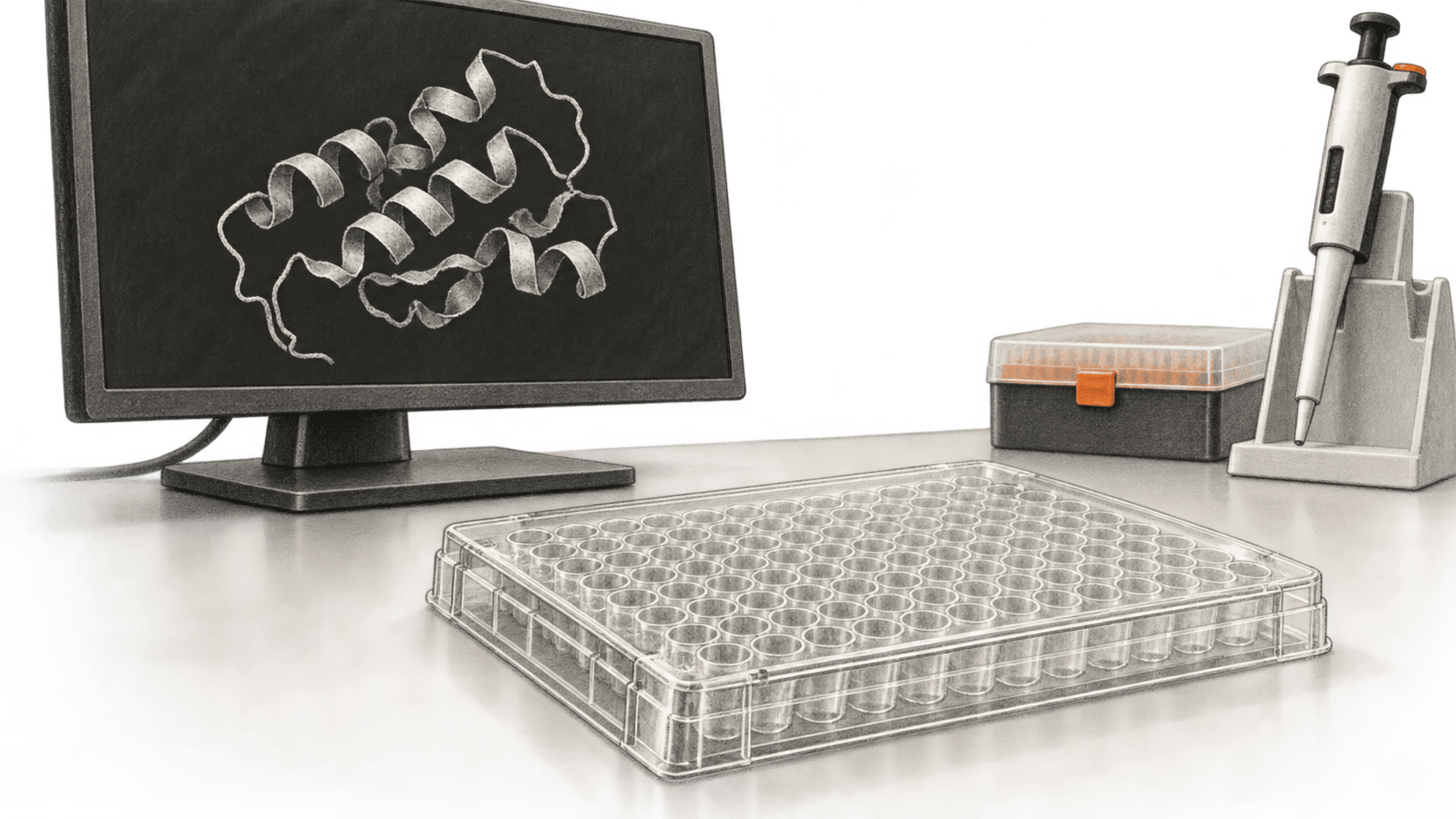
How Google Antigravity triaged an antimicrobial peptide candidate

Google traced one peptide candidate through sequence, structure and genomic checks with Antigravity. Its predicted activity still awaits lab results.

The big change

What changed: Google's walkthrough shows a researcher directing an agent to assemble sequence, structural and genomic evidence for one peptide candidate in a single workbench. The output is a testable hypothesis and an assay plan, with no antimicrobial activity result reported.

Why it matters: Biologists spend time connecting clues across separate resources before choosing what to test. An agent that assembles those clues can give research teams a clearer basis for prioritizing limited bench work, provided researchers check the underlying matches and annotations. Google does not report whether this workflow improves discovery rates.

What to watch: Google says the candidate is undergoing wet lab validation. Expression, susceptibility, target engagement and toxicity results will determine whether this particular dossier was worth advancing. For research managers, the wider decision is whether evidence assembled by agents holds up often enough to guide scarce experimental capacity. This one candidate cannot answer that yet.

Read the full story
—
Back to the briefing
Original story: guide

Check Android chat scam alerts and Google Messages spam protection

Check the current Android chat scam warning and Google Messages spam settings, with eligibility, privacy details and the October 2026 features still rolling out.

The big change

What changed: Google is extending scam warnings beyond calls and texts to notifications from supported chat apps. Its existing notification control is limited to select devices, languages and regions; a wider device rollout is planned for later in 2026.

Why it matters: A warning in the notification shade gives a reader a chance to pause before opening a suspicious chat. Google Messages has a separate spam control for its own messages. Checking both settings clarifies which protection a phone currently offers, while leaving decisions about a sender's identity with the person receiving the message.

What to watch: Enhanced protection in Google Messages is due in the coming weeks, and call-forwarding safeguards are due from early December on select devices. Their appearance on a particular phone, along with the data each feature uses, will matter more than the announcement alone.

Read the full story
—
Back to the briefing
Original story: news

Meta releases Muse Spark Open weights and serving guides

Meta released Muse Spark Open weights on October 15. Its BF16 and NVFP4 checkpoints, hosted APIs and Muse Model License give developers several routes with distinct limits.

The big change

What changed: Meta published downloadable Muse Spark Open weights under its Muse Model License, alongside documented routes for self-hosting, partner APIs and post-training.

Why it matters: Developers can choose where inference runs and which checkpoint or provider fits their workload. The released recipes make that choice more concrete, while memory, context, price and access still depend on the route.

What to watch: Independent tests of the released checkpoint, provider-specific context and pricing, and the behavior of the smaller quantizations on real tasks. Meta's demonstrations and evaluations do not establish those results for another deployment.

Read the full story
—
Back to the briefing
Original story: news

OpenAI opens GPT-Rosalind academic plan to eligible U.S. university labs

OpenAI is taking applications from eligible U.S. university labs for up to 30 sponsored ChatGPT Business seats and GPT-Rosalind access, subject to verification, approval and activation.

The big change

What changed: OpenAI has opened a sponsored route for eligible U.S. university labs to seek GPT-Rosalind access through a managed ChatGPT Business workspace. The accepted offer can cover up to 30 Standard seats for up to 12 months.

Why it matters: A lab can apply through its PI or designated lead without a university Enterprise contract, provided its institution permits an independent workspace. The application, trusted-access decision and individual member activation each have separate requirements.

What to watch: OpenAI has not promised approval to every eligible applicant. Lab leads need to check the accepted offer's end date and charges, their university's data rules and the account route that applies to them.

Read the full story
—
Back to the briefing
Original story: guide

How to remap a Copilot key with PowerToys on Windows 11

Microsoft's built-in Right Ctrl and Context Menu choice is still forthcoming. A documented PowerToys route can remap a Copilot key when its actual shortcut input matches.

The big change

What: Microsoft plans a Windows 11 setting that will let a Copilot key act as Right Ctrl or Context Menu. The company has not specified when or in which build it will arrive.

How to act now: On a keyboard that sends a shortcut PowerToys can capture, Keyboard Manager can map that exact input to another key or shortcut. Microsoft documents Win+C and Left Shift+Win+F23 as common Copilot-key inputs.

Why it matters: Losing Right Ctrl or Context Menu can interrupt familiar shortcuts and assistive workflows. A mapping needs to be checked against the reader's own keyboard and software before it becomes a reliable replacement.

Read the full story
—
Back to the briefing