EmArm uses whole-arm touch to adjust a robot's movements
HKUST's EmArm research prototype uses tactile skin and joint sensing to adjust movement. Lab tests cover touch recognition, object balancing and obstacle avoidance; deployment remains untested.
The big change
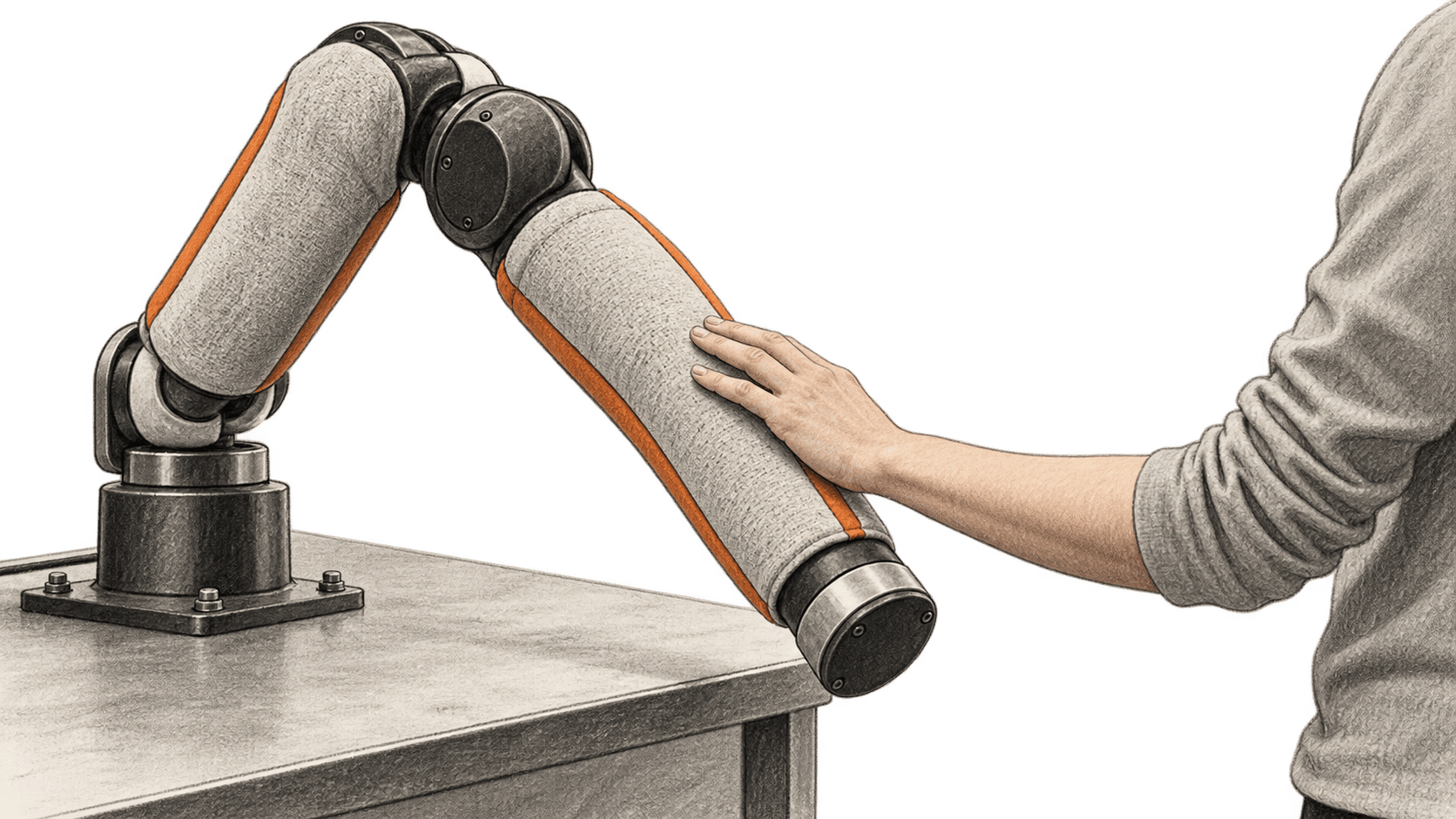
What changed: EmArm places tactile sensing across much of a rigid arm and feeds contact features together with joint angles into its movement decisions. The researchers report demonstrations of touch classification, object balancing and path replanning when an obstacle is outside the robot's view.
Why it matters: Contact can happen anywhere along an arm, including beyond a gripper. Sensing where and how the arm is touched gives the controller information that vision or a few force sensors may miss in the demonstrated tasks.
What to watch: The published evidence concerns a research platform and bounded experiments. Repeated tests in less controlled settings, independent reproduction and practical access to the implementation would be needed to assess broader use.