THE WORLD IS NOT STANDING STILL.RSS
BIG CHANGE.
BIG CHANGE, one tap away

Make room for the big picture.

Add BIG CHANGE to your home screen or desktop. It opens in its own window, with the latest stories when you’re online.

iPhone & iPad
Open bigchange.ai in Safari. Tap Share, then Add to Home Screen. Turn on Open as Web App if shown, then tap Add.
Android
Open bigchange.ai in Chrome. In the browser menu, choose Install app or Add to Home screen.
Desktop
In Chrome or Edge, use the install icon in the address bar or the browser’s app menu. In Safari on Mac, choose File → Add to Dock.
All briefings

Follow the change ·

The day,
in perspective.

What happened in AI and robotics — and the change behind it. A reading path through 22 stories from BIG CHANGE.

Ordered using RADAR attention, story opens and likes. Excerpts from our published reporting; open a story for the full context and sources. Dates in UTC.

Follow-up story: news

Claude Haiku 4.5 leaves consumer model selectors on October 29

Anthropic will remove Haiku 4.5 from Free, Pro and Max model selectors on October 29. Existing chats remain, but resumed chats will answer with Haiku 5.5.

The big change

What changed: On October 29, Haiku 4.5 leaves the Free, Pro and Max model selectors for chat, Cowork and Design, including Claude Desktop and Mobile. Haiku 5.5 takes its place.

Why it matters: A saved Haiku 4.5 chat remains accessible, but its next response uses Haiku 5.5 after the change. The model that answers a resumed conversation may differ from the one that wrote its earlier replies.

What to watch: Anthropic says Haiku 4.5 remains available in Claude Code, on Team and Enterprise plans, and through the Claude Platform API. The notice does not announce retirement of the model across those products.


Read the full story
—
Back to the briefing
Original story: analysis

Anthropic gives six METR evaluators internal access with publication limits

Six METR staff have employee-like access for risk assessments at Anthropic. The evaluator can publish findings, while Anthropic retains control over access and specified redactions.

The big change

What changed: Anthropic says six METR employees have company hardware, office space and internal-tool access roughly comparable to its own risk assessment teams. METR is expected to publish analyses of Anthropic's risk levels, incidents or practices.

Why it matters: An outside evaluator may be able to examine internal evidence that the public cannot see. METR's eventual account can also describe material limits on its access and redactions, helping readers weigh the conclusions.

What to watch: Anthropic says it cannot veto METR's publication, but it can require redactions under preset categories and ultimately decides what falls within them. No assessment result from this embedded arrangement is established by the announcement.

Read the full story
—
Back to the briefing
Original story: news

Waymo plans Toronto mapping before autonomous rides targeted for 2028

Waymo says it will begin Toronto work with human-driven mapping and supervised tests. It aims to welcome its first fully autonomous riders in 2028; commercial rides are not available now.

The big change

What changed: Toronto now has a dated Waymo entry plan. The first visible vehicles will gather mapping and validation experience with people at the wheel. Waymo is targeting its first fully autonomous ride-hailing passengers in 2028.

Why it matters: Residents may see Waymo cars well before they can book one. Manual driving and tests help the company assess local streets, but they do not establish that its driverless service is ready for Toronto or available to the public.

What to watch: Waymo says later phases require further work with regulators. The practical milestone for riders is a permitted commercial launch, not the arrival of mapping vehicles or an email signup.

Read the full story
—
Back to the briefing
Original story: news

Microsoft's PRAISE pairs junior engineers with CMU courses

Microsoft's internal PRAISE program pairs selected early-career engineers with senior preceptors and CMU courses. Its training outcomes have not been reported.

The big change

What changed: Microsoft and CMU have described an internal training arrangement that combines senior engineers’ guidance on real projects with a university certificate curriculum for selected early-career employees.

Why it matters: AI tools can produce code while newer engineers still need to learn how to assess it and make design decisions. PRAISE assigns that learning to experienced colleagues and formal courses, with time spent on the employee’s actual work.

What to watch: CMU has named the current courses and planned spring courses. Evidence of the program’s value would require participant numbers and measured learning or engineering outcomes; neither institution has published those results for PRAISE.

Read the full story
—
Back to the briefing
Original story: analysis

Taiyo Yuden demonstrates AI urine-odor sensor at CEATEC

Taiyo Yuden demonstrated a urine-odor sensor and AI pattern analysis at CEATEC. The reviewed sources do not establish clinical performance for its proposed examination prompt.

The big change

What changed: Taiyo Yuden presented a urine-odor monitoring concept at CEATEC. Its sensor records responses across 16 films, and AI compares the resulting pattern with learned examples.

Why it matters: The proposed output is a prompt to consider further examination. That creates a possible route from a routine measurement to a clinical visit, if the system can be validated for that use.

What to watch: A study reporting the population tested, comparison with established examinations, sensitivity, specificity and false results would show whether the proposed prompt is useful. The exhibition and award do not supply those measures.

Read the full story
—
Back to the briefing
Original story: analysis

OmicsBench tests AI agents across dependent bioinformatics steps

An author-reported benchmark follows AI agents through dependent bioinformatics tasks. Scores fall on later steps, while feedback improves results under limits.

The big change

What changed: OmicsBench grades a sequence of dependent analysis steps in one continuing agent session. It exposes errors that a single final answer can hide, although the evidence here comes from the benchmark authors' own preprint.

Why it matters: A research team judging an agent for multi-step analysis can examine where its results drift, including whether it follows the specified selection criteria. The paper reports lower scores on dependent steps, so a good answer to one prompt is weak evidence for the whole workflow.

What to watch: The public runner and three released tasks let researchers inspect the method. The remaining 94 tasks are private; independent evaluations on held-out work, with analysis quality checked beyond answer matching, would give stronger evidence about practical use.

Read the full story
—
Back to the briefing
Original story: analysis

StudentSim tests AI tutor feedback without measuring student learning

StudentSim compares AI student simulators with learner records and tests responses to guided corrections. Its chess tutor study rates advice, not learning gains in real students.

The big change

What changed: The team published a two-stage training method and StudentSimEval, a benchmark covering 60 learners across chess, second-language English writing and mathematics. The benchmark tests a simulator's match to recorded behavior and its ability to reach a correction after guidance.

Why it matters: These are useful checks on a proxy used during tutor development. The guidance score uses a canonical corrected answer, rather than a recorded revision by that individual learner, so a high score does not establish how a student would learn from the hint.

What to watch: Independent reproduction and studies with real learners would need to test learning over time, safety and classroom fit before this research signal could support student-facing use.

Read the full story
—
Back to the briefing
Original story: guide

A robotic welding model tests power control before physical trials

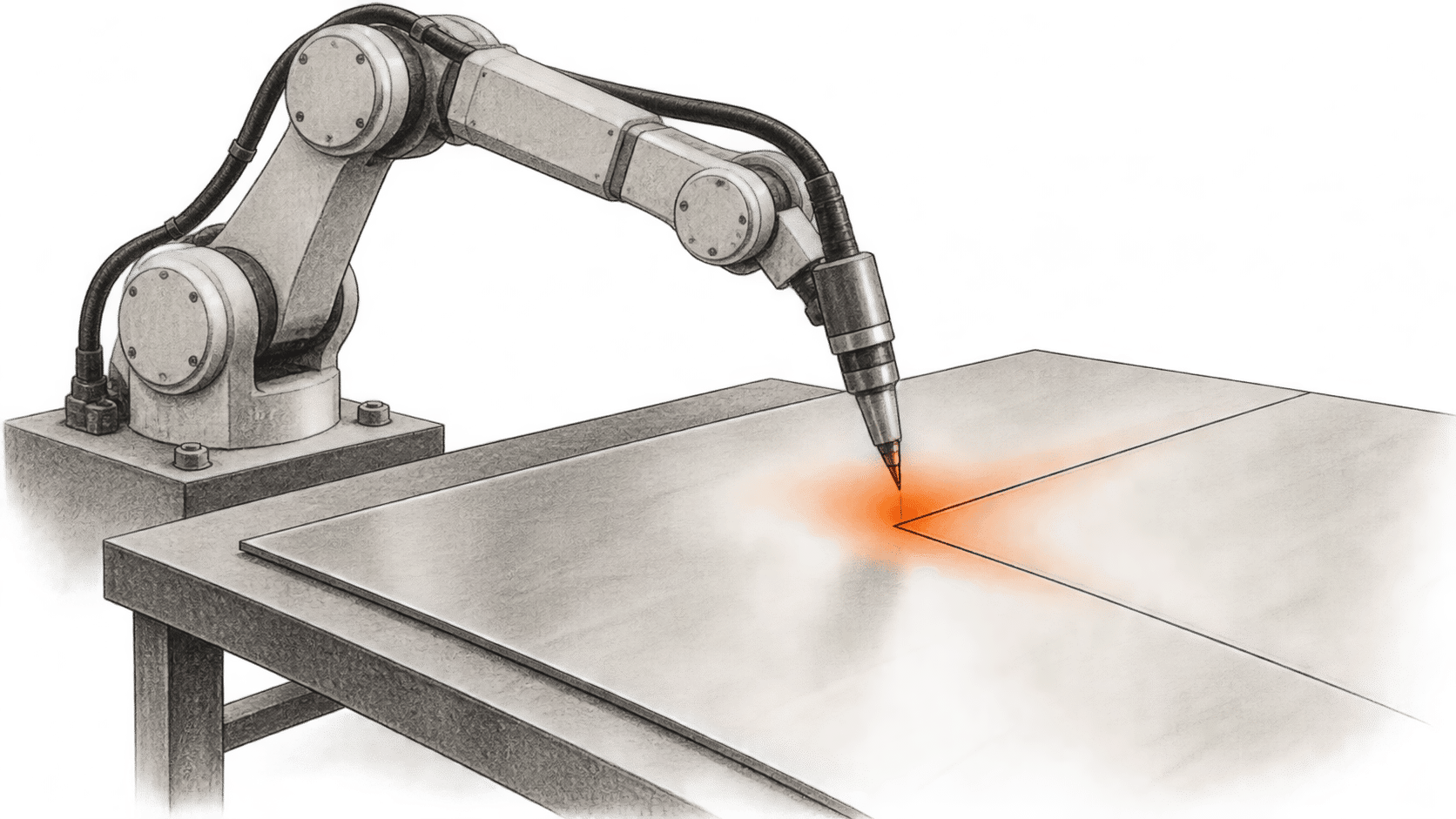
An ISPARK preprint joins a weld-pool model, a fast surrogate and a simulated robot. Its corner test compares modelled widths; physical welding validation remains ahead.

The big change

What changed: The researchers joined a thermal weld-pool model to a fast predictor and a simulated six-axis robot. That lets them compare power adjustments during a changing travel-speed profile, instead of checking only fixed welding settings.

Why it matters: Engineers developing in-space joining methods have few opportunities to test under flight-like conditions. This model can help choose which settings and controller behavior deserve physical tests, while leaving weld strength and reliability unproven.

What to watch: Measurements from weld coupons, thermal-vacuum and reduced-gravity tests would show where the model matches the process. Robotic hardware-in-the-loop trials would separately test motion, sensing and command delays.

Read the full story
—
Back to the briefing