THE WORLD IS NOT STANDING STILL.RSS
BIG CHANGE.
BIG CHANGE, one tap away

Make room for the big picture.

Add BIG CHANGE to your home screen or desktop. It opens in its own window, with the latest stories when you’re online.

iPhone & iPad
Open bigchange.ai in Safari. Tap Share, then Add to Home Screen. Turn on Open as Web App if shown, then tap Add.
Android
Open bigchange.ai in Chrome. In the browser menu, choose Install app or Add to Home screen.
Desktop
In Chrome or Edge, use the install icon in the address bar or the browser’s app menu. In Safari on Mac, choose File → Add to Dock.
All briefings

Follow the change ·

The day,
in perspective.

What happened in AI and robotics — and the change behind it. A reading path through 39 stories from BIG CHANGE.

Ordered using RADAR attention, story opens and likes. Excerpts from our published reporting; open a story for the full context and sources. Dates in UTC.

Original story: news

NHTSA proposes optional cyan lights for automated vehicles

NHTSA proposes optional cyan marker lamps for automated vehicles and revised lighting controls for vehicles without manual driving controls. It is not yet a final rule.

The big change

What changed: NHTSA proposes a defined, optional cyan signal for a vehicle operating without an occupant expected to monitor the road. Vehicles lacking manual driving controls would also gain relief from some driver-operated lighting-control specifications.

Why it matters: A common signal would give road users a consistent meaning to look for when manufacturers choose to fit the lamps. Required lighting functions would remain, and the marker would not certify automated-driving safety.

What to watch: Federal Register publication is scheduled for October 26, followed by a 30-day comment period. The final requirements and any effective date depend on rulemaking; no final rule has been adopted.

Read the full story
—
Back to the briefing
Original story: guide

Make and check a full song with Lyria 3.5 in Gemini

Use Gemini's Pro and Full music controls to prompt an original structured song, then listen to and reopen the downloaded MP3 before a human rights decision.

The big change

What changed: Google says Lyria 3.5 powers music creation in Gemini, where the Pro model offers a Full track of about two to three minutes.

Why it matters: You can describe a whole song in one prompt and save an MP3, then judge the actual arrangement and recording yourself.

What to watch: Full does not promise exactly three minutes or every requested section. Access, usage limits and rights still need checking.

Read the full story
—
Back to the briefing
Original story: news

Pennsylvania targets misleading AI ads with disclosure law

Signed October 22 and effective December 21, the law ties disclosure to false impressions about goods or services and expressly excludes content limited to text.

The big change

What changed: Pennsylvania has added a specific disclosure requirement to its treatment of deceptive advertising. It covers synthetic representations of goods and services, with the duty tied to a false consumer impression.

Why it matters: The disclosure must reach consumers when they first encounter the covered content, in the same medium. That makes its placement, readability and audibility part of the rule. Disclosing AI use also leaves other legal remedies intact.

What to watch: The meaning of a false consumer impression will determine the rule's reach. Legal analysis has already identified competing readings of that threshold; its application matters as the December 21 effective date approaches.

Read the full story
—
Back to the briefing
Original story: guide

Upscale a 720p AI video to a checked 1440p file with Magnific

Take one rights-cleared 720p AI clip through Magnific Creative, then inspect the downloaded 1440p file for dimensions, detail, motion and audio.

The big change

What changed: Magnific documents Creative and Precision video upscaling, with 1440p labeled 2K in its output settings. Creative can reconstruct and synthesize detail in low-resolution or AI-generated footage.

Why it matters: A larger file can still alter a face, letter or moving object. Comparing the downloaded output with the original gives the creator a basis for accepting it.

What to watch: The app's upload validator, credit quote and actual output govern an attempt. The public page mentions clips up to eight seconds, but we did not see a signed-in account's limits or a billable run.

Read the full story
—
Back to the briefing
Original story: guide

Use Gemini 3.1 Flash Live to talk about a shared screen

Build a local Gemini 3.1 Flash Live voice session that sends combined-desktop frames, checks spoken answers against the screen and stops capture.

The big change

What: A local Python session can pair spoken questions with desktop frames sent to gemini-3.1-flash-live-preview and play the model's audio reply.

How: Google's Live API accepts 16-kHz PCM microphone input and JPEG frames at no more than one frame per second; the example plays 24-kHz PCM output and stops on q.

Why it matters: The reader can check a reply against a visible screen change and end both capture streams. The whole combined desktop, including any visible notification, is in scope while the program runs.

Read the full story
—
Back to the briefing
Original story: news

Rockwell names four FactoryTalk Conductor launch integrations

Rockwell's FactoryTalk Conductor is set to connect four engineering applications at launch. A 2026 public preview precedes planned commercial availability in Q1 2027.

The big change

What changed: Rockwell proposes a single way to coordinate engineering tasks across controller programming, emulation, simulation and interface development using natural language. The four applications already exist; Conductor's announced role is to connect their work with AI agents.

Why it matters: Automation engineers work with different artifacts in those applications. Coordinating them could reduce manual handoffs between design and testing, but Rockwell has not published a Conductor customer result demonstrating that benefit.

What to watch: The planned Q1 2027 release needs to establish which operations engineers can access and how changes are reviewed. Those details will determine whether the proposed coordination fits a team's engineering process.

Read the full story
—
Back to the briefing
Original story: guide

Build a checked film production office in Claude Cowork

Use Claude Cowork to draft a source-checked film office, then deliver approved TXT and CSV copies through private project knowledge and verify every recipient file.

The big change

What changed: Cowork can work across a permitted local folder and draft several connected production documents. The team still has to supply the real shoot facts and approve each consequential file.

Why it matters: A coordinator can keep shot IDs, creative briefs and production records in one checked index instead of reconciling unrelated drafts by memory. The producer remains responsible for rights, contacts, time and money.

What to watch: Cowork project files remain on the producer's computer until approved copies are explicitly added to account project knowledge. Sharing a project title or session does not establish that a colleague received the office.

Read the full story
—
Back to the briefing
Original story: news

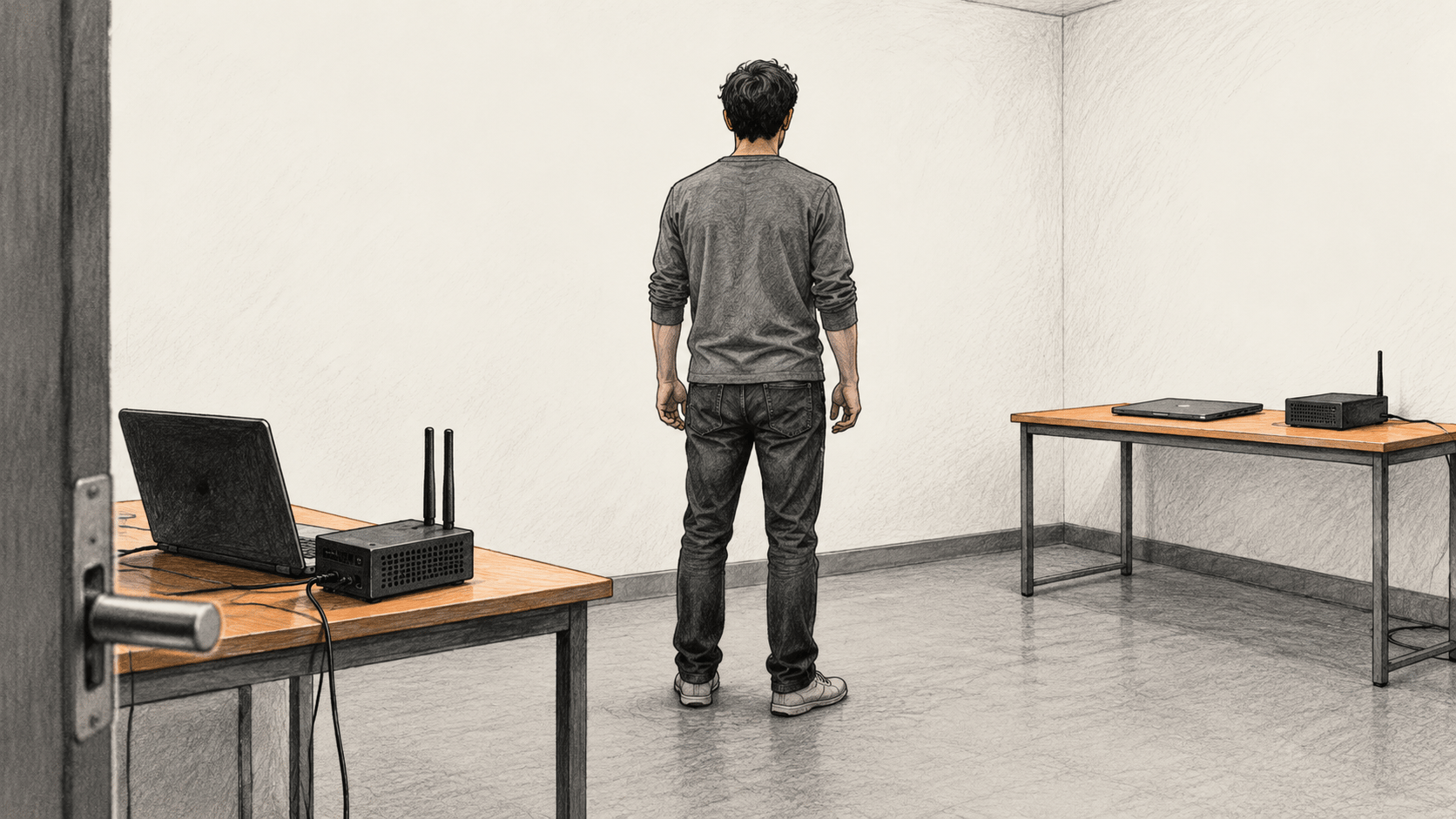
Wi-Fi handgun detector tested in small rooms, not checkpoints

WiFireNet detected a concealed, deactivated handgun in controlled room recordings. Its 72.5 handgun AP@25 score and sample-level split leave real screening performance open.

The big change

What changed: The researchers released a dataset and a detector that map Wi-Fi channel measurements into image-shaped features, then locate people and classify their associated carried-object labels. A camera supplies training labels and a visual teacher; the evaluated model uses Wi-Fi measurements for its predictions.

Why it matters: Engineers and public bodies examining concealed-object sensing now have a reported four-class experiment to scrutinize, including comparisons with a plastic replica, a metal bottle and a phone. The handgun result is an object-detection score from controlled rooms, so it cannot tell an operator how often a real screening system would flag the wrong person.

What to watch: A consequential follow-up would test complete sessions, people and rooms kept out of training, and report per-person alerts and false alarms at a stated operating threshold. Those measurements would address decisions the current sample-level evaluation cannot settle.

Read the full story
—
Back to the briefing