The October 22 IORA preprint describes planning grasps for coupled hands.
The big change
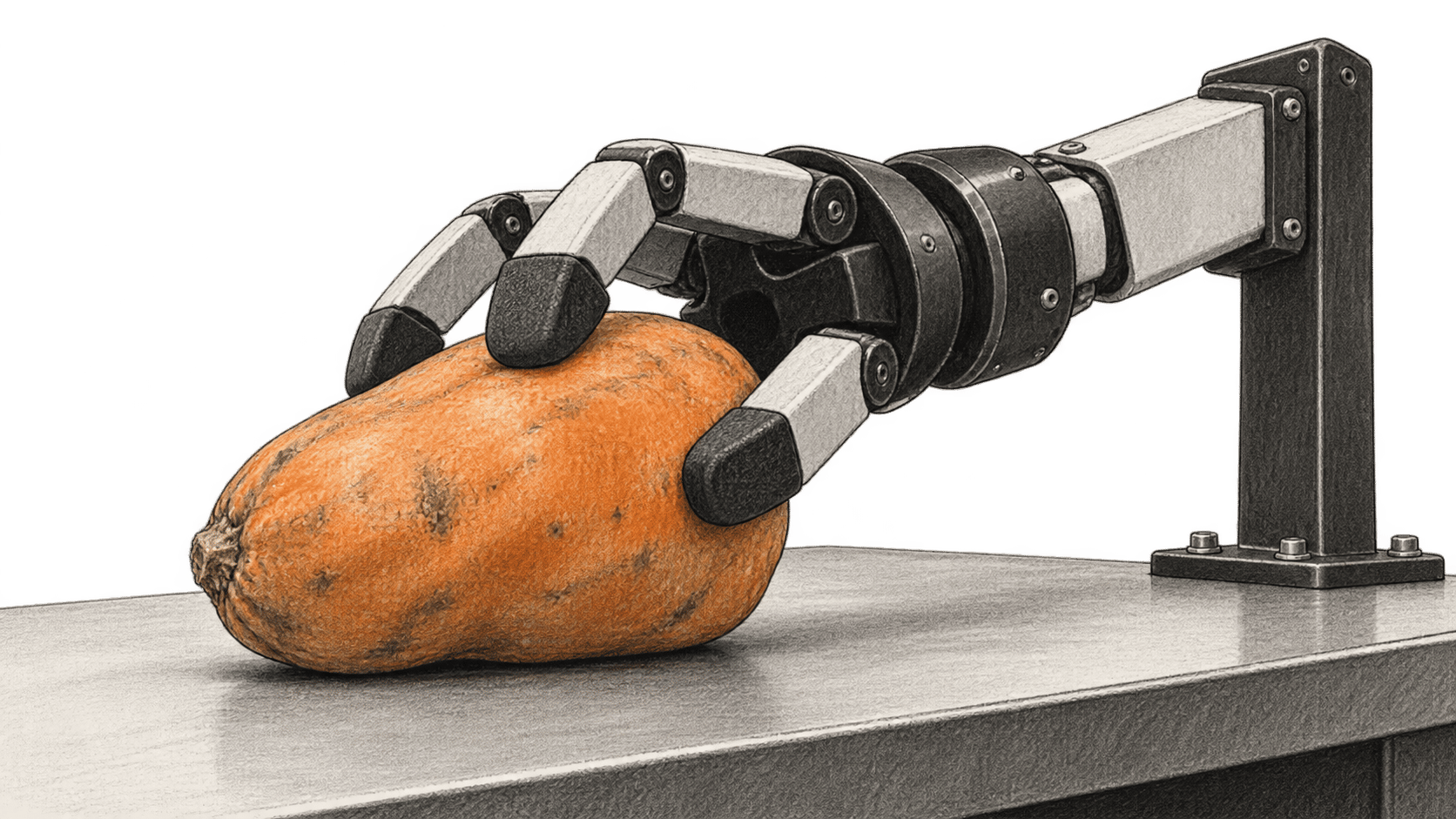
- What changed: IORA plans a stationary hold with load-bearing table contact.
- Why it matters: Engineers gain a contact source when planning for coupled joints.
- What to watch: Planning requires known object geometry and a static support surface.
How IORA selects a hold
IORA matches hand and object regions under coupled motor constraints, refines the grasp, then filters candidates in force simulations. Table friction contributes.
What the evidence shows
In the authors' 200-object MuJoCo test, IORA succeeded on 88.5% of objects, Dexonomy on 42.5%. Per-grasp ranking reverses because failed generation can be excluded.
Physical tests used 24 replicas. A pulley trial executed 17 of 18 grasps. With six real vegetables, the hand held against a table during teleoperated knife or slicer use. Autonomous cooking was untested.